Acidity and Gastric Medicines: EMK Omni Pharma Guide
Acidity, reflux and gastritis are treated with several different kinds of medicine. This guide explains those classes and where Omnizole-D and Panomni-D from EMK Omni Pharma are prescribed.
What Acidity and Gastric Medicines Are Used For
Acidity is a loose word for several different problems. Gastro-oesophageal reflux disease is acid rising into the food pipe, producing burning behind the breastbone and a sour taste. Gastritis is inflammation of the stomach lining. Peptic ulcer disease is a break in that lining, sometimes linked to Helicobacter pylori or to long use of anti-inflammatory painkillers. Functional dyspepsia is discomfort and fullness without any of these being found.
The medicines used across these conditions fall into a few groups. Antacids neutralise acid already present and act quickly but briefly. H2 blockers reduce acid production through histamine receptors. Proton pump inhibitors switch off the pump itself. Prokinetics help the stomach empty and reduce nausea. Mucosal protectants coat and shield.
EMK Omni Pharma markets two prescription capsules in this category, both combining a proton pump inhibitor with a prokinetic. They are contract manufactured at GMP units and marketed from Mysuru, Karnataka.
How Proton Pump Inhibitors Work
The lining of the stomach contains proton pumps that push acid into the stomach cavity. Proton pump inhibitors bind those pumps and shut them down, which reduces acid far more thoroughly and for far longer than an antacid can.
Two practical points follow from this. First, the pumps have to be active for the medicine to bind them, which is why these products are generally taken before a meal rather than after it. Second, the effect builds over the first days of treatment, so someone expecting instant relief may think the medicine is not working. Antacids are what act fast; proton pump inhibitors are what heal.
The molecules are also acid sensitive, which is why they are supplied in enteric-coated or gastro-resistant forms designed to survive the stomach and release further along. Capsules of this kind should be swallowed whole and never crushed or chewed unless the doctor gives specific instructions.
Why Domperidone Is Added to the Capsule
Reducing acid does not always settle everything. Many patients also have slow stomach emptying, nausea, bloating or a sense of food sitting in the stomach. Domperidone is a prokinetic that blocks dopamine D2 receptors, which encourages the stomach to move its contents on and reduces nausea.
Because the two molecules work over different time courses, these capsules place them in different release formats. The proton pump inhibitor sits in an enteric-coated or gastro-resistant form and the domperidone in a sustained or prolonged release form, so that acid control and motility support run alongside each other through the day.
Domperidone carries its own cautions. It can affect the heart's electrical rhythm in susceptible people, so doctors keep courses short, avoid unnecessary repeats, and take care in older patients, in those with heart disease and in anyone on medicines known to prolong the QT interval.
Omnizole-D and Panomni-D: What Each Contains
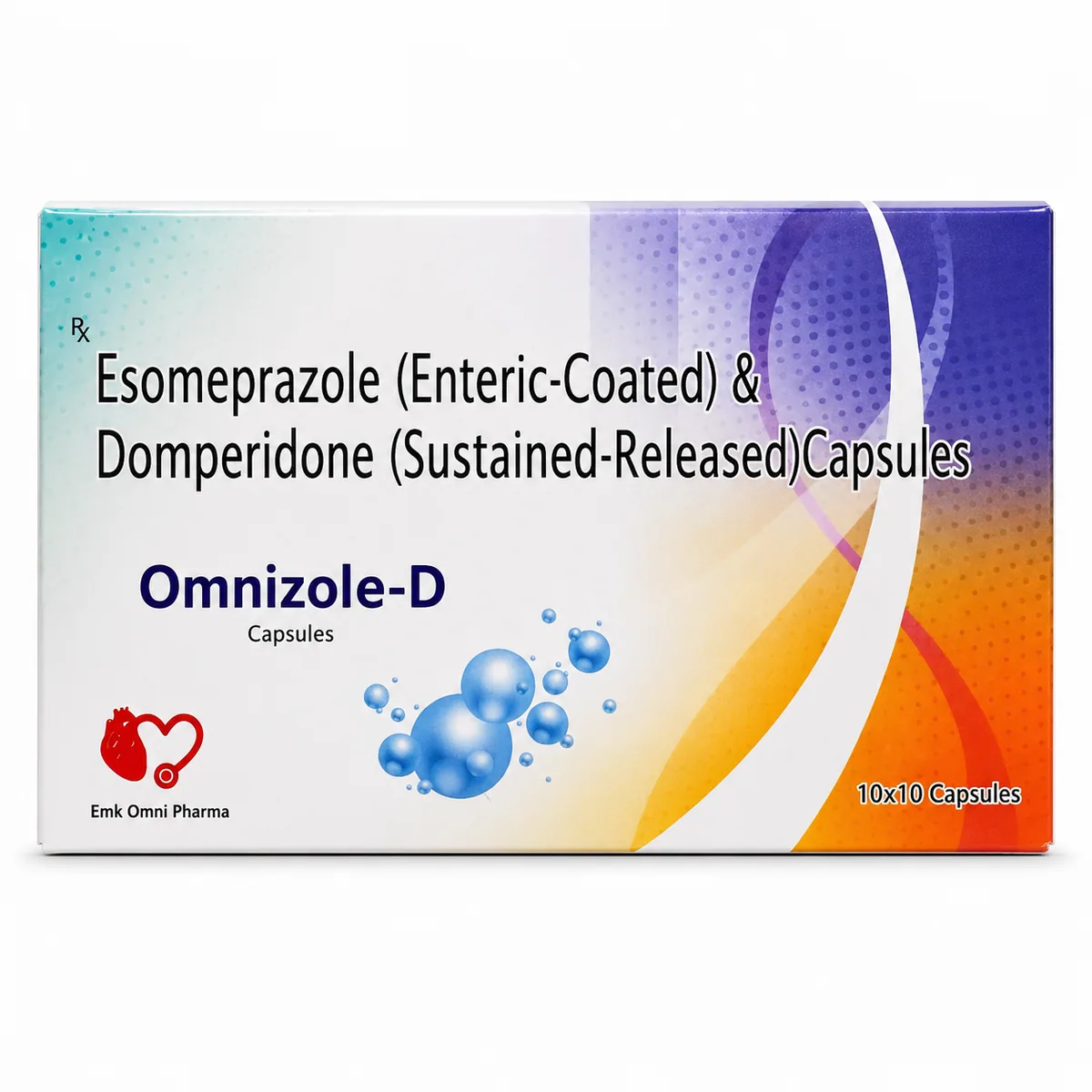
Omnizole-D is a prescription capsule combining Esomeprazole in an enteric-coated form with Domperidone in a sustained release form. The strengths are as printed on the pack label, so check the carton and the strip rather than relying on memory. Esomeprazole is the S-isomer of omeprazole and is used in reflux disease, in erosive oesophagitis and as part of ulcer treatment.
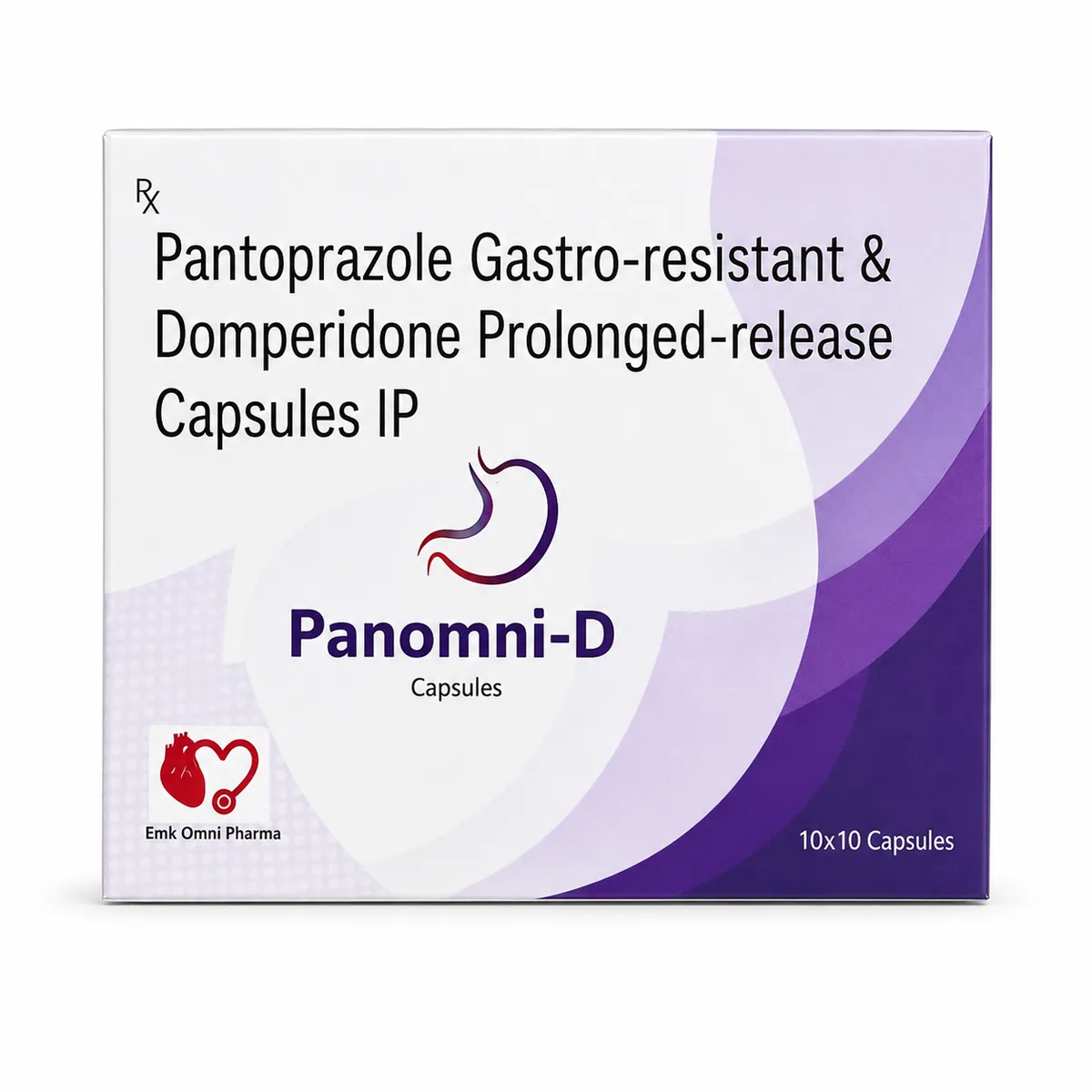
Panomni-D contains Pantoprazole 40 mg in a gastro-resistant form with Domperidone 30 mg in a prolonged release form, as Pantoprazole Gastro-resistant and Domperidone Prolonged-release Capsules IP. Pantoprazole is often preferred when a patient is on several other medicines, because it interacts less with the liver enzyme pathways that some other proton pump inhibitors use more heavily.
That difference is one of the main practical reasons a doctor picks one of these over the other.
What a Doctor Weighs Before Prescribing
The choice depends on the symptom pattern and on everything else going on.
- Whether the main complaint is burning and reflux, or fullness, bloating and nausea, which decides how much the prokinetic matters.
- Other medicines in use. Clopidogrel is the classic example, since some proton pump inhibitors can reduce its activation.
- Heart rhythm history and age, because of the domperidone component.
- Liver function, which affects how these molecules are handled.
- How long treatment has already run. Extended proton pump inhibitor use is linked to lower magnesium and vitamin B12, and to bone and gut infection concerns, so doctors review rather than repeat indefinitely.
Alarm features change the plan altogether. Difficulty swallowing, vomiting blood, black stools, unintended weight loss, persistent vomiting or anaemia call for investigation, often endoscopy, rather than a longer course of acid suppression.
Everyday Habits, Storage and When to Return
Medicine works better when the triggers are addressed. Eating the last meal two to three hours before lying down, keeping portions moderate, and raising the head end of the bed all reduce night time reflux. Very spicy or deep fried food, strong tea and coffee on an empty stomach, aerated drinks, alcohol and tobacco commonly aggravate symptoms. Losing excess weight around the abdomen helps because it reduces pressure pushing stomach contents upward.
Anti-inflammatory painkillers are a frequent hidden cause of gastric trouble. Anyone taking them regularly should say so, because the plan may need to change rather than simply adding acid suppression on top.
Store capsules below 25 degrees C in a dry place, in the original blister until use, and be careful during the monsoon when humidity can affect enteric coatings. Keep them out of the kitchen and bathroom and away from children. Return to the doctor if symptoms persist beyond the course prescribed, come back quickly after stopping, or change in character. This article is for general information only and is not a substitute for advice from a registered medical practitioner.
Frequently asked questions
- Should these capsules be taken before or after food?
- Proton pump inhibitor combinations are generally taken before a meal, because the acid pumps must be active for the medicine to work on them. Follow the timing the doctor gives.
- How is Panomni-D different from Omnizole-D?
- Panomni-D contains pantoprazole with domperidone, while Omnizole-D contains esomeprazole with domperidone. The molecules differ in how the liver handles them, which matters when other medicines are involved.
- Can these capsules be opened or crushed?
- No, unless the doctor specifically advises it. The enteric or gastro-resistant coating is there to protect the molecule from stomach acid, and breaking it defeats the design.
- Why has my acidity not settled on the first day?
- Proton pump inhibitors build their effect over several days. Immediate relief usually comes from antacids, and the doctor will advise whether anything is needed alongside.
- Can acidity medicine be taken long term on its own?
- Extended use should stay under medical review. Long courses have been linked to low magnesium and vitamin B12 and other concerns, so the doctor decides how long treatment continues.
- Which symptoms mean I should see a doctor urgently?
- Difficulty swallowing, vomiting blood, black stools, unintended weight loss or persistent vomiting need prompt assessment rather than a longer course of acidity medicine.
- Do these capsules interact with heart medicines?
- They can. Some proton pump inhibitors affect clopidogrel, and domperidone needs care with medicines that influence heart rhythm. Give the doctor a full list of what you take.
- Are Omnizole-D and Panomni-D available without a prescription?
- No. Both are prescription medicines and a licensed chemist may dispense them only against a valid prescription from a registered medical practitioner.
Related guides
Medical Disclaimer
This product information is intended for general awareness only and should not be considered medical advice. Please consult a registered medical practitioner before using any prescription medicine.