Angina Guide for India: Chest Pain, Tests and Treatment
Angi-NTG 2.6: Nitroglycerin Controlled Release Tablets 2.6 mg
Angina is chest discomfort that appears when the heart muscle runs short of blood. This guide covers the warning signs, Indian risk factors, the tests doctors order and where medicines fit in.
What Is Angina and What Causes It?
Angina is chest discomfort that appears when the heart muscle does not get as much blood as it needs. It is usually caused by fatty plaque narrowing the coronary arteries, so a supply that is adequate at rest falls short during effort.
Doctors separate two patterns. Stable angina is predictable: it comes at a similar level of exertion, lasts a few minutes and settles with rest. Unstable angina breaks that pattern, appearing at rest, lasting longer or coming on with less effort than before. It is an emergency, treated as a possible heart attack.
Angina Symptoms: What the Chest Discomfort Feels Like
People rarely describe angina as sharp pain. The usual words are heaviness, tightness, pressure or burning behind the breastbone, and many place a fist over the chest rather than point to one spot.
The feeling can spread to the left arm, both arms, the jaw, the neck, the upper back or the pit of the stomach. Cold weather, a heavy meal, stairs, carrying luggage or sudden anger can bring it on. Women, older adults and people with long-standing diabetes may instead notice breathlessness, cold sweating, fatigue or a heaviness mistaken for indigestion.
Risk Factors for Angina Commonly Seen in India
- Tobacco in any form, including beedi, cigarette, gutka and khaini.
- Diabetes, widespread in India and able to blunt the warning pain.
- High LDL cholesterol with low HDL and raised triglycerides.
- Uncontrolled blood pressure over many years.
- Central obesity and low daily activity.
- Family history of early heart disease, a frequent finding in Indian families.
- Diets heavy in fried food, vanaspati, refined flour and sweets.
Coronary disease often appears at younger ages in India, so exertional chest discomfort at forty should never be dismissed as acidity.
How Doctors Diagnose Angina
Your description matters most, so explain what brings the discomfort on, how long it lasts and what relieves it. Examination and a resting ECG follow, though a normal resting ECG does not rule angina out.
Common next steps are a treadmill stress test, an echocardiogram, and blood tests such as a lipid profile, HbA1c, haemoglobin, thyroid and kidney function. If more detail is needed, a stress echocardiogram, a nuclear perfusion scan, a CT coronary angiogram or a coronary angiography may be advised.
Lifestyle Measures That Reduce Angina Attacks
- Stop tobacco completely. This is the single change with the fastest benefit.
- Follow the activity plan your doctor sets, usually walking built up gradually rather than sudden heavy exertion.
- Eat smaller meals, since a very heavy meal can trigger discomfort.
- Cut fried food, vanaspati, bakery items and sweets, and add vegetables, dals, millets and fruit.
- Keep blood pressure, sugar and cholesterol at the targets your doctor sets.
- Warm up before exertion in cold weather and avoid heavy work straight after a meal.
Medicines Doctors Use to Treat and Prevent Angina
Treatment has two aims: fewer attacks now, and lower risk of a heart attack later.
- Nitrates widen vessels so the heart works against a lighter load. Angi-NTG 2.6 from EMK Omni Pharma contains Nitroglycerin 2.6 mg as a controlled release tablet, used as regular prevention rather than for sudden discomfort, which needs a separate short-acting preparation.
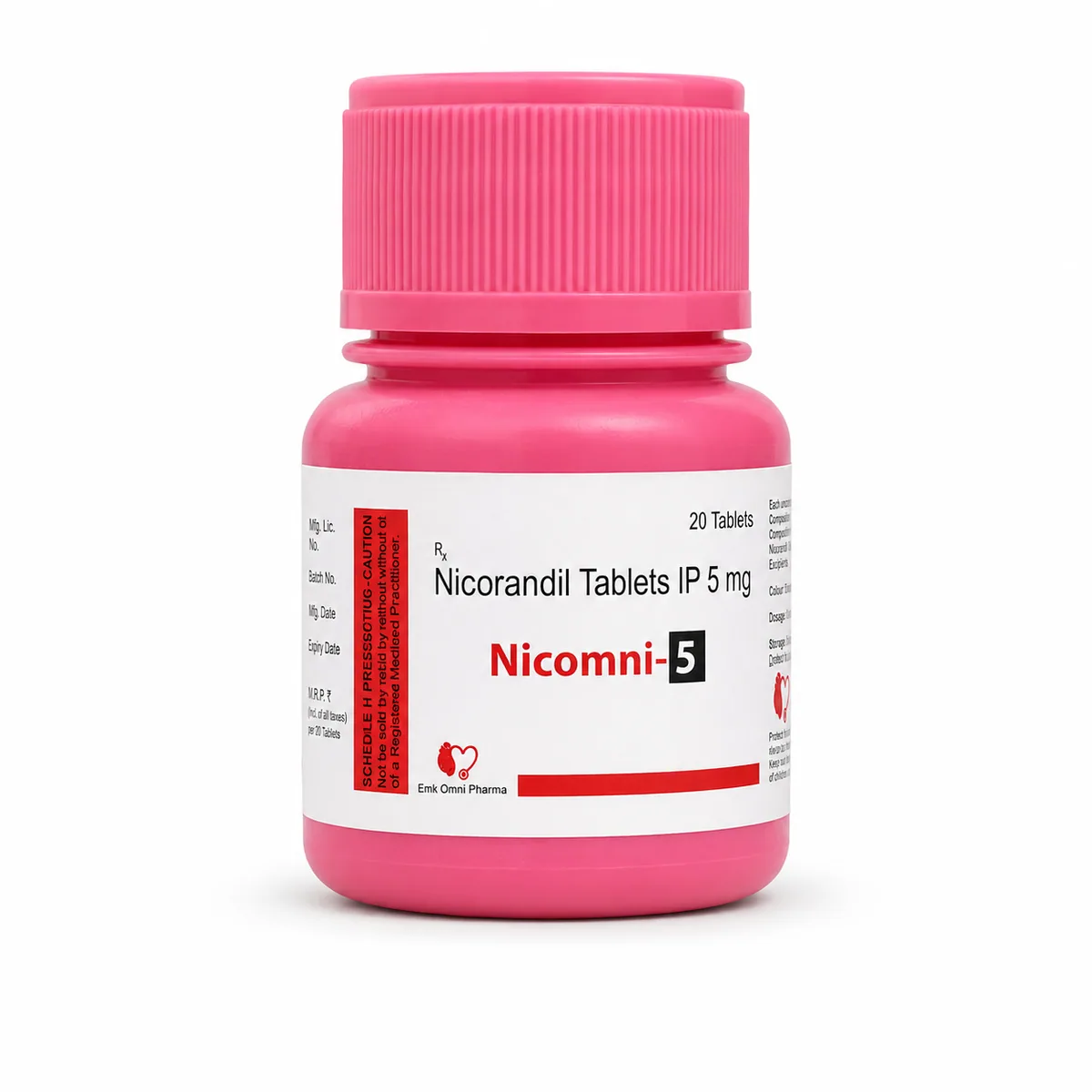
- Potassium channel openers relax vessels by another route when other groups are not enough. Nicomni-5 contains Nicorandil Tablets IP 5 mg in a bottle of twenty.
- Beta blockers slow the heart so the muscle needs less oxygen. Metomni-XL 50 contains Metoprolol Succinate in an extended release tablet.
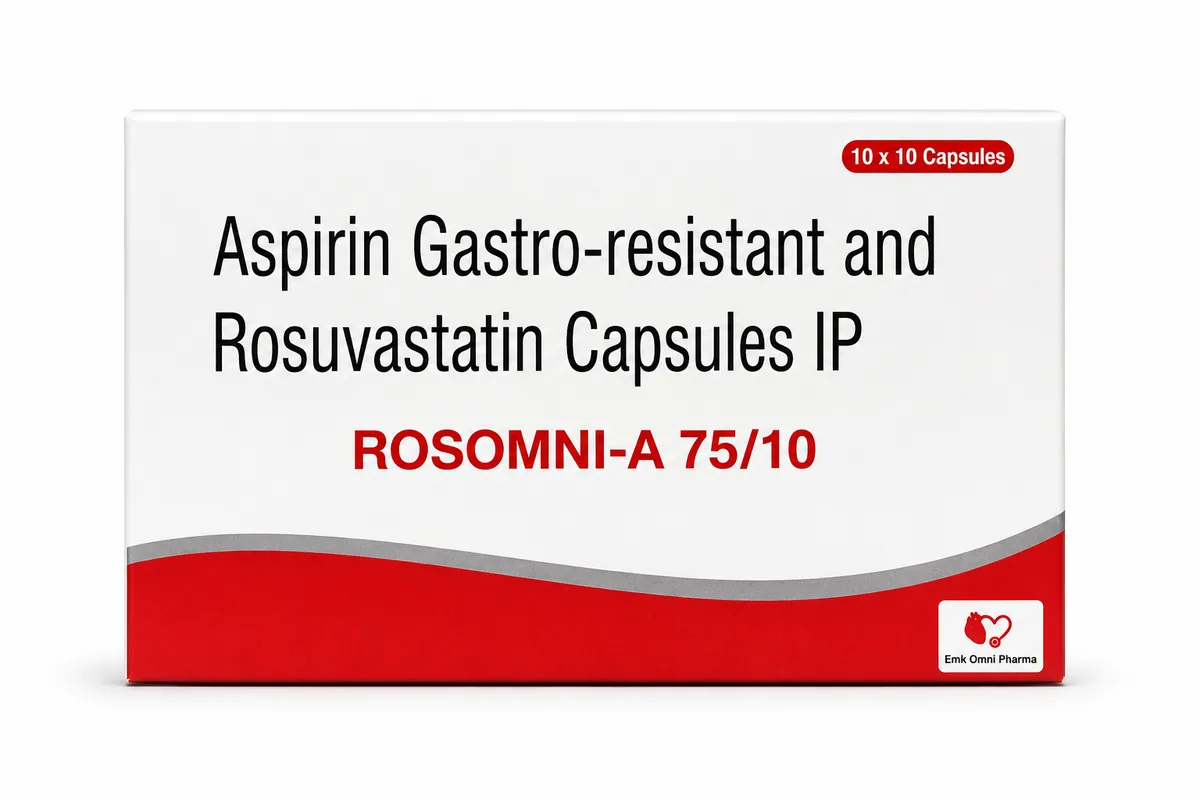
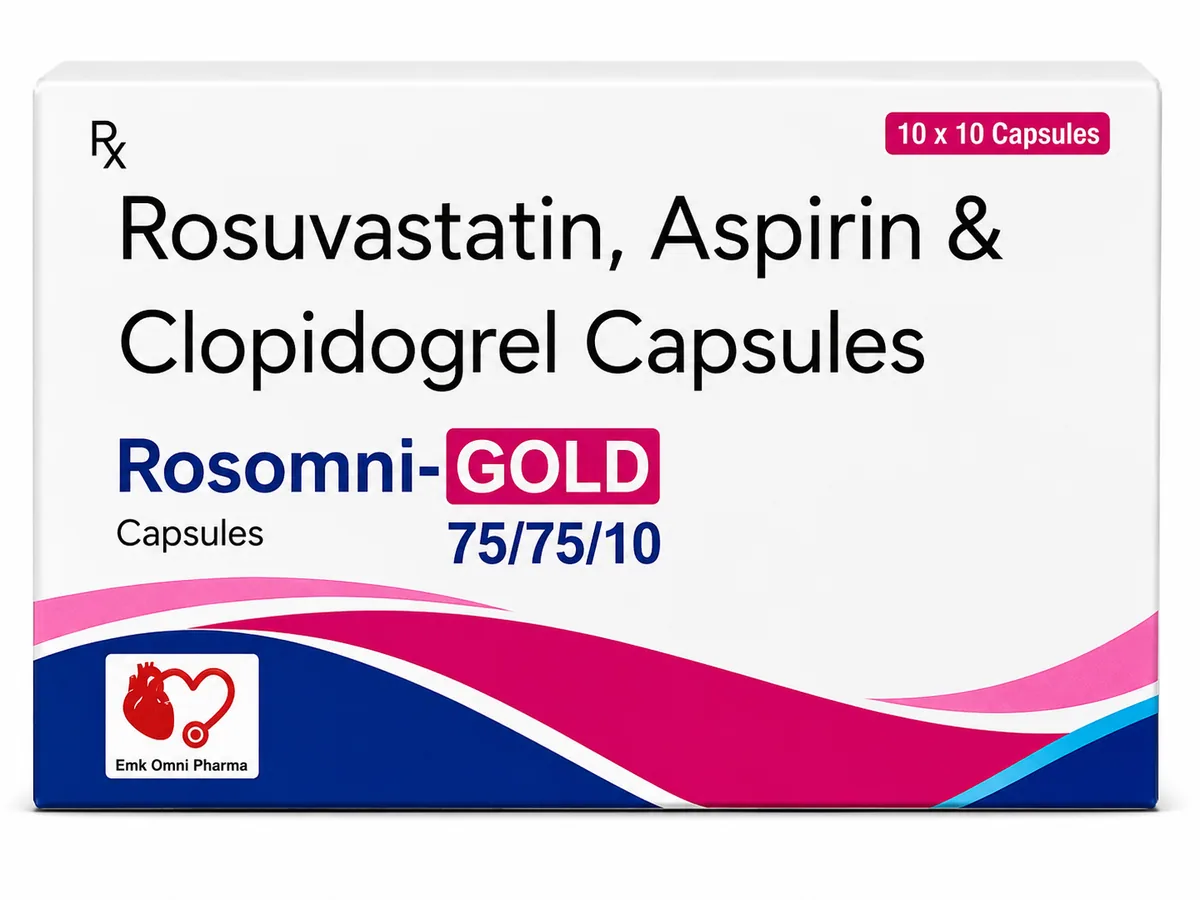
- Antiplatelets with a statin act on the plaque itself. Rosomni-Gold 75/75/10 combines Aspirin 75 mg, Clopidogrel 75 mg and Rosuvastatin 10 mg in one capsule.
All are Schedule H medicines dispensed only against a prescription.
When Angina Becomes an Emergency and Why Follow-Up Matters
Treat chest discomfort as an emergency and reach the nearest hospital with cardiac facilities if it comes at rest, lasts more than about ten minutes, feels worse than your usual pattern, or comes with cold sweating, vomiting, severe breathlessness or fainting. Do not drive yourself.
Follow-up matters because coronary disease keeps changing. Reviews let your doctor see whether attacks are becoming more frequent, check cholesterol and sugar control, watch blood counts where antiplatelets are used, and adjust medicines before a crisis. Note when discomfort appears and what you were doing, and take that note to every visit. This article is for general information only and is not a substitute for advice from a registered medical practitioner.
Frequently asked questions
- Is angina the same thing as a heart attack?
- No. Angina warns that the heart muscle is short of blood and usually settles with rest. A heart attack means the supply stays blocked long enough to damage muscle.
- How can I tell angina apart from gas or acidity?
- Often you cannot, which is why it needs assessment. Discomfort brought on by exertion and relieved by rest leans towards angina, especially with diabetes or smoking.
- Can angina be treated without a stent or surgery?
- Many people are managed with medicines and lifestyle change alone. Whether an angiogram, a stent or bypass surgery is needed is a decision for a cardiologist.
- Why do nitrates cause headache?
- Nitrates widen blood vessels in the head as well as the heart, which can throb in the first days. It often eases. Tell your doctor if it is severe.
- Is it safe to exercise if I have angina?
- Regular activity is usually part of treatment, but the type and intensity must be set by your doctor. Sudden heavy exertion without guidance carries the risk.
- Should I continue medicines if I have had no attack for months?
- Yes, unless your doctor says otherwise. A quiet spell usually reflects the medicines working, and stopping on your own can let symptoms and risk return.
- Can stress alone cause angina?
- Strong emotion can trigger an attack when arteries are already narrowed, and long-term stress worsens blood pressure and sleep. It is a trigger rather than the sole cause.
Need Angi-NTG 2.6 for your pharmacy, hospital or clinic?
EMK Omni Pharma supplies through authorised channels across Karnataka. Send an enquiry and our team will respond during business hours.
Related guides
Medical Disclaimer
This product information is intended for general awareness only and should not be considered medical advice. Please consult a registered medical practitioner before using any prescription medicine.