Angi-NTG 2.6 vs Nicomni-5: How Doctors Choose
Angi-NTG 2.6: Nitroglycerin Controlled Release Tablets 2.6 mg
Angi-NTG 2.6 and Nicomni-5 both target angina but reach the goal differently. Here is how nitroglycerin and nicorandil compare and why the choice belongs to your doctor.
Angi-NTG 2.6 and Nicomni-5 Side by Side
Both products belong to the EMK Omni Pharma cardiac care range and both are prescription only medicines dispensed against the prescription of a registered medical practitioner.
- Angi-NTG 2.6: Nitroglycerin Controlled Release Tablets 2.6 mg. Supplied as a bottle of 30 tablets. Swallowed whole.
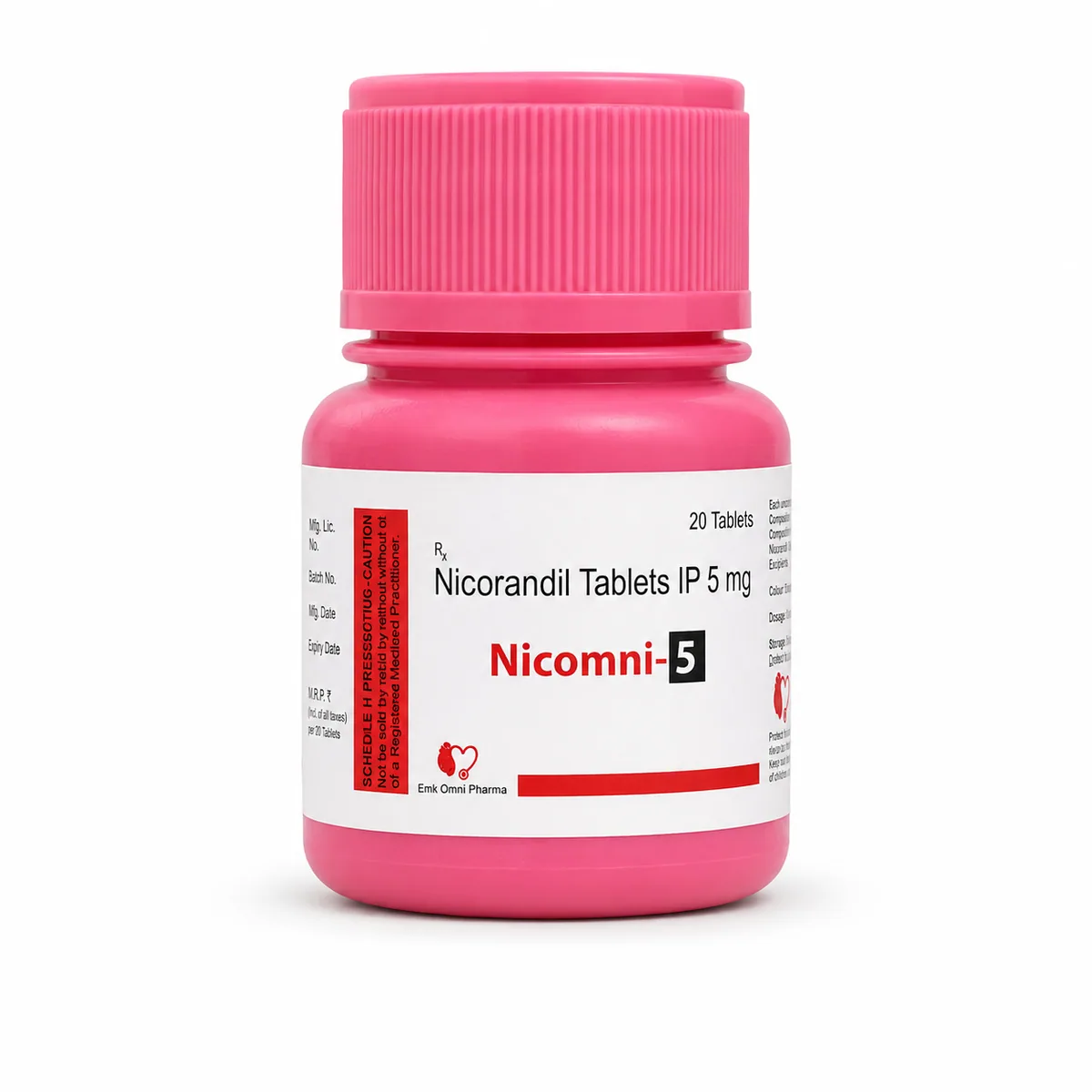
- Nicomni-5: Nicorandil Tablets IP 5 mg.
They sit in the same broad group of anti anginal medicines, meaning medicines used to reduce how often angina episodes occur. What separates them is the biological route each takes to that result, and that difference is exactly what a cardiologist weighs up.
Neither product is a substitute for the fast acting medicine your doctor gives you for an episode of chest pain in progress.
How Nitroglycerin and Nicorandil Work Differently
Nitroglycerin is an organic nitrate. It releases nitric oxide, which relaxes vascular smooth muscle through the cyclic GMP pathway. The effect is strongest on veins, so the main result is less blood returning to the heart, a smaller workload and lower oxygen demand. Coronary arteries also widen.
Nicorandil has a dual character. One part of its action is nitrate like, working through the same nitric oxide route. The other part opens potassium channels in vascular smooth muscle, which relaxes arterial vessels through a separate mechanism and includes an effect on the small resistance vessels of the coronary circulation.
In practice that means the two medicines shift the supply and demand balance from slightly different angles. Doctors sometimes prefer one when a patient has not responded well enough to the other, or when the side effect profile of one suits a particular person better.
What a Doctor Considers Before Choosing
The decision is individual, and several threads are pulled together.
- Symptom pattern. How often angina appears, at what level of effort and at what time of day.
- Blood pressure and heart rate. Both medicines can lower blood pressure, so the starting point matters.
- Other medicines already prescribed, including beta blockers, calcium channel blockers, blood pressure medicines and anything affecting the same pathways.
- Tolerance of side effects. Nitrate headache is common with nitroglycerin, while nicorandil carries its own recognised profile including ulceration of the mouth, gastrointestinal tract or perianal region that must be reported promptly.
- Other health conditions, such as kidney or liver disease, glaucoma or anaemia.
- How well the dosing pattern fits the patient's day, since consistency matters more than convenience.
Sometimes a doctor prescribes medicines from different classes together. That too is a clinical decision based on the whole picture.
Why You Must Not Switch Products or Strengths Yourself
It can look as though one anti anginal tablet is much like another. It is not.
Strengths in milligrams cannot be compared across molecules. Nitroglycerin 2.6 mg and nicorandil 5 mg are not two versions of the same thing, and the numbers say nothing about relative effect. Formulations differ too, since a controlled release tablet behaves quite differently from a conventional one even at the same nominal amount.
Switching on your own carries real risks. Angina may go uncontrolled, blood pressure may drop too far, or a combination may be created that your doctor would not have chosen. Stopping a nitrate abruptly can also make angina worse.
If a chemist offers a substitution because a product is out of stock, call your doctor's clinic before accepting it. If cost or availability is the reason you are thinking about a change, say so at your appointment. Doctors would far rather solve that openly than discover a silent switch later.
This article is for general information only and is not a substitute for advice from a registered medical practitioner.
Frequently asked questions
- Which is better, Angi-NTG 2.6 or Nicomni-5?
- Neither is better in general. They act through different mechanisms, and the right choice depends on your symptoms, blood pressure, other medicines and how you tolerate each one.
- Can both medicines be taken together?
- Only if a doctor prescribes that combination after assessing your blood pressure and full medicine list. Never combine anti anginal medicines on your own.
- Is nicorandil 5 mg stronger than nitroglycerin 2.6 mg?
- Milligram numbers cannot be compared across different molecules. The figures refer to different substances and say nothing about relative effect.
- What if my usual product is out of stock?
- Contact your doctor's clinic before accepting any substitute. A pharmacist can advise, but the decision to change a cardiac medicine belongs to the prescriber.
- Does nicorandil also require a prescription?
- Yes. Both Angi-NTG 2.6 and Nicomni-5 are prescription medicines and cannot be sold by retail without a prescription from a registered medical practitioner.
- Can I change my own dose if angina increases?
- No. Increasing angina is a signal to contact your doctor promptly, since it may indicate that your condition has changed and needs assessment.
Need Angi-NTG 2.6 for your pharmacy, hospital or clinic?
EMK Omni Pharma supplies through authorised channels across Karnataka. Send an enquiry and our team will respond during business hours.
Related guides
Medical Disclaimer
This product information is intended for general awareness only and should not be considered medical advice. Please consult a registered medical practitioner before using any prescription medicine.