Acidity and GERD in India: Causes, Tests and Treatment
Panomni-D: Pantoprazole Gastro-resistant & Domperidone Prolonged-release Capsules IP
Acidity and reflux affect a large number of Indian households. This guide covers the symptoms, the everyday triggers, the tests doctors order and the classes of prescription medicine used to control GERD.
What Are Acidity, Reflux and GERD?
Acidity is the burning discomfort felt when stomach acid irritates the food pipe or the stomach lining. A ring of muscle at the lower end of the food pipe normally keeps acid where it belongs. When that muscle relaxes at the wrong moment, acid travels upward, and this is called reflux.
Occasional reflux after a heavy meal is common. When it happens repeatedly, disturbs sleep or inflames the lining of the food pipe, doctors call it gastro-oesophageal reflux disease, or GERD. It is as much a lifestyle problem as an acid problem, so treatment addresses both.
Symptoms of Acidity and Acid Reflux
- Burning behind the breastbone, often after meals or on lying down
- Sour or bitter fluid rising into the throat or mouth
- Bloating, frequent belching, early fullness and nausea
- Pain or heaviness in the upper abdomen
- Dry cough, throat clearing, hoarseness or a lump-like feeling in the throat
- Sleep broken by symptoms after a late dinner
Chest burning can be hard to tell apart from heart pain. If the discomfort comes with sweating, breathlessness, or pain spreading to the jaw or left arm, treat it as a heart emergency until a doctor says otherwise.
Why Acidity Is So Common in India
Everyday habits explain much of it. Late dinners followed soon by sleep, deep-fried snacks, generous chilli and masala, tea or coffee on an empty stomach, and long gaps between meals during shift work all encourage reflux. Tobacco, paan, gutka and alcohol weaken the valve at the lower end of the food pipe.
Weight around the abdomen, tight waistbands and pregnancy push stomach contents upward, and frequent NSAID painkiller use irritates the stomach lining. Helicobacter pylori, a bacterium widespread in India, can cause ulcers and long-standing indigestion.
How Doctors Diagnose the Cause
Many cases are recognised from the history alone, and a doctor may start treatment and watch the response. Testing matters when symptoms persist, return quickly after medicine is stopped, or come with warning signs.
An upper gastrointestinal endoscopy lets the doctor see inflammation, ulcers or narrowing and take a sample if needed. Helicobacter pylori is checked with a urea breath test, a stool antigen test, or a biopsy. An ECG is often done first when chest pain could be cardiac.
Lifestyle Measures That Reduce Reflux
- Eat smaller meals and finish dinner two to three hours before lying down
- Raise the head end of the bed by about fifteen centimetres instead of stacking pillows
- Cut back on fried food, very spicy gravies, fizzy drinks, and strong tea or coffee if they trigger you
- Reduce weight around the waist and loosen tight belts
- Stop smoking, paan and gutka, and limit alcohol
- Do not buy painkillers loosely for daily aches without asking a doctor
Classes of Medicine Doctors Use for Acidity and GERD
- Antacids and alginates neutralise acid or form a raft over the stomach contents, acting quickly but briefly.
- H2 blockers such as famotidine reduce acid production and are sometimes used at night.
- Proton pump inhibitors, including pantoprazole, esomeprazole and rabeprazole, block the acid pump in the stomach lining and are the mainstay for GERD and ulcers. They are usually taken before a meal, as the doctor directs.
- Prokinetics such as domperidone help the stomach empty and ease nausea and bloating.
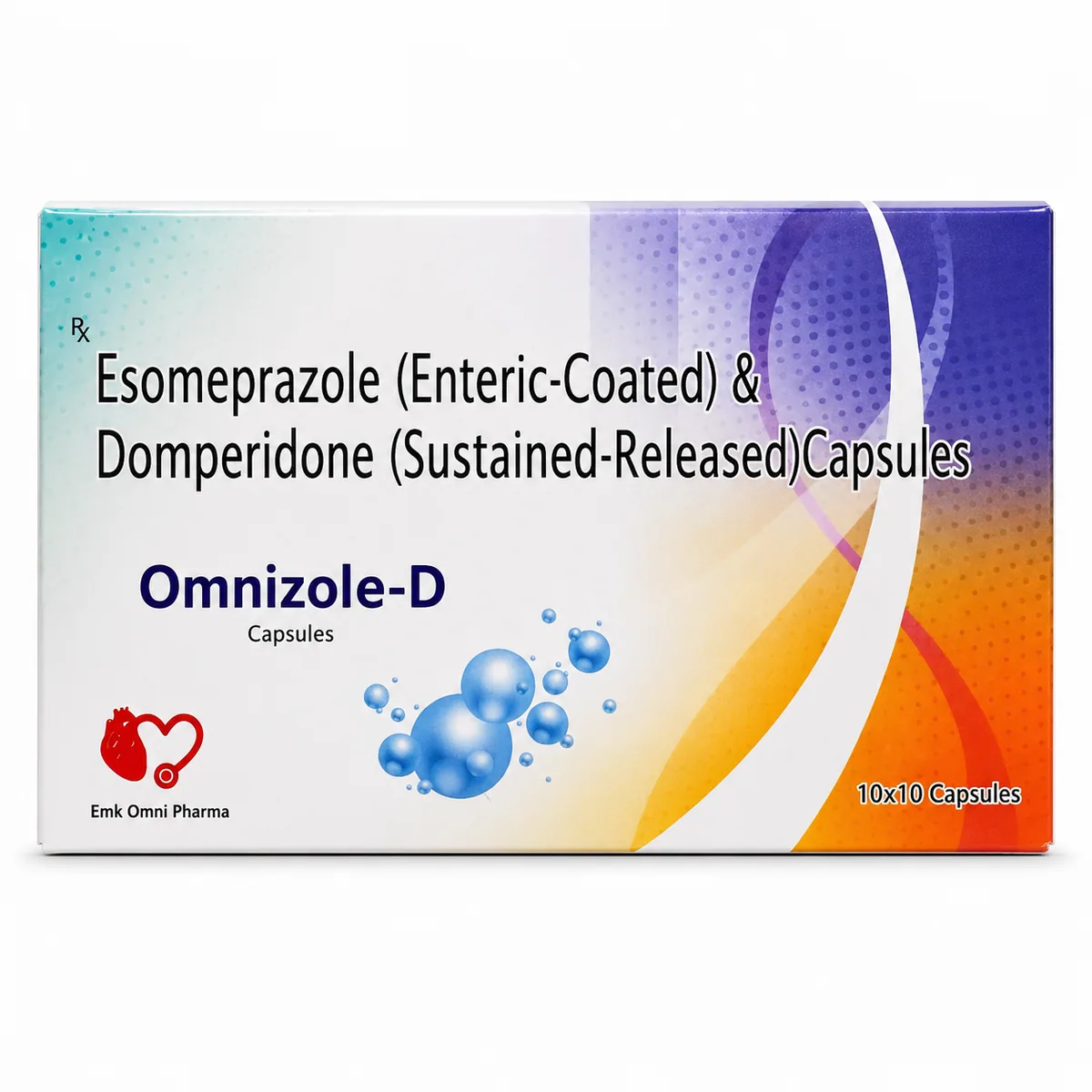
- Combination capsules carry both actions in one dose. Panomni-D from EMK Omni Pharma contains pantoprazole 40 mg in gastro-resistant form with domperidone 30 mg in prolonged-release form, while Omnizole-D combines enteric-coated esomeprazole with sustained-release domperidone. Such capsules are swallowed whole and never opened or crushed.
- Antibiotic courses are added when Helicobacter pylori is found.
Panomni-D and Omnizole-D are prescription medicines, and the doctor decides the strength, timing and duration.
Warning Signs and Why Follow-Up Matters
Seek emergency care for chest pain with sweating or breathlessness, vomiting of blood or coffee-coloured material, or black tarry stools. See a doctor promptly for difficulty swallowing, food sticking, repeated vomiting, unexplained weight loss, or anaemia found on a blood test. Symptoms starting for the first time after the age of forty-five deserve a proper assessment, not a repeat strip from the chemist.
Follow-up matters because acid-suppressing medicines are meant to be reviewed. Doctors often reassess after four to eight weeks, step the dose down, and confirm that Helicobacter pylori has cleared. Prolonged acid suppression can affect vitamin B12, magnesium and bone health. This article is for general information only and is not a substitute for advice from a registered medical practitioner.
Frequently asked questions
- Is acidity the same as GERD?
- Acidity describes the burning symptom. GERD is the diagnosis when reflux is frequent enough to trouble daily life or inflame the food pipe.
- Can I take Panomni-D whenever I feel heartburn?
- No. Panomni-D is a prescription capsule of pantoprazole and domperidone, taken on a schedule set by your doctor, not on demand.
- Why is a proton pump inhibitor advised before food?
- These medicines work best on acid pumps that become active as a meal approaches. Your doctor will say how long before the meal to take a dose.
- Does milk or curd help acidity?
- Cold milk or curd may soothe burning briefly, but the fat content can worsen reflux later. It is not a substitute for proper treatment.
- Can stress alone cause acidity?
- Stress does not create stomach acid by itself, but it changes eating patterns and sleep, so symptoms often feel stronger during difficult periods.
- Should everyone with acidity get an endoscopy?
- No. It is advised mainly for warning signs, symptoms that keep returning, or complaints starting later in life.
- Is it safe to take acid medicines for years?
- Long courses are sometimes necessary but should be reviewed regularly, since prolonged acid suppression can affect vitamin B12 and bone health.
- Can painkillers be the reason for my acidity?
- Often yes. NSAID painkillers taken frequently irritate the stomach lining. Tell your doctor about every painkiller you use.
Need Panomni-D for your pharmacy, hospital or clinic?
EMK Omni Pharma supplies through authorised channels across Karnataka. Send an enquiry and our team will respond during business hours.
Related guides
Medical Disclaimer
This product information is intended for general awareness only and should not be considered medical advice. Please consult a registered medical practitioner before using any prescription medicine.