Panomni-D vs Omnizole-D: Choosing the Right Capsule
Panomni-D: Pantoprazole Gastro-resistant & Domperidone Prolonged-release Capsules IP
Panomni-D and Omnizole-D are both acid plus motility combinations from EMK Omni Pharma, but they use different proton pump inhibitors. Here is how a doctor thinks about the choice.
How Panomni-D and Omnizole-D differ
The difference is the proton pump inhibitor and the way each release system is described on the pack.
Panomni-D contains Pantoprazole Sodium IP equivalent to Pantoprazole 40 mg in gastro-resistant form together with Domperidone IP 30 mg in prolonged-release form. Its full generic description is Pantoprazole Gastro-resistant and Domperidone Prolonged-release Capsules IP, and it is supplied as 10 x 10 capsules.
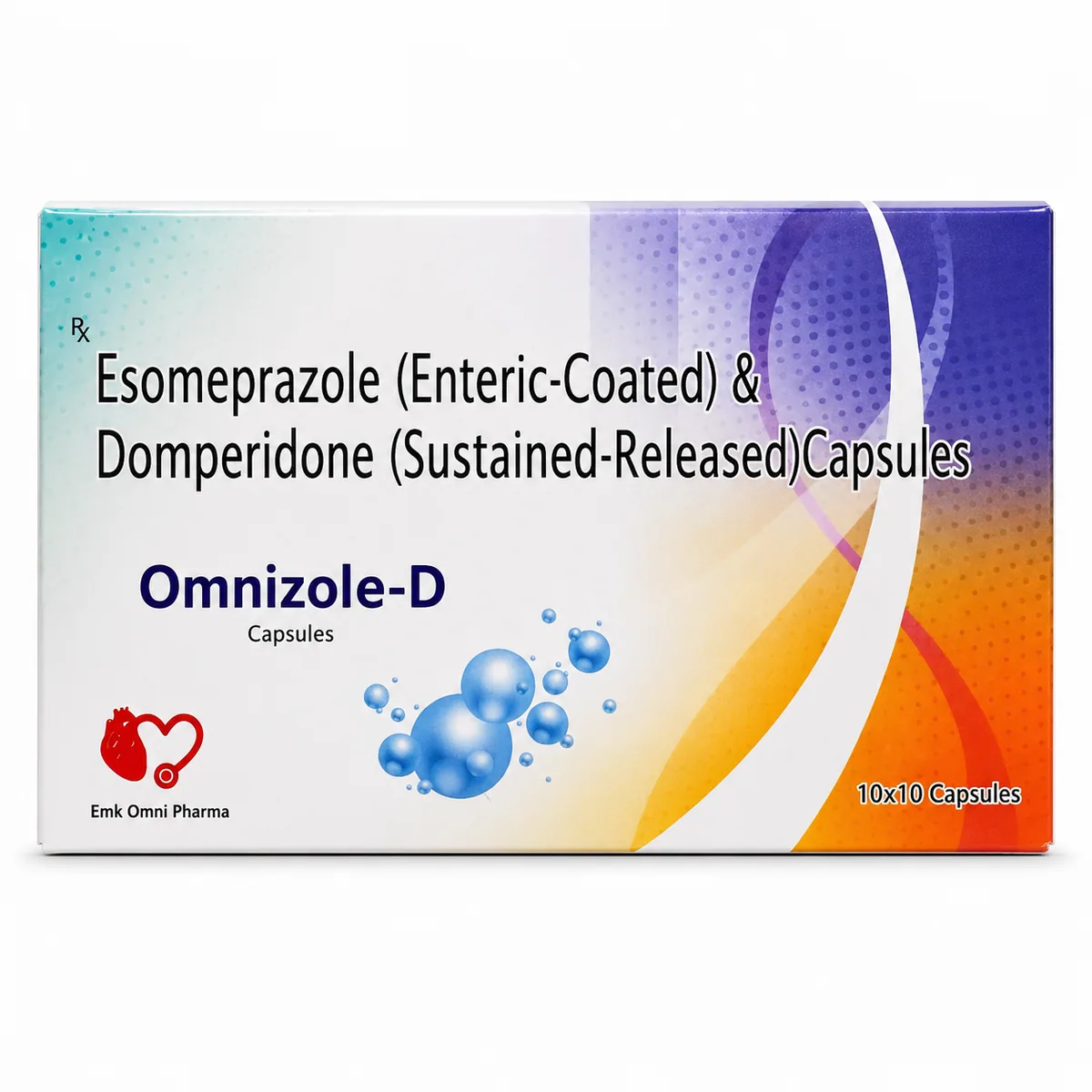
Omnizole-D is an Esomeprazole enteric-coated and Domperidone sustained-release capsule. For its strengths, read the pack label, since these are confirmed on the printed pack rather than assumed.
Esomeprazole is a single isomer refinement within the same drug family. Both molecules block the same pump. Where they part company is in how the liver handles them, which shapes the interaction profile, and in how each behaves in people with liver impairment. Pantoprazole is often described as having a comparatively straightforward interaction profile within the class, which can matter for a patient already taking several medicines.
What a doctor considers when choosing between them
The prescription is a judgement built from several pieces of information, and symptom severity is only one of them.
- Other medicines: blood thinners, antifungals, HIV medicines, methotrexate, certain antibiotics and antiarrhythmics all influence the choice
- Heart history: any rhythm problem, fainting or QT concern affects whether a domperidone combination is appropriate at all
- Liver and kidney function: impairment changes how both components are handled
- Age: older adults are usually kept on shorter, more closely reviewed courses
- Pregnancy or breastfeeding: these require a separate, individual decision
- Previous response: what has helped or caused trouble before carries weight
- Diagnosis: simple reflux, an ulcer, an infection of the stomach lining or a motility problem lead to different plans
- Practical fit: once daily dosing and a routine you can actually keep to
Sometimes the right answer is neither combination. If a patient has acid symptoms with no motility complaint, a single molecule product may be more appropriate, and adding domperidone without a reason is not good practice.
Why you should not switch between them on your own
Two products can look interchangeable on a shelf and still be different decisions for your body.
Switching without advice can undo a plan that was built around your other medicines. It can also mask what is really happening, because a change in symptoms after a self-made switch tells your doctor very little. If a heart rhythm concern or a liver issue was the reason a particular combination was chosen, changing it quietly removes that safeguard.
The same applies to stopping early, restarting an old strip months later, or accepting a substitute at the counter because your brand is out of stock. Ask the chemist to call your doctor, or take a photograph of the prescription and check before buying anything different.
If cost, availability or the size of the capsule is the real problem, say so at the consultation. Doctors can usually work with that, and an honest conversation gives a better result than a silent substitution.
This article is for general information only and is not a substitute for advice from a registered medical practitioner.
Questions worth asking at the clinic
Take a short list with you. It makes a five minute consultation far more useful.
- Why have you chosen this particular combination for me
- Do any of my other medicines interact with it
- How long should I take it and when should I come back
- What should improve, and by when
- Which symptoms mean I should return sooner
- Should any blood test or ECG be done
- Is there anything in my diet or routine that matters most in my case
- What should I do if this brand is not available at my chemist
Write down the answers. Bring the pack or a photograph of the strip to every visit, so the exact composition and batch are clear rather than remembered.
Frequently asked questions
- Is Panomni-D stronger than Omnizole-D?
- Stronger is the wrong comparison, since the two use different molecules from the same family. The suitable choice depends on your history and your other medicines, and only your doctor can decide.
- Can I take Panomni-D if Omnizole-D is out of stock?
- Not on your own. Ask the chemist to check with your doctor, since the original choice may have been made for a specific reason.
- What is the difference between gastro-resistant and enteric-coated?
- Both describe a coating that resists stomach acid and releases the medicine further along the gut. The terms are used on different pack labels for the same broad purpose.
- Do both products contain domperidone?
- Yes. Panomni-D contains prolonged-release domperidone and Omnizole-D contains sustained-release domperidone. Read each pack label for the printed strengths.
- Can I take both capsules together for faster relief?
- No. Taking two acid plus motility combinations together doubles up on both molecules and is unsafe. Take only what your doctor has prescribed.
- Why did my doctor change my brand at follow-up?
- Doctors adjust treatment based on response, new test results, other medicines or side effects. Ask directly at the visit so you understand the reason for the change.
Need Panomni-D for your pharmacy, hospital or clinic?
EMK Omni Pharma supplies through authorised channels across Karnataka. Send an enquiry and our team will respond during business hours.
Related guides
Medical Disclaimer
This product information is intended for general awareness only and should not be considered medical advice. Please consult a registered medical practitioner before using any prescription medicine.