Cardiac Care Medicines: EMK Omni Pharma Category Guide
Cardiac care covers several very different jobs, from preventing angina to clearing fluid in heart failure. This guide explains the drug classes involved and where each EMK Omni Pharma cardiac product fits.
What Do Cardiac Care Medicines Actually Treat?
Cardiac care is a wide label, and the medicines inside it do very different jobs. In Indian practice the term usually covers treatment for angina, protection after a heart attack or a stent, therapy for chronic heart failure, and control of the fluid overload that comes with a weak heart. These groups are not interchangeable. A tablet that prevents chest pain will do nothing for swollen ankles, and a diuretic will do nothing to stop a clot forming in a coronary artery.
EMK Omni Pharma markets a cardiac range that spans these jobs. The company does not manufacture the products itself. They are made at GMP certified contract manufacturing units and marketed from Mysuru, Karnataka. Every item is a Schedule H medicine, so a chemist can dispense it only against a valid prescription.
Medicines Prescribed to Prevent Angina
Angina is chest discomfort that appears when the heart muscle is not getting the oxygen it needs for the work being asked of it. Two products in the range are aimed at preventing those episodes rather than at treating a sudden attack.
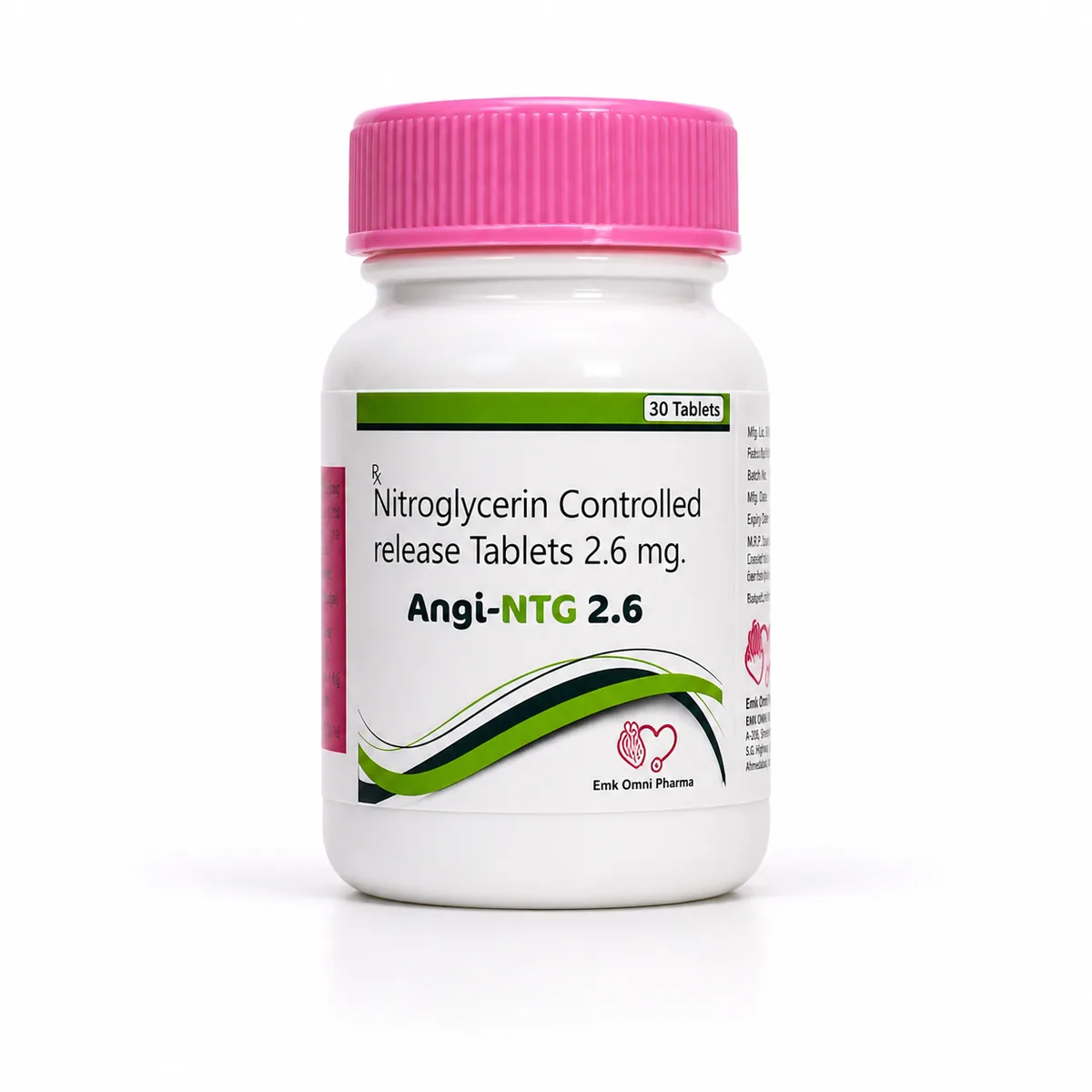
Angi-NTG 2.6 is a controlled release nitroglycerin tablet of 2.6 mg. Nitroglycerin is a nitrate. It is converted in the body to nitric oxide, which relaxes veins and reduces the volume of blood returning to the heart, so the heart has less work to do.
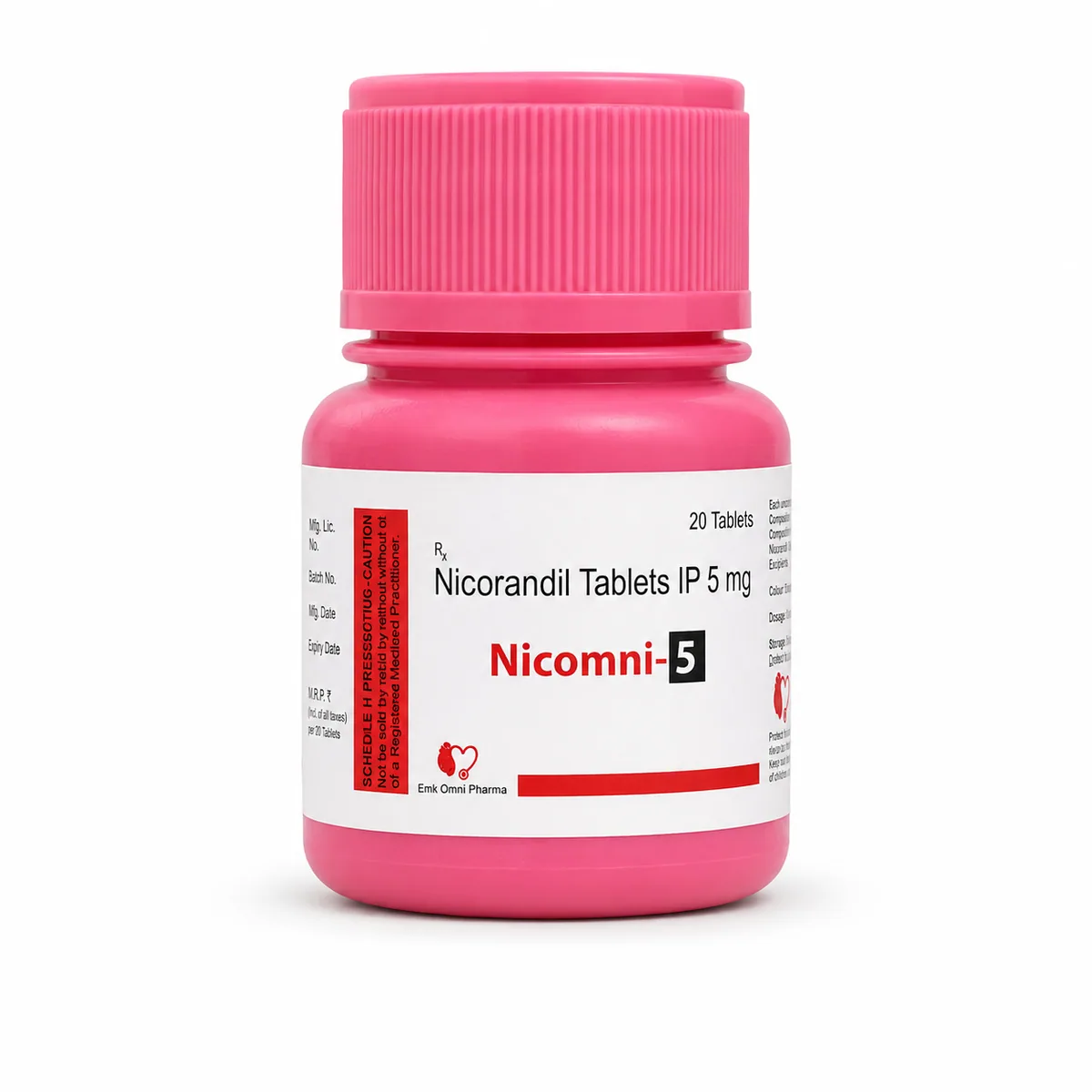
Nicomni-5 contains Nicorandil IP 5 mg and sits in a class of its own. It acts in two ways at once, with a nitrate-like effect on veins and a potassium channel opening effect that widens coronary arteries. Doctors often consider it when symptoms persist on standard anti-anginal treatment.
Antiplatelet and Statin Combinations After a Cardiac Event
After a heart attack, a stent or a bypass, the priority shifts to lowering the risk of a second event. That usually means keeping platelets from clumping together and keeping LDL cholesterol low. Fixed dose capsules put both jobs into one unit, which makes long term treatment easier to keep up with.
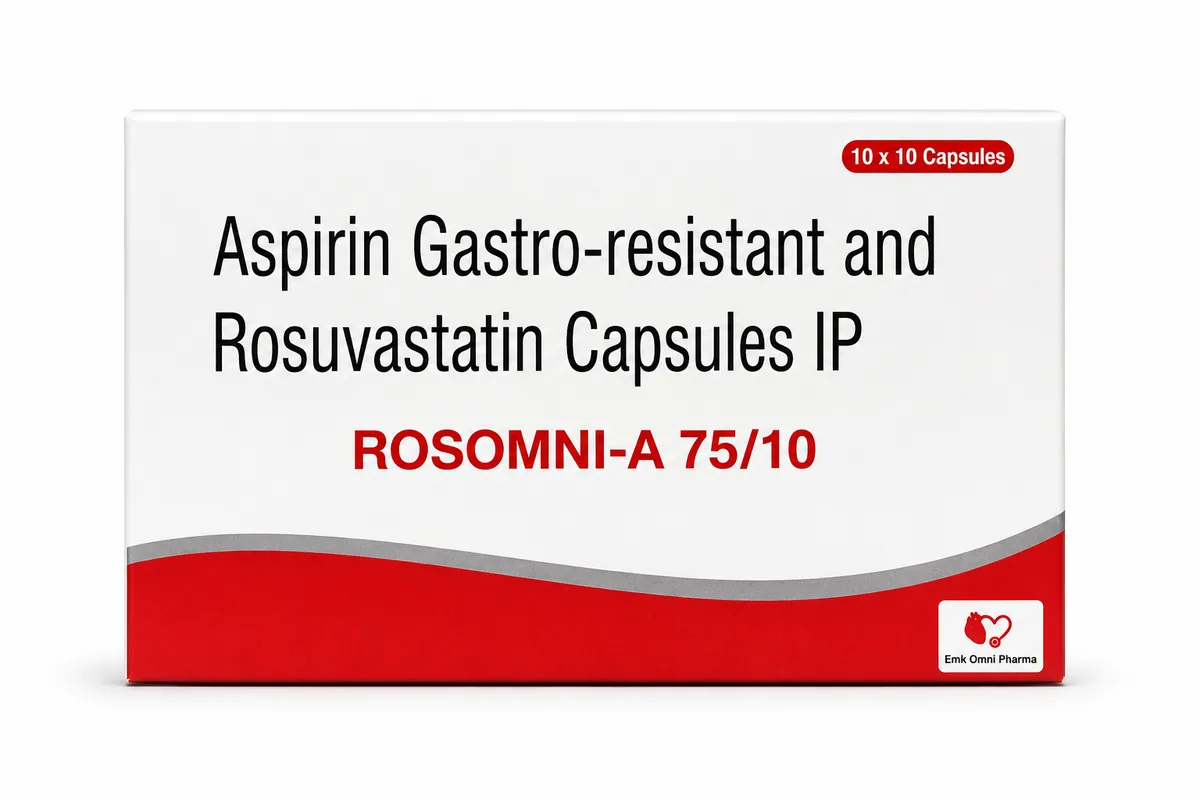
Rosomni-A 75/10 pairs gastro-resistant Aspirin 75 mg with Rosuvastatin 10 mg. Aspirin blocks the COX-1 enzyme in platelets, and the gastro-resistant pellets are intended to reduce direct contact with the stomach lining.
Rosomni-Gold 75/75/10 adds Clopidogrel 75 mg to Rosuvastatin 10 mg and Aspirin 75 mg. Clopidogrel blocks a different platelet receptor, and using two antiplatelets together is what cardiologists call dual antiplatelet therapy. Rosomni-Gold 75/75/20 carries the same three molecules with the statin stepped up to Rosuvastatin 20 mg, for patients who need a larger reduction in LDL.
Heart Failure Therapy and Diuretics for Fluid Overload
Chronic heart failure with reduced ejection fraction needs two separate things: long term treatment that helps the failing heart muscle, and relief from fluid collecting in the legs, abdomen and lungs.
Sacomni 50, with Sacubitril 24 mg and Valsartan 26 mg, and Sacomni 100, with Sacubitril 49 mg and Valsartan 51 mg, belong to the angiotensin receptor neprilysin inhibitor group. Valsartan blocks the angiotensin II receptor, while sacubitril blocks neprilysin, the enzyme that breaks down the body's own natriuretic peptides. Treatment is usually begun at the lower strength and reviewed before any step up.
For fluid the range has two diuretic combinations. Toromni Plus LS 10/25 contains Torsemide 10 mg with Spironolactone 25 mg, and Toromni Plus 10/50 pairs the same Torsemide 10 mg with Spironolactone 50 mg. Torsemide is a loop diuretic that removes salt and water, while spironolactone is an aldosterone antagonist that limits potassium loss and has its own place in heart failure care.
What a Doctor Weighs Before Choosing One
Prescribing here means matching the medicine both to the problem and to the person sitting in the consulting room.
- The diagnosis. Stable angina, a recent stent and heart failure pull towards different parts of the range.
- Kidney function and electrolytes, which matter a great deal for Sacomni and for both Toromni Plus strengths.
- Blood pressure, since ARNI therapy and diuretics both lower it. Someone who already runs low may be started on Sacomni 50 rather than Sacomni 100.
- Bleeding risk and any history of gastric ulcer, which count against triple therapy such as Rosomni-Gold.
- The LDL target, which decides whether the 10 mg or the 20 mg rosuvastatin version is appropriate.
- Everything else already being taken, including painkillers, potassium supplements and traditional preparations.
Patients should not move between strengths on their own or ask a chemist to substitute one product for another.
Monitoring, Storage and Daily Habits
Cardiac treatment is usually long term, so follow up is part of the treatment rather than an optional extra. Depending on the prescription a doctor may ask for a lipid profile, liver enzymes, serum creatinine, potassium and sodium, along with regular blood pressure and pulse checks. Report unexplained muscle pain on a statin, black stools or unusual bruising on antiplatelets, and dizziness or a sharp drop in urine output on diuretics.
Daily habits carry real weight alongside the tablets. Cutting added salt matters for anyone with heart failure, and Indian kitchens hide plenty of it in pickles, papad, packaged snacks and restaurant food. Stopping tobacco in every form, walking regularly within limits the doctor agrees, and keeping weight and sleep in check all support the same goal.
Store packs below 25 degrees C in a dry place, away from the bathroom shelf, and take extra care during the monsoon when humidity can spoil tablets. Follow any storage line printed on the individual pack. This article is for general information only and is not a substitute for advice from a registered medical practitioner.
Frequently asked questions
- Can cardiac care medicines be bought without a prescription?
- No. Each product in this category is a Schedule H medicine, so a licensed chemist may dispense it only against a valid prescription from a registered medical practitioner.
- What is the difference between Sacomni 50 and Sacomni 100?
- Both contain sacubitril with valsartan. Sacomni 50 has 24 mg and 26 mg, Sacomni 100 has 49 mg and 51 mg. Doctors usually start lower and review before stepping up.
- Why does Rosomni-Gold contain three molecules?
- It brings two antiplatelet drugs, aspirin and clopidogrel, together with rosuvastatin for cholesterol, so a patient after a stent takes fewer separate units each day.
- Is Angi-NTG 2.6 meant for sudden chest pain?
- It is a controlled release tablet intended for regular prevention. Sudden or severe chest pain needs emergency care, and the doctor advises separately on what to do at that moment.
- Do these medicines need regular blood tests?
- Often yes. Statins may call for a lipid profile and liver enzymes, while Sacomni and the Toromni Plus tablets call for kidney function and potassium. The doctor decides the schedule.
- Can ordinary painkillers be taken alongside heart medicines?
- Anti-inflammatory painkillers can raise blood pressure, affect the kidneys and add to bleeding risk. Ask the treating doctor or pharmacist before starting any painkiller, including over the counter ones.
- How do Toromni Plus LS 10/25 and Toromni Plus 10/50 differ?
- Both carry torsemide 10 mg. The spironolactone content differs, 25 mg in the LS version and 50 mg in the other. The choice depends on fluid load and potassium levels.
- How should these packs be stored during the monsoon?
- Keep them in the original blister or bottle in a dry place below 25 degrees C, away from the kitchen and bathroom. Do not decant tablets into loose containers.
Related guides
Medical Disclaimer
This product information is intended for general awareness only and should not be considered medical advice. Please consult a registered medical practitioner before using any prescription medicine.