Diabetes Medicines: EMK Omni Pharma Category Guide
Type 2 diabetes is treated with several classes of tablet, each lowering blood sugar by a different route. This guide explains those routes and where each EMK Omni Pharma diabetes product fits.
What Diabetes Medicines Are Trying to Achieve
In type 2 diabetes the body still makes insulin but responds to it poorly, and over time the pancreas struggles to keep up. Treatment aims to bring blood glucose close to a target the doctor sets, protect the kidneys, eyes, nerves and heart, and avoid dropping sugar too low along the way.
No single tablet does all of this, which is why the category holds several classes. Metformin lowers glucose production by the liver. Sulfonylureas such as glimepiride prompt the pancreas to release more insulin. DPP-4 inhibitors such as sitagliptin extend the life of the body's own incretin hormones. SGLT2 inhibitors such as empagliflozin let the kidneys pass surplus glucose out in the urine.
EMK Omni Pharma markets five products across these classes. All are Schedule H medicines, contract manufactured at GMP units and marketed from Mysuru, Karnataka.
Metformin with Glimepiride: Gluomni M1 and Gluomni-M2
Metformin is the usual foundation of type 2 diabetes treatment in India. It reduces glucose released by the liver and improves the way muscle responds to insulin, and it does not by itself push sugar dangerously low. Modified release formats spread the release out, which many people find easier on the stomach.
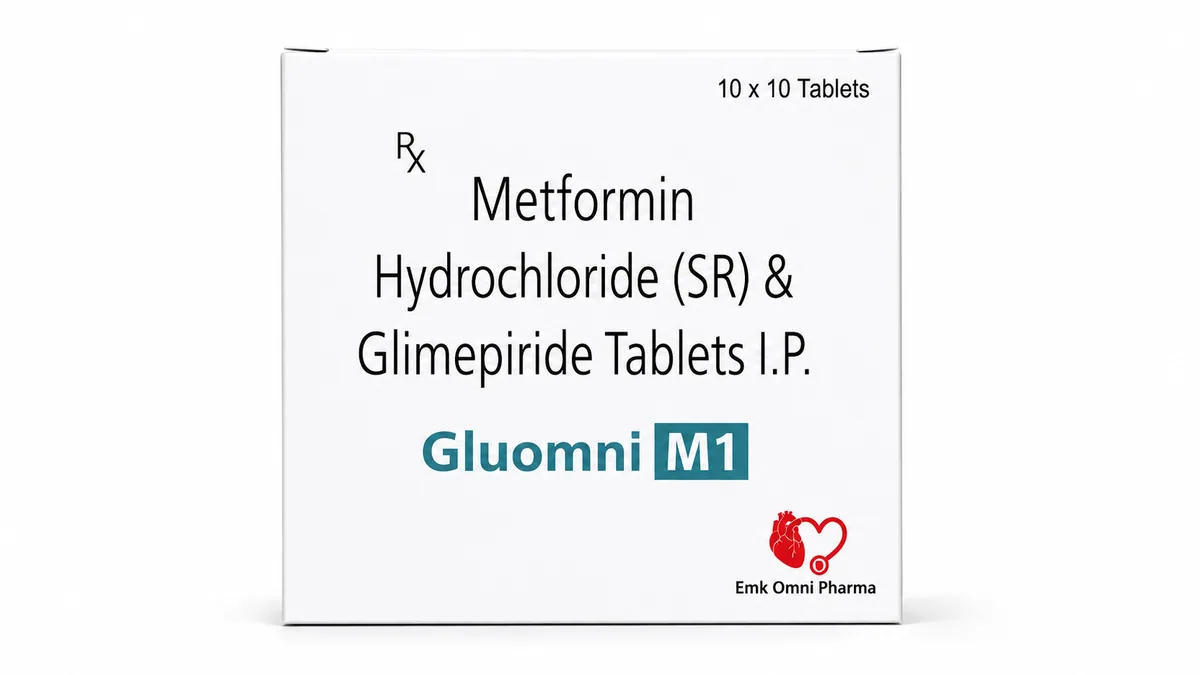
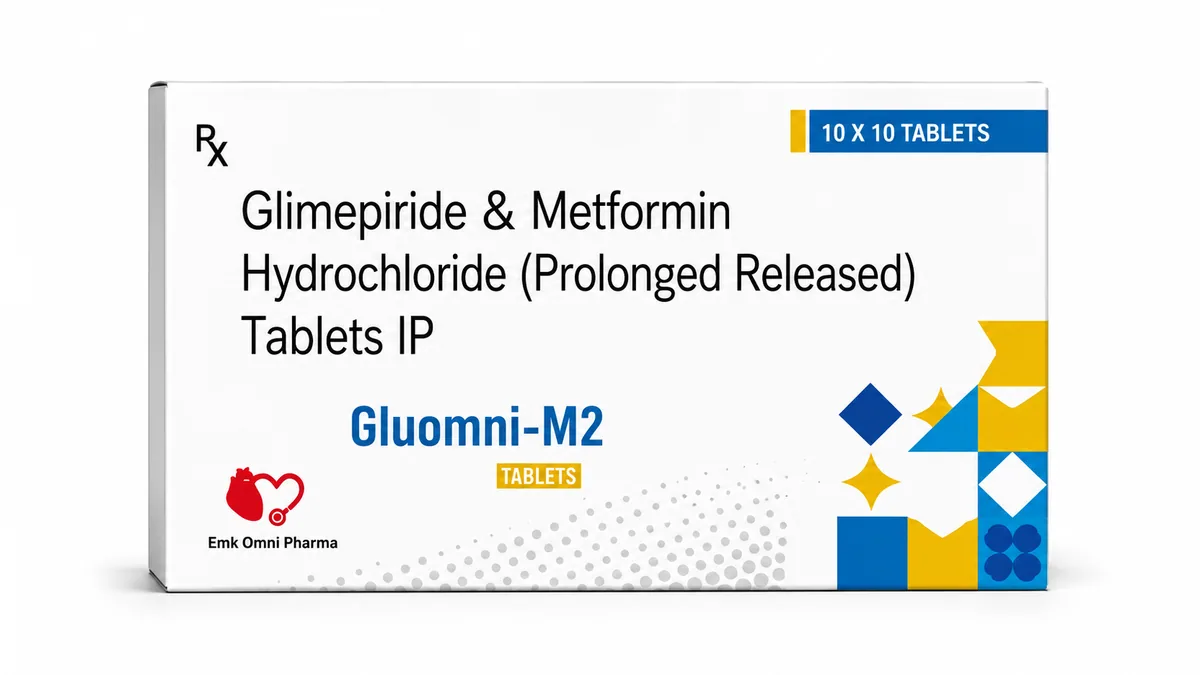
Gluomni M1 is a bilayer tablet containing Metformin Hydrochloride (SR) 500 mg with Glimepiride 1 mg. Gluomni-M2 contains Glimepiride 2 mg with Metformin Hydrochloride 500 mg in a prolonged release form. The glimepiride content is what separates them.
Glimepiride belongs to the sulfonylurea class and acts on the beta cells of the pancreas to release more insulin. Because it works whether or not sugar is high at that moment, it carries a real risk of hypoglycaemia if a meal is skipped or delayed. Patients on either product should know the warning signs of low sugar and keep a quick source of glucose within reach.
Sitagliptin with Metformin: Sitomni-M 50/500 and Sitomni-M-OD 100/500
Incretin hormones are released by the gut after eating and encourage insulin release only when glucose is high. The enzyme DPP-4 breaks them down quickly. Sitagliptin blocks that enzyme, so the hormones last longer and the insulin response tracks the meal.
Sitomni-M 50/500 is a film-coated tablet containing Sitagliptin 50 mg with Metformin Hydrochloride 500 mg. Sitomni-M-OD 100/500 contains Sitagliptin 100 mg with Metformin Hydrochloride 500 mg and is designed as a once daily film-coated tablet.
Because sitagliptin acts in a glucose dependent way, it is less likely on its own to drive sugar too low than a sulfonylurea. That property makes this pairing attractive for older patients, for people with irregular meal timings and for those who have had hypoglycaemia in the past.
Empomni-25 and the SGLT2 Route
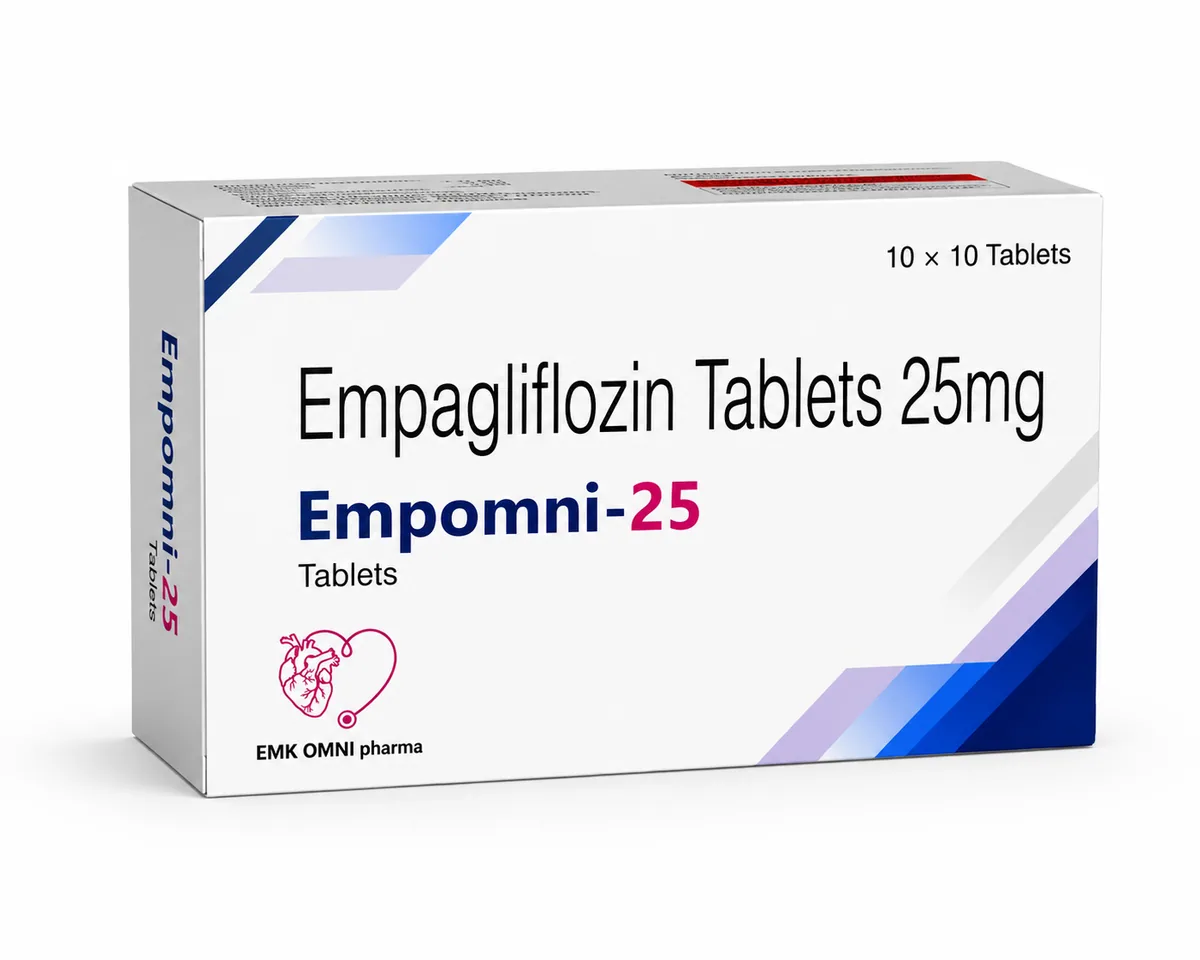
Empomni-25 contains Empagliflozin 25 mg and is supplied in a 10 x 10 pack. Empagliflozin blocks the sodium glucose co-transporter 2 in the kidney tubules, so glucose that would normally be reabsorbed is passed out in the urine instead.
The mechanism does not depend on insulin, so it can be added to almost any other diabetes tablet. It also tends to be associated with modest weight and blood pressure reduction, and the class has attracted interest for its effects on the heart and kidneys beyond sugar control.
The route of action explains the cautions too. More sugar in the urine means a greater chance of urinary and genital fungal infections, so genital hygiene and adequate water intake matter. Report unusual thirst, nausea, vomiting or breathlessness promptly, since a rare form of ketoacidosis can occur even when sugar readings look reasonable.
How a Doctor Chooses Between These Tablets
Diabetes prescribing is highly individual, and most people move through more than one combination over the years.
- The HbA1c and how far it sits from the target the doctor has set.
- Kidney function, which limits or rules out several of these molecules.
- Risk of hypoglycaemia, which weighs against sulfonylurea combinations in elderly patients or anyone living alone.
- Weight, since some classes tend to add weight and others to reduce it.
- Heart failure or chronic kidney disease, which may make an SGLT2 inhibitor attractive.
- Meal patterns, shift work and religious fasting, which affect how safely a sulfonylurea can be used.
- Affordability and how many tablets a person will realistically take, which is where fixed dose combinations earn their place.
Strengths within a family, such as Gluomni M1 against Gluomni-M2, are not interchangeable and must not be switched without the doctor.
Monitoring, Fasting and Everyday Care
HbA1c gives an average picture over roughly three months and is usually repeated at intervals the doctor sets. Home readings before meals and after them fill in the detail. Kidney function, a lipid profile, an annual eye examination and regular foot checks all belong in routine diabetes care, and long term metformin users may have vitamin B12 checked.
Everyone on these tablets should be able to recognise low sugar: sweating, trembling, hunger, confusion or sudden weakness. Keep glucose handy and tell family members what to do.
Fasting deserves a conversation in advance. Ekadashi, Navratri, Ramzan and similar observances change meal timing considerably, and sulfonylurea containing tablets in particular may need review before the fast begins. Illness with vomiting or poor intake is another moment to call the doctor rather than carry on unchanged.
Diet and activity remain the base on which every tablet works. Portion size, less refined rice and wheat, more pulses and vegetables, and regular walking all reduce the burden on the medicine. Store packs below 25 degrees C in a dry place. This article is for general information only and is not a substitute for advice from a registered medical practitioner.
Frequently asked questions
- Why does my tablet contain two molecules?
- Type 2 diabetes involves more than one problem at once. Combining two mechanisms in one tablet usually controls glucose better than raising a single molecule and keeps the daily count low.
- What is the difference between Gluomni M1 and Gluomni-M2?
- Both carry metformin 500 mg in a modified release form. Gluomni M1 has glimepiride 1 mg and Gluomni-M2 has glimepiride 2 mg. The doctor selects based on control and hypoglycaemia risk.
- How is Sitomni-M-OD 100/500 different from Sitomni-M 50/500?
- The sitagliptin content differs, 100 mg against 50 mg, and the OD version is formulated for once daily use. The metformin content is 500 mg in both.
- Why do I pass more urine on Empomni-25?
- Empagliflozin works by sending surplus glucose out through the kidneys, and that glucose carries water with it. Drink adequate water and mention any burning or discomfort to the doctor.
- Can I take these tablets while fasting?
- Ask the doctor before the fast, not during it. Sulfonylurea containing tablets such as Gluomni M1 and Gluomni-M2 in particular may need adjusting to avoid low sugar.
- Do I still need diet control if I take medicine?
- Yes. Tablets work alongside food choices and activity rather than replacing them. Good habits often mean fewer medicines and steadier readings over the long term.
- What should I do if I miss a dose?
- The general principle is to take it when remembered unless the next dose is close, and never to double up. Ask the treating doctor or pharmacist for advice specific to your prescription.
- Are diabetes tablets sold over the counter in India?
- No. These are Schedule H medicines and a licensed chemist may dispense them only against a valid prescription from a registered medical practitioner.
Related guides
Medical Disclaimer
This product information is intended for general awareness only and should not be considered medical advice. Please consult a registered medical practitioner before using any prescription medicine.