Pain Management Medicines: EMK Omni Pharma Guide
Pain has many causes and no single medicine suits them all. This guide explains the main classes used in India and where Emfenac-P from EMK Omni Pharma is prescribed within them.
What Pain Management Medicines Cover
Pain is a symptom, not a diagnosis, and the right medicine depends on where the pain comes from. Short lived pain after an injury, a dental procedure or surgery behaves differently from the grinding discomfort of osteoarthritis, and both differ from the burning, tingling pain of a damaged nerve.
Broadly the medicines fall into groups. Non-steroidal anti-inflammatory drugs reduce inflammation and are the mainstay for musculoskeletal and inflammatory pain. Paracetamol relieves pain and fever with little anti-inflammatory action. Muscle relaxants help when spasm is a large part of the problem. Agents for neuropathic pain act on nerve signalling rather than on inflammation. Topical preparations deliver medicine locally, and physical measures such as physiotherapy, heat, ice and rest often do more than any tablet.
EMK Omni Pharma markets a prescription combination in this category. It is contract manufactured at a GMP unit and marketed from Mysuru, Karnataka.
How NSAIDs and Paracetamol Differ
NSAIDs block cyclo-oxygenase enzymes, which reduces production of prostaglandins. Prostaglandins drive swelling, redness and the sensitisation of pain nerves, so blocking them tackles inflammation at its source. The same enzymes protect the stomach lining and support kidney blood flow, which is exactly why NSAIDs carry gastric and renal cautions.
Paracetamol works mainly in the central nervous system and brings down fever and pain without a meaningful anti-inflammatory effect. Its safety profile is different: the stomach and kidneys are far less involved, but the total daily amount matters a great deal because of the liver.
Because the two act by separate routes, using them together often gives better relief than increasing either one alone. That is the reasoning behind fixed dose combinations, and it also reduces the pressure to escalate the NSAID.
Emfenac-P: Aceclofenac with Paracetamol
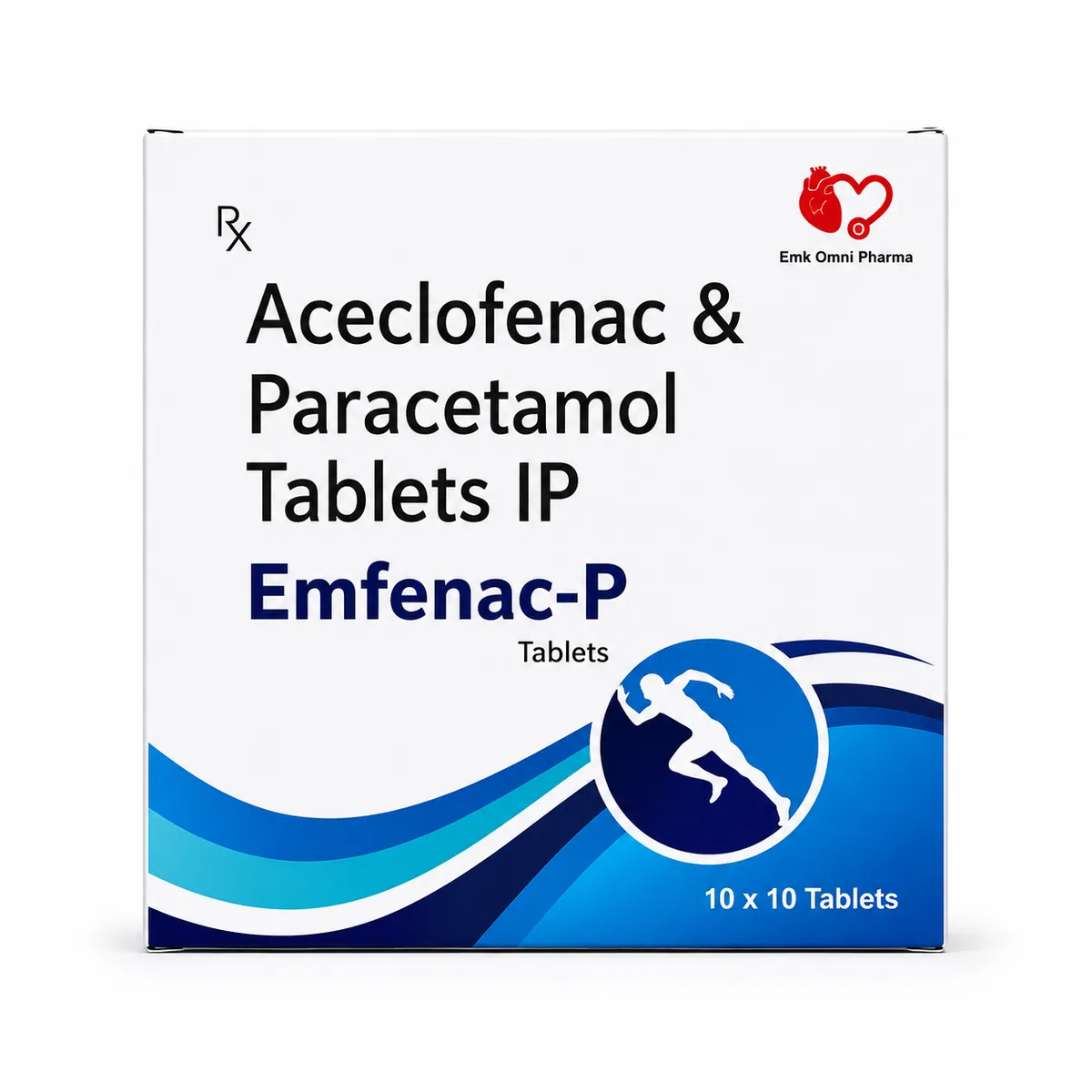
Emfenac-P is a prescription tablet containing Aceclofenac 100 mg and Paracetamol 325 mg, supplied as Aceclofenac and Paracetamol Tablets IP. It is used under medical supervision for the relief of pain, inflammation and fever.
Aceclofenac is an NSAID related to diclofenac. Indian doctors commonly prescribe combinations of this kind for osteoarthritis flares, low back pain, cervical and lumbar spondylosis, sprains and other soft tissue injuries, dental pain, post-operative pain and painful periods, and for fever accompanied by body ache.
The paracetamol component means anyone taking Emfenac-P should avoid other paracetamol containing products at the same time. Many cold and flu remedies sold across the counter in India contain paracetamol, and doubling up without realising it is a genuine risk to the liver. Tell the pharmacist what you are already taking before buying anything additional.
What a Doctor Weighs Before Prescribing a Painkiller
Prescribing here is as much about who should not take the medicine as about who should.
- History of gastric ulcer, bleeding or reflux, which may call for gastric protection alongside or for a different approach entirely.
- Kidney function, since NSAIDs reduce blood flow to the kidneys and can tip a borderline patient into trouble.
- Heart disease, heart failure and blood pressure, all of which NSAIDs can affect.
- Liver disease and alcohol use, which matter for the paracetamol component.
- Age, with older patients generally needing more caution and shorter courses.
- Asthma, since some people react badly to NSAIDs.
- Pregnancy and breastfeeding, which need a doctor's judgement rather than a general rule.
- Other medicines, particularly blood thinners, antiplatelets, diuretics, ACE inhibitors, angiotensin receptor blockers and other NSAIDs.
The guiding principle across the category is the lowest effective strength for the shortest sensible time, reviewed rather than repeated on autopilot.
What This Category Does Not Do
An anti-inflammatory tablet relieves symptoms. It does not correct the underlying problem, whether that is worn cartilage, a slipped disc, an infection or an injury that needs rest and rehabilitation. Relying on a painkiller to keep working through pain can delay a diagnosis that matters.
Nerve pain, including diabetic neuropathy and sciatica, generally responds poorly to NSAIDs because inflammation is not the main driver. Those conditions call for different medicines, which is a conversation for the doctor.
Some pain needs urgent assessment rather than a tablet: chest pain, sudden severe abdominal pain, headache of abrupt onset or with fever and neck stiffness, pain with numbness or weakness in a limb, or pain following significant injury.
Monitoring, Warning Signs and Practical Care
For short courses, monitoring is mostly about watching for trouble. Report stomach pain, indigestion that will not settle, black or tarry stools, vomiting that looks like coffee grounds, swelling of the feet, breathlessness, a drop in urine output, rash or yellowing of the eyes. For longer use a doctor may check kidney function, haemoglobin, liver enzymes and blood pressure.
Take the tablet with or after food if the stomach is sensitive, keep hydration up, and avoid alcohol while on treatment. Do not add a second anti-inflammatory tablet, injection or gel on top without asking, and do not share a prescription with a family member whose situation you do not know.
Alongside the medicine, the boring measures earn their keep: correct posture, weight reduction, physiotherapy, graded activity rather than complete rest for most back pain, and heat or ice as the doctor advises. Store tablets below 25 degrees C in a dry place, keep them in the blister through humid months and out of reach of children. This article is for general information only and is not a substitute for advice from a registered medical practitioner.
Frequently asked questions
- Why does Emfenac-P contain two molecules?
- Aceclofenac reduces inflammation while paracetamol acts centrally on pain and fever. Two mechanisms together often give better relief than raising either one on its own.
- Can I take Emfenac-P with a cold remedy?
- Check the label first. Many cold and flu products contain paracetamol, and taking them alongside would raise the total paracetamol intake. Ask the pharmacist or doctor before combining.
- Should this tablet be taken with food?
- Taking it with or after food is commonly advised because NSAIDs can irritate the stomach lining. The treating doctor gives the timing that suits your prescription.
- How long can a painkiller like this be continued?
- The usual principle is the shortest effective course. Continuing beyond what the doctor prescribed, or repeating it for months, needs medical review rather than a fresh purchase.
- Can people with kidney problems take NSAIDs?
- NSAIDs reduce blood flow to the kidneys, so they need caution or avoidance in kidney disease. Tell the doctor about any kidney condition before a painkiller is prescribed.
- Is alcohol a problem with this medicine?
- Alcohol adds to the risk of stomach bleeding with an NSAID and to liver strain with paracetamol. It is best avoided while on treatment.
- Will this help nerve pain such as diabetic neuropathy?
- Usually not much. Burning or tingling nerve pain is driven by nerve signalling rather than inflammation and generally needs a different class of medicine that the doctor selects.
- Is Emfenac-P available over the counter?
- No. It is a prescription medicine, and a licensed chemist may dispense it only against a valid prescription from a registered medical practitioner.
Related guides
Medical Disclaimer
This product information is intended for general awareness only and should not be considered medical advice. Please consult a registered medical practitioner before using any prescription medicine.