Bisomni 2.5 (Bisoprolol 2.5 mg): The Complete Guide
Bisomni 2.5: Bisoprolol Fumarate Tablets IP 2.5 mg
Bisomni 2.5 is a prescription-only beta-blocker tablet from EMK Omni Pharma containing Bisoprolol Fumarate IP 2.5 mg. This guide covers what it is, how it works and what the rest of the cluster explains.
What Is Bisomni 2.5 and Who Markets It
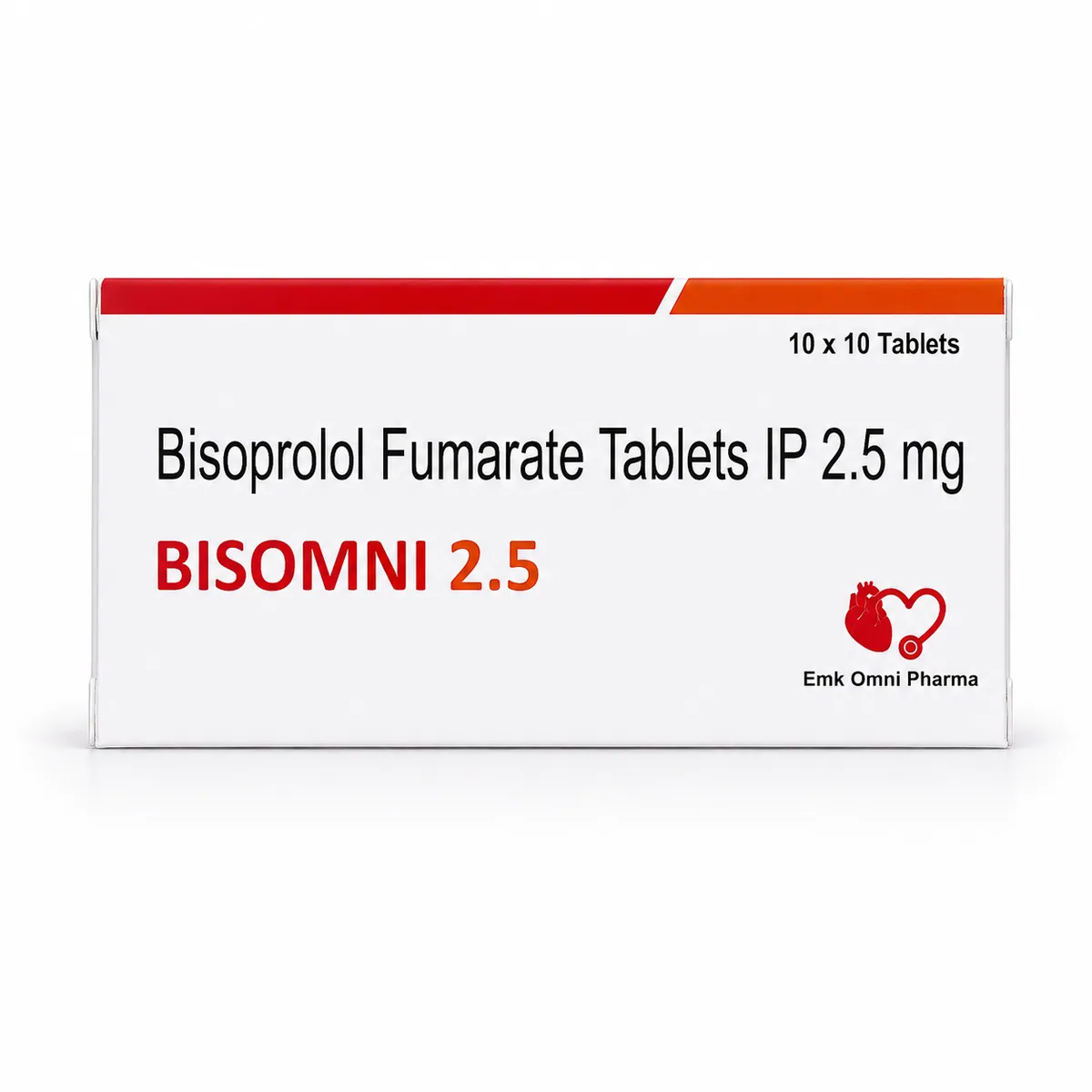
Bisomni 2.5 is a prescription-only medicine marketed in India by EMK Omni Pharma, a pharmaceutical marketing company based in Mysuru, Karnataka. Each film-coated tablet contains Bisoprolol Fumarate IP 2.5 mg along with approved excipients. EMK Omni Pharma does not manufacture the tablet in its own plant. The product is made at GMP-certified contract manufacturing units and marketed under the Bisomni brand name.
Bisomni 2.5 sits in the blood pressure management range and belongs to the beta-blocker family of medicines. It is supplied as a 10 x 10 pack, which means ten blister strips of ten tablets each. The carton carries the Schedule H warning that it is not to be sold by retail without the prescription of a registered medical practitioner. A chemist in India cannot legally hand it over without that prescription, and that rule protects patients rather than inconveniencing them.
Bisomni 2.5 Key Facts at a Glance
- Brand name: Bisomni 2.5
- Composition: Bisoprolol Fumarate IP 2.5 mg, along with approved excipients
- Dosage form: Film-coated tablet
- Strength: 2.5 mg
- Pack size: 10 x 10 tablets
- Category: Blood pressure management
- Drug class: Cardioselective beta-1 blocker
- Prescription status: Schedule H, prescription only
- Storage: Cool, dark, dry place below 25°C, protected from light, heat and moisture
- Marketed by: EMK Omni Pharma, Mysuru, Karnataka
The 2.5 mg strength is one of the lower strengths in the bisoprolol range. Doctors often begin at a modest strength, watch the pulse and the blood pressure readings over a few weeks, and only then decide whether the strength should stay where it is or move.
How Bisoprolol Fumarate 2.5 mg Works in the Body
Bisoprolol fumarate is a beta-blocker, and more precisely a cardioselective beta-1 blocker. The heart muscle carries beta-1 receptors that respond to adrenaline and noradrenaline, the hormones that make the heart beat faster and harder when you are stressed, rushing or anxious. Bisoprolol settles onto those receptors and softens that signal. The heart then beats a little slower and contracts with slightly less force, so it needs less oxygen for the same amount of work.
There is a second effect. The kidneys release less renin, a hormone that sets off a chain reaction which tightens blood vessels and holds on to salt and water. With less renin and a calmer heart, blood pressure tends to ease down over the following weeks rather than in a single day. The word cardioselective matters as well. Bisoprolol prefers the beta-1 receptors of the heart over the beta-2 receptors of the airways, which is why doctors sometimes consider it where an older non-selective beta-blocker would be unsuitable. Selectivity is relative rather than absolute, so any airway condition still has to be declared before the first prescription.
Who Doctors Prescribe Bisomni 2.5 For
Doctors prescribe bisoprolol tablets such as Bisomni 2.5 for high blood pressure, for angina where chest tightness appears on exertion, and as part of long-term care in chronic stable heart failure when a specialist starts it and builds the strength up slowly. It may also be chosen when a resting heart rate that runs too fast needs to be settled, or when a patient needs both rate control and pressure control from one tablet.
The decision is always individual. A doctor weighs your blood pressure readings taken on more than one day, your pulse, your kidney function, whether you have asthma or diabetes, what else you already take and your age. Bisomni 2.5 is not a general heart tonic, and it is not a medicine to start because a parent or neighbour takes something similar. A prescription belongs to one patient and one set of test results.
What the Rest of This Bisomni 2.5 Guide Covers
This cluster answers one question at a time so you can go straight to what you need.
- Uses: the conditions bisoprolol is prescribed for, and what it does not do
- How to take it: timing, food, swallowing the film-coated tablet and missed doses
- Side effects: what is common, what usually settles and what needs urgent attention
- Precautions and interactions: asthma, diabetes, pregnancy, kidney and liver considerations, and medicines that clash
- Storage: keeping tablets stable through Indian heat and monsoon humidity
- Patient FAQ: the questions people actually ask at the chemist counter
- Bisoprolol explained: the molecule, its class and how it sits among beta-blockers
- High blood pressure guide: the condition itself and where a tablet fits into it
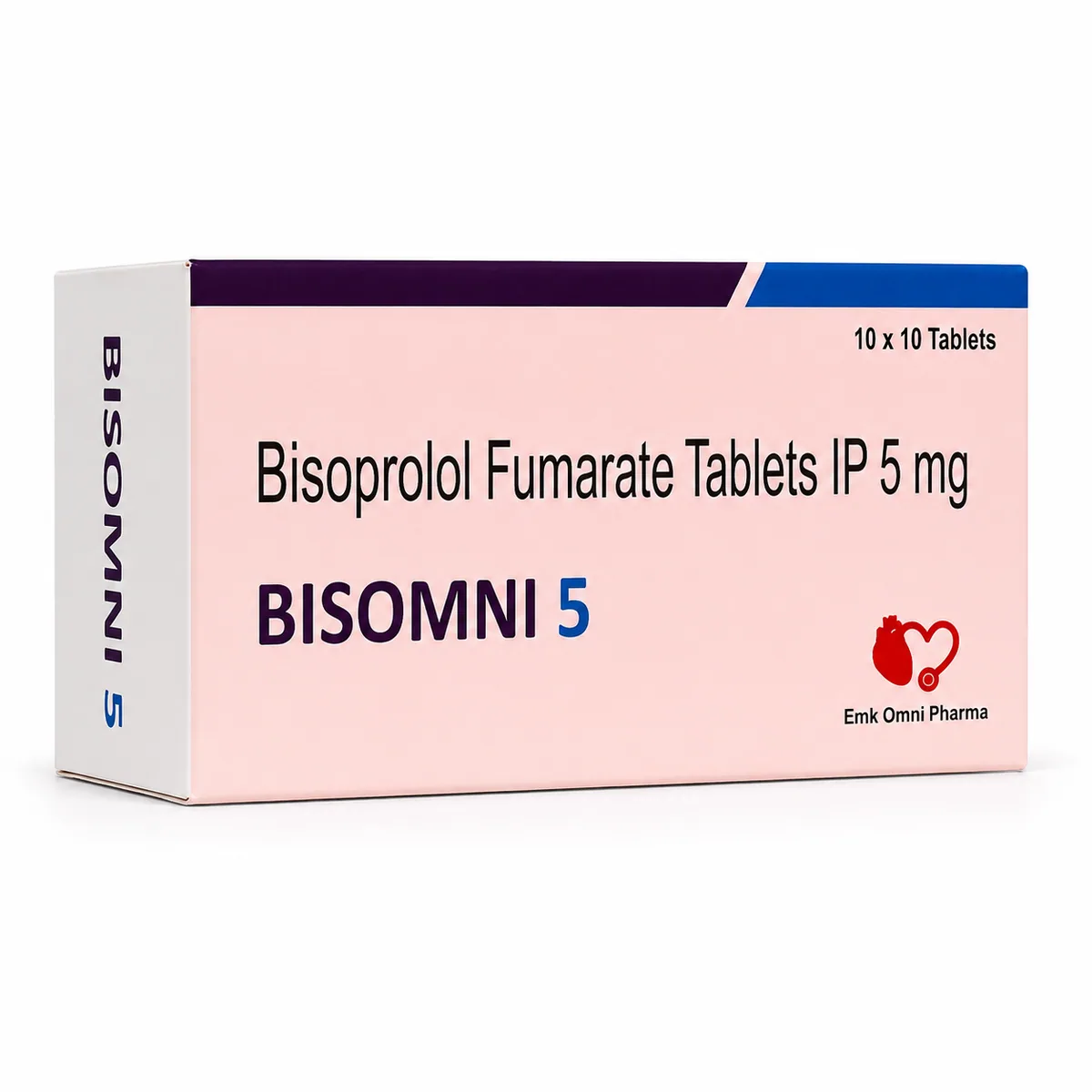
- Strength comparison: Bisomni 2.5 against Bisomni 5 and the Metomni-XL range
- For healthcare professionals: dispensing, counselling and sourcing points
When to Talk to Your Doctor About Bisomni 2.5
Book a review rather than waiting if your pulse feels unusually slow, if you feel faint when you stand up, if you become breathless at rest or at night, if your ankles swell, or if wheezing begins. Mention that you take a beta-blocker before any surgery, dental procedure or eye procedure, and tell your doctor if you are pregnant, planning a pregnancy or breastfeeding.
One point outranks the rest. Never stop Bisomni 2.5 on your own, even if you feel completely well. Stopping a beta-blocker abruptly can trigger a rebound rise in heart rate and blood pressure and can bring on chest pain. If the medicine has to be withdrawn, your doctor will step the dose down over days or weeks. This article is for general information only and is not a substitute for advice from a registered medical practitioner.
Frequently asked questions
- What is Bisomni 2.5 used for?
- It is prescribed by doctors for high blood pressure, angina and heart rate control, and sometimes as part of long-term chronic heart failure care started by a specialist. Your doctor decides which of these applies to you.
- Is Bisomni 2.5 available without a prescription?
- No. It is a Schedule H medicine, so a licensed chemist can dispense it only against a valid prescription from a registered medical practitioner.
- What does the 2.5 in the name stand for?
- It is the amount of bisoprolol fumarate in each tablet, which is 2.5 mg. The sibling product Bisomni 5 carries 5 mg of the same molecule.
- How long does Bisomni 2.5 take to work?
- The effect on heart rate begins within hours, but the full effect on blood pressure usually becomes clear over a few weeks. Your doctor will ask you to record readings during that period.
- Can I stop taking it once my blood pressure is normal?
- No. Normal readings usually mean the medicine is doing its job. Stopping a beta-blocker suddenly can cause a rebound rise in heart rate and blood pressure, so only your doctor should change or withdraw it.
- Does EMK Omni Pharma manufacture Bisomni 2.5?
- EMK Omni Pharma markets Bisomni 2.5. The tablets are produced at GMP-certified contract manufacturing units and supplied under the Bisomni brand.
- How should the pack be stored at home?
- Keep it in a cool, dark, dry place below 25°C, protected from light, heat and moisture, and well out of reach of children.
- Can Bisomni 2.5 be taken with other blood pressure medicines?
- Doctors often combine blood pressure medicines, but the combination must be chosen by them. Show your doctor and your chemist a full list of everything you take, including supplements and ayurvedic products.
Need Bisomni 2.5 for your pharmacy, hospital or clinic?
EMK Omni Pharma supplies through authorised channels across Karnataka. Send an enquiry and our team will respond during business hours.
Related guides

Medical Disclaimer
This product information is intended for general awareness only and should not be considered medical advice. Please consult a registered medical practitioner before using any prescription medicine.