Empomni-25 vs Combination Diabetes Tablets
Empomni-25: Empagliflozin Tablets 25 mg
Empomni-25 sits in the same diabetes range as Gluomni M1, Gluomni-M2 and Sitomni-M 50/500, but the molecules differ. Here is what separates them and what a doctor weighs when choosing.
The EMK Omni Pharma Diabetes Range at a Glance
Several products in the range treat the same condition through different molecules. Knowing what is inside each helps you follow the conversation at the clinic.
- Empomni-25: Empagliflozin Tablets 25 mg. A single molecule SGLT2 inhibitor acting at the kidney.
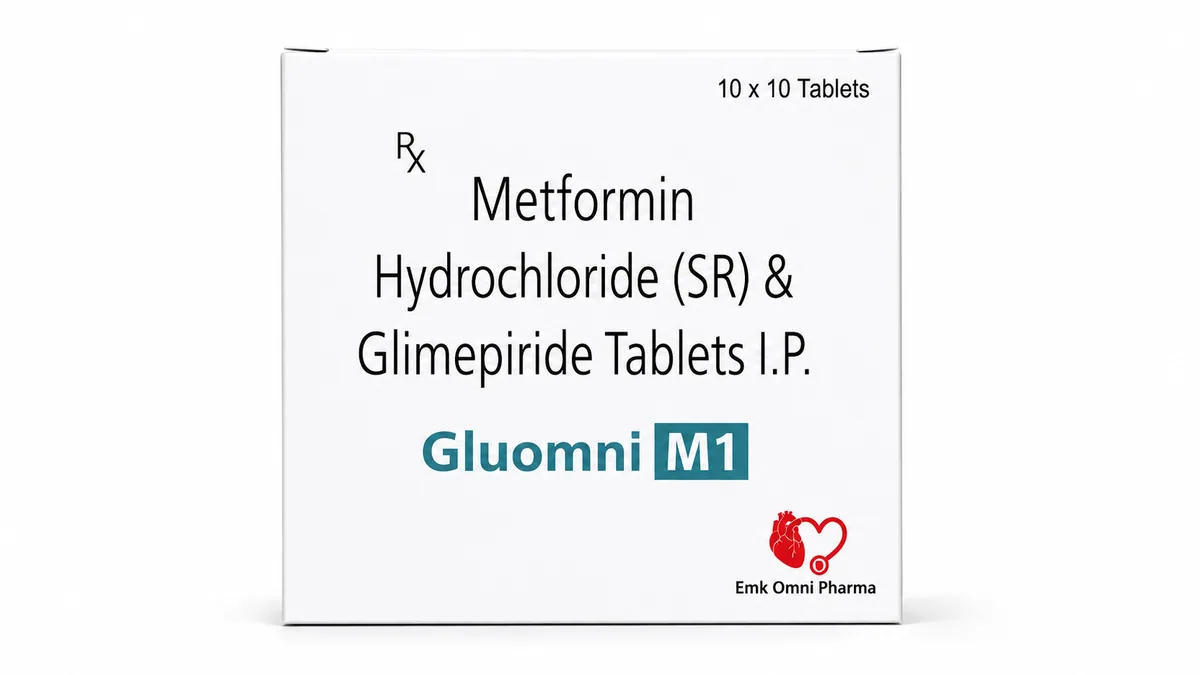
- Gluomni M1: Metformin Hydrochloride (SR) 500 mg with Glimepiride 1 mg. A biguanide paired with a sulfonylurea.
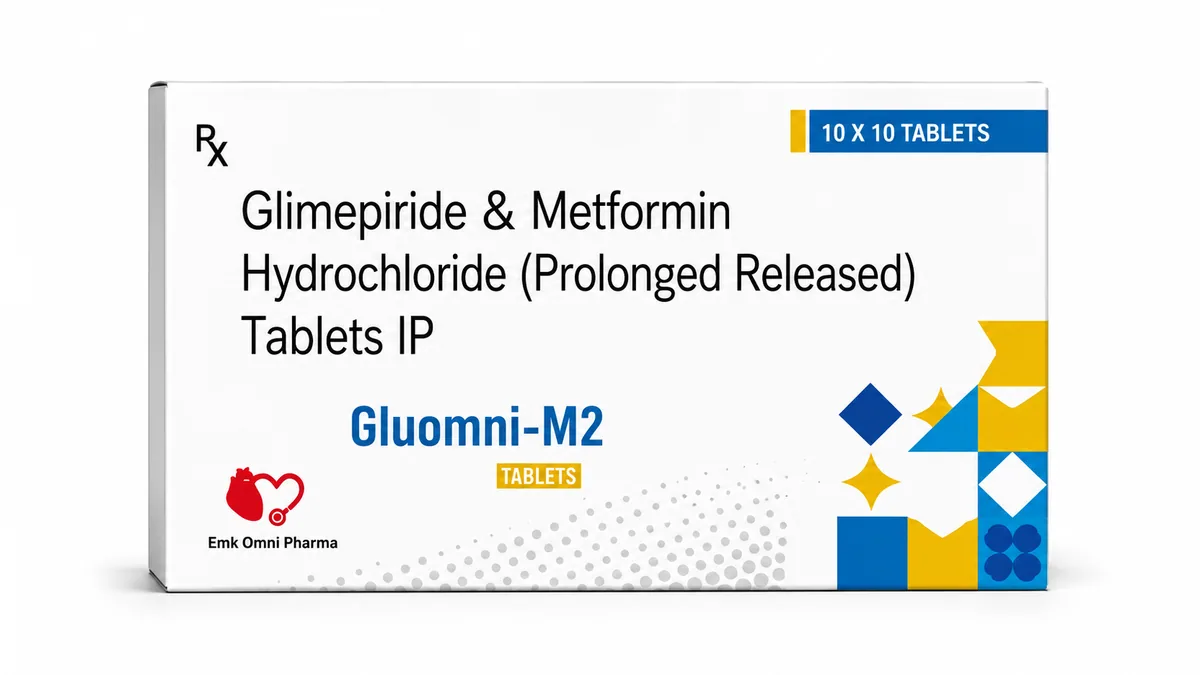
- Gluomni-M2: Glimepiride 2 mg with Metformin Hydrochloride (PR) 500 mg. The same pairing with a higher sulfonylurea share.
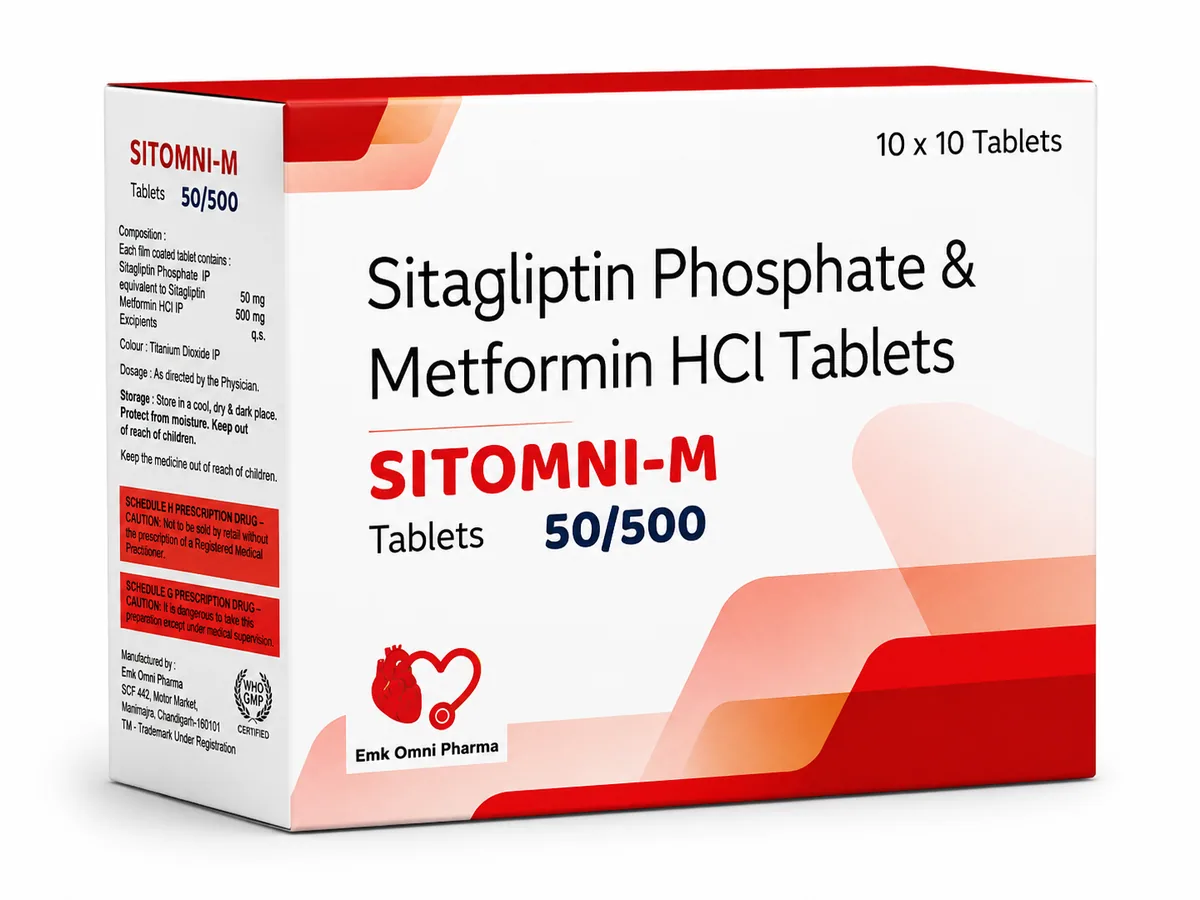
- Sitomni-M 50/500: Sitagliptin 50 mg with Metformin Hydrochloride 500 mg. A gliptin paired with a biguanide.
All four are prescription medicines. None of them is a general upgrade on another, because they are built for different clinical situations.
Different Molecules, Different Routes to Lower Sugar
Empagliflozin in Empomni-25 reduces glucose reabsorption in the kidney, so glucose leaves in urine. The effect does not need the pancreas to release more insulin.
Metformin, present in all three combination products, mainly reduces glucose production by the liver and improves how the body responds to its own insulin.
Glimepiride, in Gluomni M1 and Gluomni-M2, prompts the pancreas to release more insulin. That is effective, but it carries a higher chance of low blood sugar and needs regular meals.
Sitagliptin, in Sitomni-M 50/500, works through gut hormone signals so insulin release is supported mainly when glucose rises after a meal, which generally carries a lower chance of low sugar than a sulfonylurea.
Because the routes differ, these products are sometimes used together rather than as alternatives, always on prescription.
Single Molecule or Fixed Dose Combination?
A fixed dose combination such as Gluomni M1, Gluomni-M2 or Sitomni-M 50/500 puts two molecules in one tablet. That reduces pill count and helps people stay regular, which matters a great deal in long term therapy.
A single molecule tablet such as Empomni-25 gives the doctor room to move. If one part of the regimen needs to change, it can be changed without disturbing the other. That flexibility is useful when a patient is at risk of low sugar, when kidney function changes, or when the SGLT2 inhibitor needs a planned pause around surgery or illness.
Many prescriptions include both approaches: a combination tablet for the base regimen and a single molecule tablet added on top.
What a Doctor Considers When Choosing
The choice is individual and rests on several factors together.
- Kidney function. It influences the suitability of both SGLT2 inhibitors and metformin containing products.
- Risk of low blood sugar. Elderly patients, people who fast, and those with irregular meals may do better away from a sulfonylurea heavy regimen.
- Weight and blood pressure. These sometimes favour one mechanism over another.
- Heart and kidney history. These increasingly shape the choice of class.
- Infection history. Repeated urinary or genital infections are relevant to an SGLT2 inhibitor.
- Tolerance. Stomach upset with metformin, or urinary symptoms with empagliflozin, may lead to a change.
- Number of tablets and cost. Both affect whether a patient actually stays on treatment.
This is why two people with similar HbA1c values may correctly leave the clinic with different prescriptions.
Why You Must Not Switch Between These on Your Own
These are not interchangeable products. Swapping Empomni-25 for a metformin and glimepiride combination, or the other way round, changes the mechanism, the monitoring needed and the risks involved.
Switching to a sulfonylurea containing product without supervision can lead to low blood sugar, especially if you skip meals or fast. Moving to an SGLT2 inhibitor without a kidney report can be equally unwise. Adding a second product on a relative's advice risks doubling up a molecule you already take.
If cost, tablet count or side effects are the reason you want to change, say so plainly at your next visit. Doctors can usually find a workable alternative once they know the real problem.
This article is for general information only and is not a substitute for advice from a registered medical practitioner.
Frequently asked questions
- Is Empomni-25 better than Gluomni M1?
- Neither is better in general. They contain different molecules for different clinical situations, and your doctor selects based on your reports and history.
- Can Empomni-25 be taken along with a metformin combination?
- Doctors often combine medicines with different mechanisms. Any such regimen must be prescribed and monitored by a registered medical practitioner, never self assembled.
- What is the difference between Gluomni M1 and Gluomni-M2?
- Both pair metformin with glimepiride, but Gluomni M1 has glimepiride 1 mg while Gluomni-M2 has 2 mg. The doctor chooses the share that suits the patient.
- Which of these is least likely to cause low blood sugar?
- Sulfonylurea containing products carry the highest chance. Empagliflozin and sitagliptin generally carry less on their own, but risk depends on the whole regimen.
- Can I switch to a combination tablet to reduce my pill count?
- Raise it with your doctor. Reducing tablet count is a valid goal, but the substitution must keep the same molecules and strengths your treatment requires.
- Do these products come from the same company?
- All are marketed by EMK Omni Pharma, Mysuru, and produced at GMP certified contract manufacturing units. Availability at your chemist may still vary.
Need Empomni-25 for your pharmacy, hospital or clinic?
EMK Omni Pharma supplies through authorised channels across Karnataka. Send an enquiry and our team will respond during business hours.
Related guides
Medical Disclaimer
This product information is intended for general awareness only and should not be considered medical advice. Please consult a registered medical practitioner before using any prescription medicine.