Omnizole-D vs Panomni-D: How Doctors Choose
Omnizole-D: Esomeprazole (Enteric-Coated) & Domperidone (Sustained-Release) Capsules
EMK Omni Pharma markets two proton pump inhibitor and domperidone capsules. This guide explains how Omnizole-D and Panomni-D differ and what a doctor weighs when choosing between them.
Omnizole-D and Panomni-D at a glance
EMK Omni Pharma markets more than one capsule in the anti gastric and acidity category, and patients sometimes see both names and wonder which is stronger.
Omnizole-D contains esomeprazole as enteric-coated pellets with domperidone as sustained-release pellets. The strengths are printed on the pack label, and the pack holds 10 x 10 capsules.
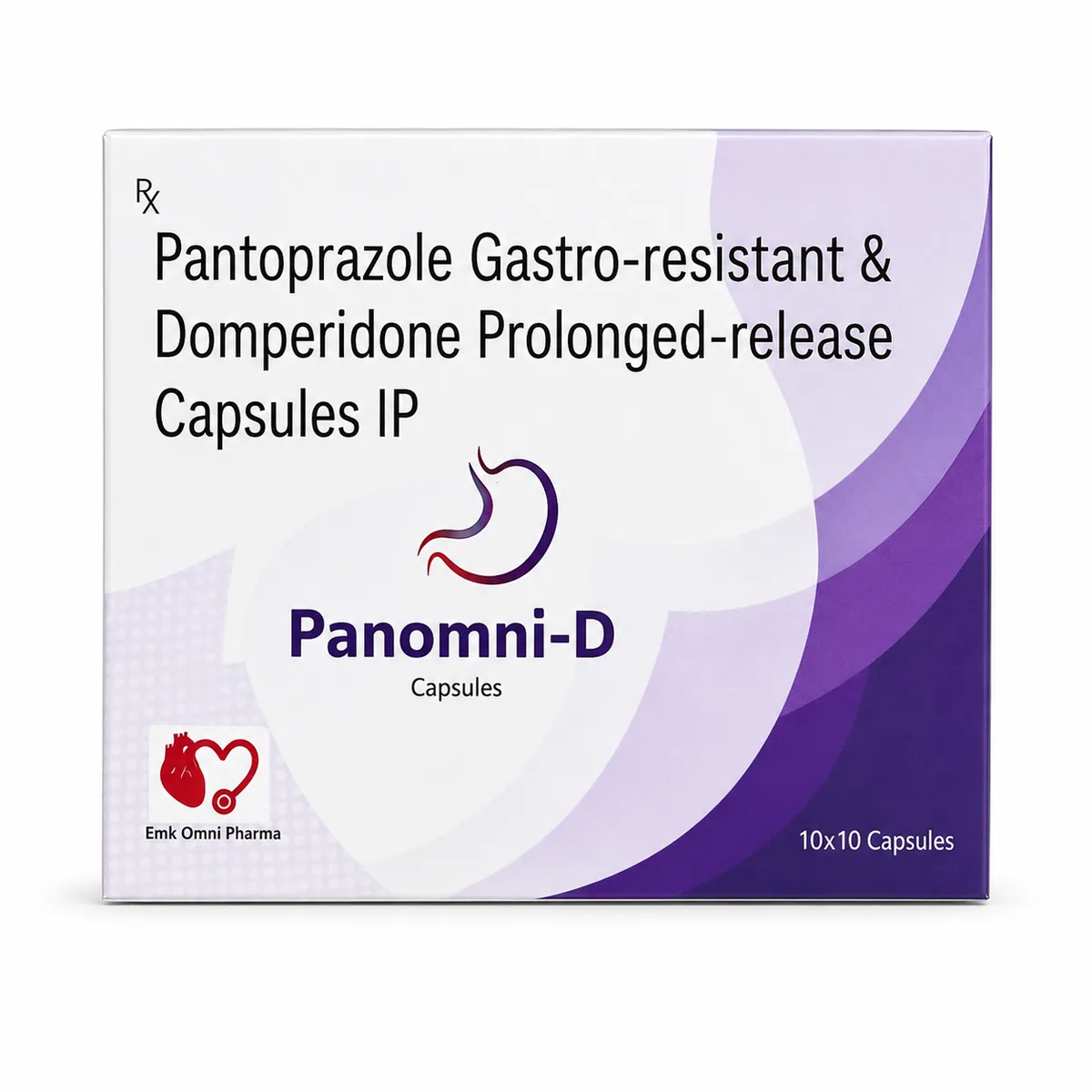
Panomni-D contains pantoprazole gastro-resistant pellets 40 mg with domperidone prolonged release 30 mg, described on the pack as pantoprazole gastro-resistant and domperidone prolonged-release capsules IP.
Both are prescription-based, both pair a proton pump inhibitor with the same prokinetic molecule, and both are swallowed whole. Neither is a general upgrade on the other. They are different tools for the same broad job.
Esomeprazole versus pantoprazole: the practical differences
Both molecules belong to the proton pump inhibitor class and both disable stomach acid pumps. The differences are in the detail.
Esomeprazole is the single-isomer form of omeprazole, and separating the isomer changes how the liver processes it. Pantoprazole has a different chemical structure and is generally regarded as having fewer interactions with drugs handled by the same liver enzymes, which matters for patients taking several medicines at once.
Acid suppression from either builds over the first days of a course rather than acting immediately. Which molecule a doctor picks depends on the diagnosis, previous response, the rest of the medicine list, liver function and cost considerations, and not on any simple ranking of strength.
Sustained release and prolonged release domperidone
Both capsules use a slow-release form of domperidone rather than an immediate-release one. The intention is the same in each case: to spread the prokinetic and anti-nausea effect through the day instead of delivering a short peak, and to keep the number of daily doses low.
The terms sustained release and prolonged release describe similar approaches from different pharmacopoeial vocabularies, and the exact pellet technology varies between products. What stays constant is the practical instruction to the patient. Do not open, chew or crush the capsule, because the release pattern depends entirely on the coating staying intact.
The domperidone precautions apply to both products. Heart rhythm history, liver function, age and the rest of the medicine list are checked before either is prescribed, and both are usually given for a limited period.
What a doctor weighs when choosing between them
The choice is rarely about one being better. The questions a prescriber runs through include:
- What exactly is being treated, and has an endoscopy or Helicobacter pylori test been done
- What else is the patient taking, especially clopidogrel, antifungals, HIV medicines, methotrexate or antibiotics that affect heart rhythm
- Is there liver disease, kidney disease, heart rhythm history, or an abnormal ECG
- How did the patient respond to a proton pump inhibitor in the past, if one was used
- What strength suits the severity, and for how many days or weeks
- How old is the patient, and are they on several medicines already
The answer can be either product, one of them without the domperidone component, or something else altogether.
Why patients must not switch products on their own
Swapping one of these capsules for the other because a neighbour recommended it, or because a chemist offered a substitute, is a poor idea for concrete reasons.
The interaction profiles are not identical, so a switch that looks harmless can matter a great deal for someone on a blood thinner. The strengths are not interchangeable unit for unit. Taking both products together doubles the domperidone exposure, which is precisely the component with a heart rhythm concern.
If a pharmacy is out of stock, ask the pharmacist to inform the prescribing doctor rather than accepting a substitute at the counter. If cost is the issue, say so at the consultation, because doctors can usually work with it. This article is for general information only and is not a substitute for advice from a registered medical practitioner.
Frequently asked questions
- Is Omnizole-D stronger than Panomni-D?
- Neither is simply stronger. They use different proton pump inhibitors with the same prokinetic, and the right choice depends on the diagnosis and the rest of your medicine list.
- Can I take Omnizole-D and Panomni-D together?
- No. Both contain domperidone, so taking them together doubles exposure to the component with a known heart rhythm concern. Take only what is prescribed.
- My chemist offered a substitute when Omnizole-D was out of stock. Should I accept?
- Ask the pharmacist to check with your prescribing doctor first. Substitutions in this class can change interactions with your other medicines.
- Why does Panomni-D list its strengths while Omnizole-D says to check the label?
- Panomni-D is described as pantoprazole 40 mg with domperidone 30 mg prolonged release. For Omnizole-D, read the strengths printed on the pack you are given.
- Is pantoprazole better for someone on many medicines?
- Pantoprazole is generally regarded as having fewer interactions through the liver enzymes involved. Your doctor decides whether that matters in your case.
- Can I switch back to my old brand if the new one suits me less?
- Report the problem to your doctor rather than switching yourself. What feels like a brand difference can be a dose, timing or diagnosis issue.
Need Omnizole-D for your pharmacy, hospital or clinic?
EMK Omni Pharma supplies through authorised channels across Karnataka. Send an enquiry and our team will respond during business hours.
Related guides
Medical Disclaimer
This product information is intended for general awareness only and should not be considered medical advice. Please consult a registered medical practitioner before using any prescription medicine.