Sitomni-M 50/500 vs Other EMK Omni Diabetes Tablets
Sitomni-M 50/500: Sitagliptin & Metformin Hydrochloride Tablets
Sitomni-M 50/500 is one option in a range. This article compares it with Sitomni-M-OD 100/500, Gluomni M1 and Gluomni-M2, and explains what a doctor weighs when picking one.
The EMK Omni Pharma Diabetes Range at a Glance
Four brands illustrate how combination therapy is built up in different ways.
- Sitomni-M 50/500: Sitagliptin and Metformin Hydrochloride Tablets, containing Sitagliptin 50 mg and Metformin Hydrochloride 500 mg, film coated, 10 x 10 pack
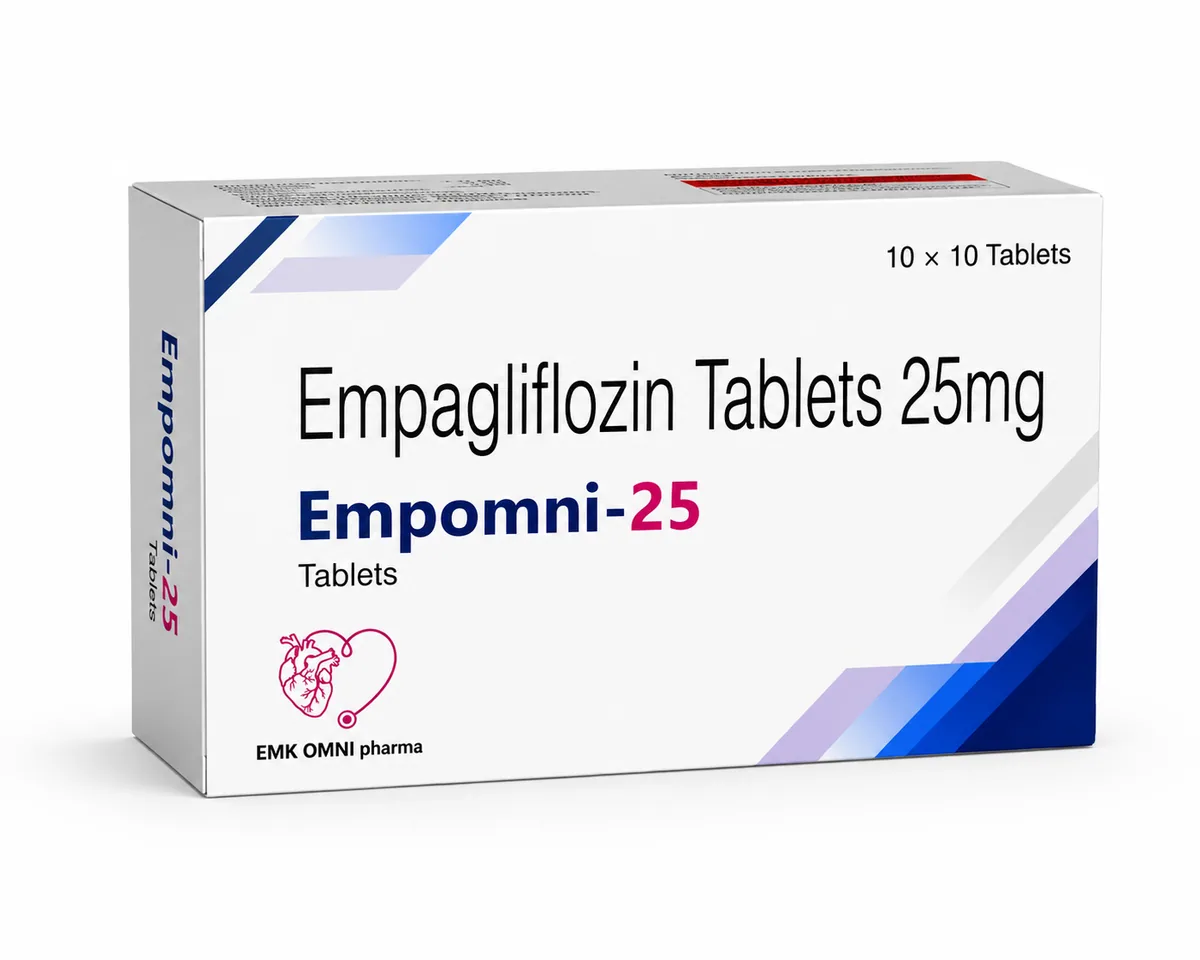
- Sitomni-M-OD 100/500: Sitagliptin Phosphate and Metformin Hydrochloride Tablets, containing Sitagliptin 100 mg and Metformin Hydrochloride 500 mg
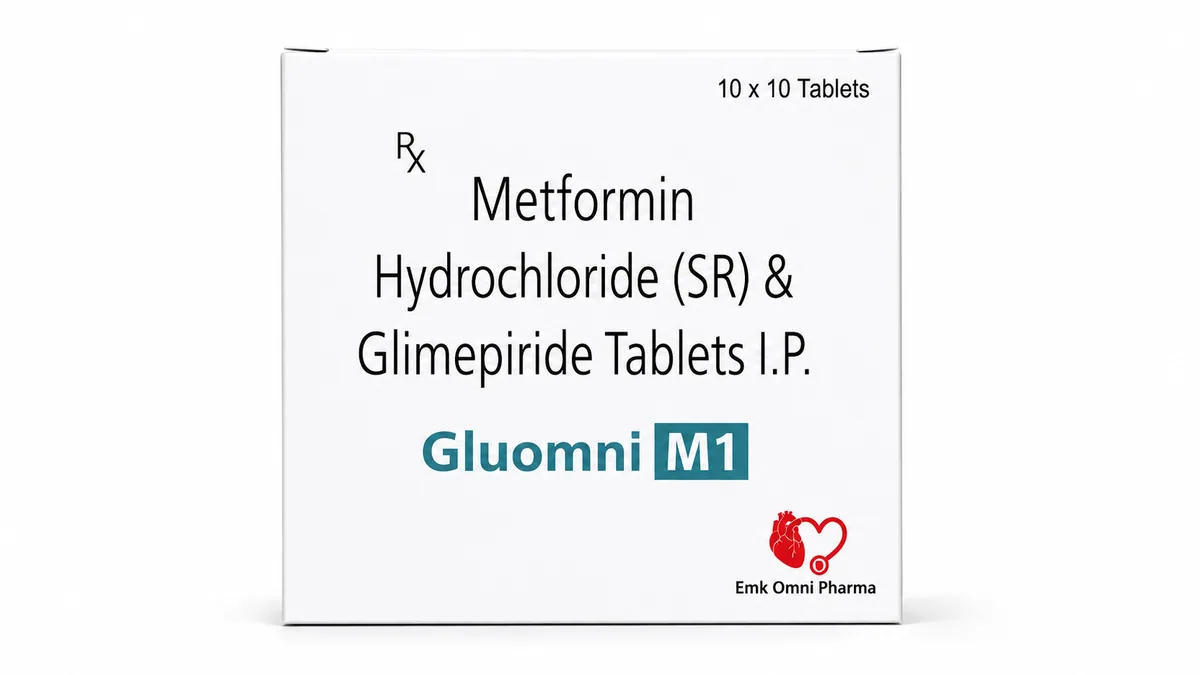
- Gluomni M1: Metformin Hydrochloride (SR) and Glimepiride Tablets IP, containing Metformin Hydrochloride (SR) 500 mg and Glimepiride 1 mg
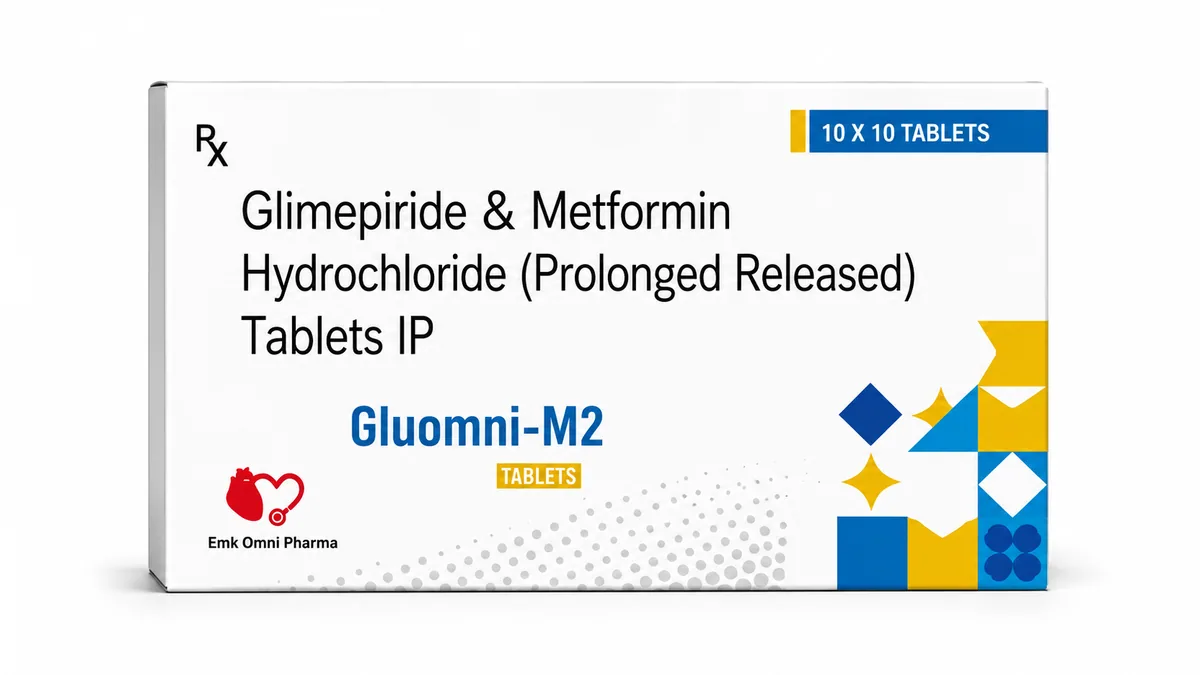
- Gluomni-M2: Glimepiride and Metformin Hydrochloride (Prolonged Release) Tablets IP, containing Glimepiride 2 mg and Metformin Hydrochloride (PR) 500 mg
All four are prescription-only medicines. The metformin component appears in each, which reflects its place as the usual backbone of oral therapy. What changes is the partner molecule, its strength and the release pattern.
Sitomni-M 50/500 vs Sitomni-M-OD 100/500
These two are the closest pair, since both combine sitagliptin with metformin 500 mg. The differences are the sitagliptin strength and the OD design.
Sitagliptin strength: 50 mg in Sitomni-M 50/500 and 100 mg in Sitomni-M-OD 100/500. A doctor may choose the lower sitagliptin content when starting combination therapy, when kidney function calls for a reduced gliptin load, or when a twice-daily schedule suits the patient's meal pattern better.
Dosing pattern: the OD designation points to a once-daily design. For someone who struggles to remember a second tablet, or who wants a simpler routine at work or while travelling, a once-daily option can improve consistency.
Metformin content: both carry 500 mg of metformin per tablet, so the difference between them is not on the metformin side. If a doctor wants more metformin, that is usually handled by changing the metformin strength or the number of doses, again a clinical decision.
Neither is universally better. They answer different practical and clinical questions.
Sitagliptin Combinations vs Glimepiride Combinations
Gluomni M1 and Gluomni-M2 take a different route by pairing metformin with glimepiride, a sulfonylurea.
How the partner molecule works: glimepiride stimulates the pancreatic beta cells to release insulin directly, whether or not glucose is high at that moment. Sitagliptin instead extends the body's own incretin signal, so its effect is glucose dependent.
Low blood sugar: because glimepiride pushes insulin out regardless of the current glucose level, sulfonylurea combinations carry a higher chance of hypoglycaemia, particularly if a meal is delayed or skipped. This matters for older adults, people who fast, drivers and those on irregular shifts.
Weight: sulfonylureas can be associated with some weight gain, while gliptins are generally weight neutral.
Metformin release: Gluomni M1 uses a sustained-release metformin and Gluomni-M2 a prolonged-release form. Modified-release metformin is often chosen when a patient has had troublesome stomach upset with the plain form.
Strength of the partner: glimepiride 1 mg in Gluomni M1 and 2 mg in Gluomni-M2, giving the doctor a step up when more effect is needed.
What a Doctor Weighs When Choosing Between Them
The prescription is a judgement made from several inputs at once.
- Current HbA1c and how far it sits from the target
- Kidney function, which affects both metformin dosing and gliptin dosing
- Risk and consequence of hypoglycaemia, which is different for a 70 year old living alone than for a 40 year old office worker
- Weight and body composition
- Tolerance of plain metformin, and whether a modified-release form is needed
- Meal pattern, shift work, travel and fasting practices
- Other medicines and other conditions, including heart, liver and kidney disease
- Ability to keep to a schedule, which favours once-daily options for some people
- Cost and continuity of supply over years
There is no universal ranking. The right tablet is the one that fits the person in front of the doctor.
Why You Must Not Switch Strength or Brand on Your Own
It is tempting to assume that a higher number means better control, or that a relative's tablet must be worth trying. Both assumptions can cause harm.
Moving from a gliptin combination to a sulfonylurea combination changes the risk of low blood sugar entirely. Doubling a strength without checking kidney function can push metformin levels higher than intended. Adding a second diabetes tablet on top of an existing one, without telling the doctor, can stack effects in ways nobody is monitoring.
All four of these brands are prescription-only medicines, and a chemist can dispense them only against a valid prescription from a registered medical practitioner. If your readings are not where you want them, book a review and bring your home log and recent reports. Changing the plan is quick once the doctor has the information.
This article is for general information only and is not a substitute for advice from a registered medical practitioner.
Frequently asked questions
- What is the difference between Sitomni-M 50/500 and Sitomni-M-OD 100/500?
- Both combine sitagliptin with metformin 500 mg. Sitomni-M 50/500 contains 50 mg of sitagliptin, while Sitomni-M-OD 100/500 contains 100 mg in a once-daily design.
- Is a sitagliptin combination better than a glimepiride combination?
- Neither is better in general. Glimepiride combinations such as Gluomni M1 and Gluomni-M2 act more directly on the pancreas and carry a higher chance of low blood sugar, which suits some patients and not others.
- Why do Gluomni M1 and Gluomni-M2 use sustained or prolonged release metformin?
- Modified-release metformin is often chosen when a patient has had significant stomach upset with plain metformin, since it releases the molecule more gradually.
- Can I move from Sitomni-M 50/500 to a higher strength myself?
- No. Strength changes depend on kidney function, current readings and other medicines. Ask your doctor for a review instead of changing the tablet yourself.
- Do all four brands contain metformin?
- Yes. Metformin hydrochloride appears in all four, in plain, sustained-release or prolonged-release form, reflecting its role as the usual backbone of oral therapy.
- Which one is safest for an elderly patient?
- That depends on the individual, especially kidney function and the risk of low blood sugar. Doctors often weigh hypoglycaemia risk carefully in older adults before choosing.
Need Sitomni-M 50/500 for your pharmacy, hospital or clinic?
EMK Omni Pharma supplies through authorised channels across Karnataka. Send an enquiry and our team will respond during business hours.
Related guides
Medical Disclaimer
This product information is intended for general awareness only and should not be considered medical advice. Please consult a registered medical practitioner before using any prescription medicine.