Sitomni-M-OD 100/500 or Sitomni-M 50/500: Choosing
Sitomni-M-OD 100/500: Sitagliptin Phosphate & Metformin Hydrochloride Tablets
EMK Omni Pharma's diabetes range includes several metformin combinations. Here is how Sitomni-M-OD 100/500 differs from its siblings and what a doctor considers before choosing one.
The EMK Omni diabetes combinations at a glance
Four related products help explain how strengths and mechanisms differ.
- Sitomni-M-OD 100/500: Sitagliptin Phosphate and Metformin Hydrochloride Tablets, Sitagliptin 100 mg with Metformin 500 mg, film-coated, once-daily design
- Sitomni-M 50/500: Sitagliptin and Metformin Hydrochloride Tablets, Sitagliptin 50 mg with Metformin 500 mg
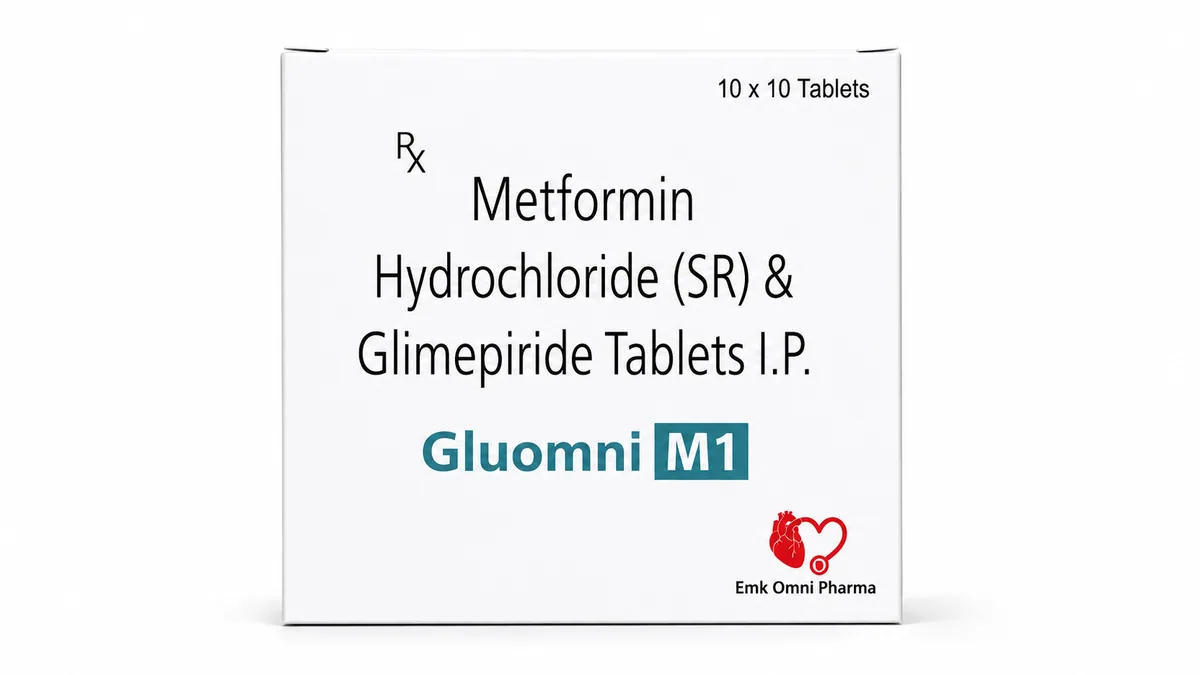
- Gluomni M1: Metformin Hydrochloride (SR) and Glimepiride Tablets IP, Metformin (SR) 500 mg with Glimepiride 1 mg
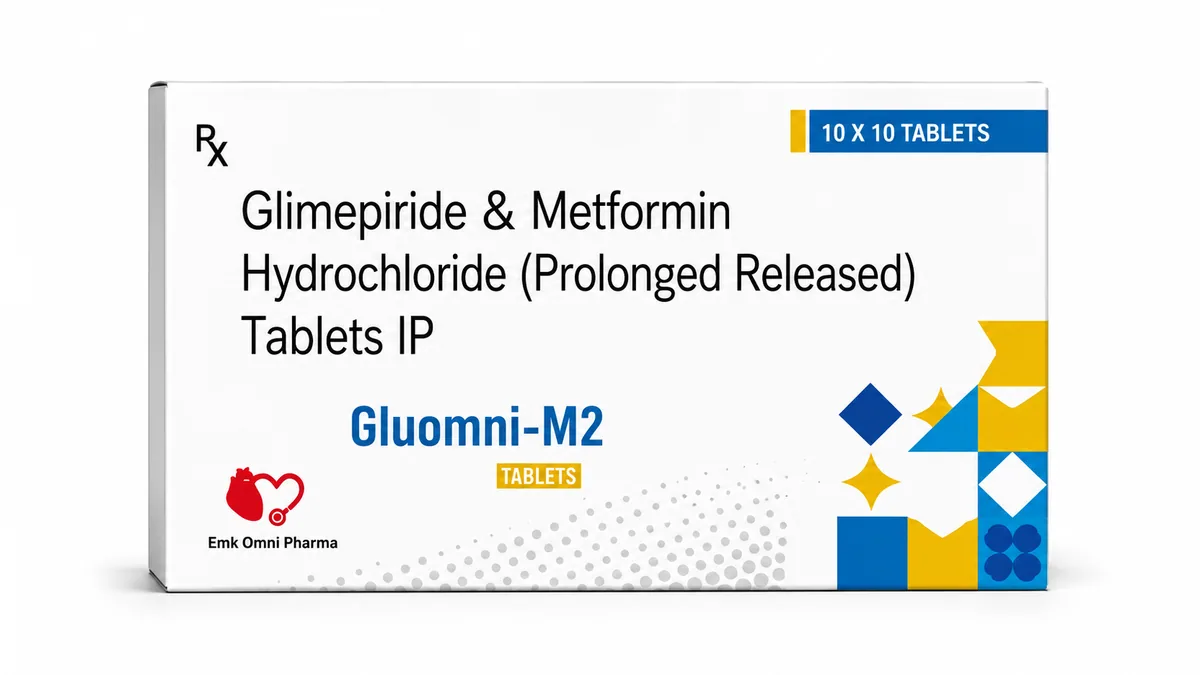
- Gluomni-M2: Glimepiride and Metformin Hydrochloride (Prolonged Release) Tablets IP, Glimepiride 2 mg with Metformin (PR) 500 mg
All four are prescription medicines. All four contain metformin at 500 mg, but the partner molecule and the release pattern differ, and those differences change how a doctor uses them.
Sitomni-M-OD 100/500 compared with Sitomni-M 50/500
These two share the same pair of molecules. The difference lies in the sitagliptin content and the intended daily pattern.
Sitomni-M 50/500 provides sitagliptin 50 mg per tablet, which suits regimens where the gliptin is spread across the day, or where a doctor wants to build up gradually, or where a lower gliptin exposure is appropriate.
Sitomni-M-OD 100/500 places the full 100 mg of sitagliptin in a single once-daily film-coated tablet. That suits patients who want the simplest possible schedule, who travel or work shifts, or who find a mid-day dose hard to remember.
Both deliver metformin 500 mg per tablet, so the metformin component alone does not distinguish them. What distinguishes them is the sitagliptin dose per tablet and how the day's treatment is arranged around it. That is a prescribing decision, not a shelf preference.
Gliptin combinations compared with glimepiride combinations
The bigger difference in this range is between the Sitomni products and the Gluomni products.
Sitagliptin is a DPP-4 inhibitor. It works through the incretin hormones released after eating, and its effect is glucose-dependent, so it eases off when blood sugar is not high.
Glimepiride is a sulfonylurea. It prompts the pancreas to release insulin regardless of the current glucose level. It is effective and long established, but that mechanism means a meaningfully higher chance of low blood sugar, particularly if a meal is delayed or missed, and it may be associated with weight gain in some people.
Gluomni M1 and Gluomni-M2 also use sustained or prolonged-release metformin, which is often chosen when a patient has struggled with the stomach effects of standard metformin.
Neither approach is universally better. A doctor may prefer a gliptin combination where hypoglycaemia risk needs to be kept low, for example in an older patient or someone with irregular meals, and may prefer a sulfonylurea combination where a stronger glucose-lowering push is needed.
What a doctor considers when choosing between them
The prescription is built from your reports and your life, not from the pack. Common considerations include:
- how far HbA1c and daily readings sit from the target set for you
- kidney function, since metformin clearance and gliptin dosing both depend on it
- risk and consequences of low blood sugar, which matter more in older adults, drivers and people who eat irregularly
- tolerance of standard metformin, which may favour a sustained or prolonged-release form
- other medicines already prescribed, including insulin
- how many tablets a day the person can realistically manage
- long-term affordability, because control depends on continuity
A doctor may also move between these products over time as the condition and the reports change.
Why you must not switch strengths on your own
Two packs that both say 500 mg of metformin are not interchangeable. Changing from a 50 mg gliptin tablet to a 100 mg one doubles that component. Moving from a gliptin combination to a glimepiride combination changes the mechanism entirely and introduces a real risk of hypoglycaemia that your current routine is not built around.
If a chemist does not have your usual pack, ask them to order it or check with your doctor rather than accepting a different strength on the spot. Take a photograph of your current strip so any substitution question can be answered accurately.
This article is for general information only and is not a substitute for advice from a registered medical practitioner.
Frequently asked questions
- Can I take two Sitomni-M 50/500 tablets instead of one Sitomni-M-OD 100/500?
- No. That changes both the sitagliptin and the metformin amounts you receive. Only your doctor can decide how the daily dose is arranged.
- Is Sitomni-M-OD 100/500 stronger than Gluomni-M2?
- They are not comparable in that way. They contain different partner molecules working by different mechanisms, so a doctor chooses based on the clinical need.
- Why do some products use sustained-release metformin?
- Sustained or prolonged-release forms release metformin more gradually, which can be gentler on the stomach for people who did not tolerate the standard form well.
- Which combination has the lowest risk of low blood sugar?
- Gliptin combinations generally carry a lower hypoglycaemia risk than sulfonylurea combinations, but risk also depends on other medicines and on meal patterns.
- My friend takes a different EMK Omni tablet. Should I ask for the same?
- No. Your friend's kidney function, readings and other medicines are different. Discuss any change with your own doctor.
- Can my doctor move me from one to another later?
- Yes. Diabetes treatment is reviewed over time and prescribers commonly adjust strength or mechanism as reports and circumstances change.
Need Sitomni-M-OD 100/500 for your pharmacy, hospital or clinic?
EMK Omni Pharma supplies through authorised channels across Karnataka. Send an enquiry and our team will respond during business hours.
Related guides
Medical Disclaimer
This product information is intended for general awareness only and should not be considered medical advice. Please consult a registered medical practitioner before using any prescription medicine.