Atorvastatin Explained: How Atomni-10 Works
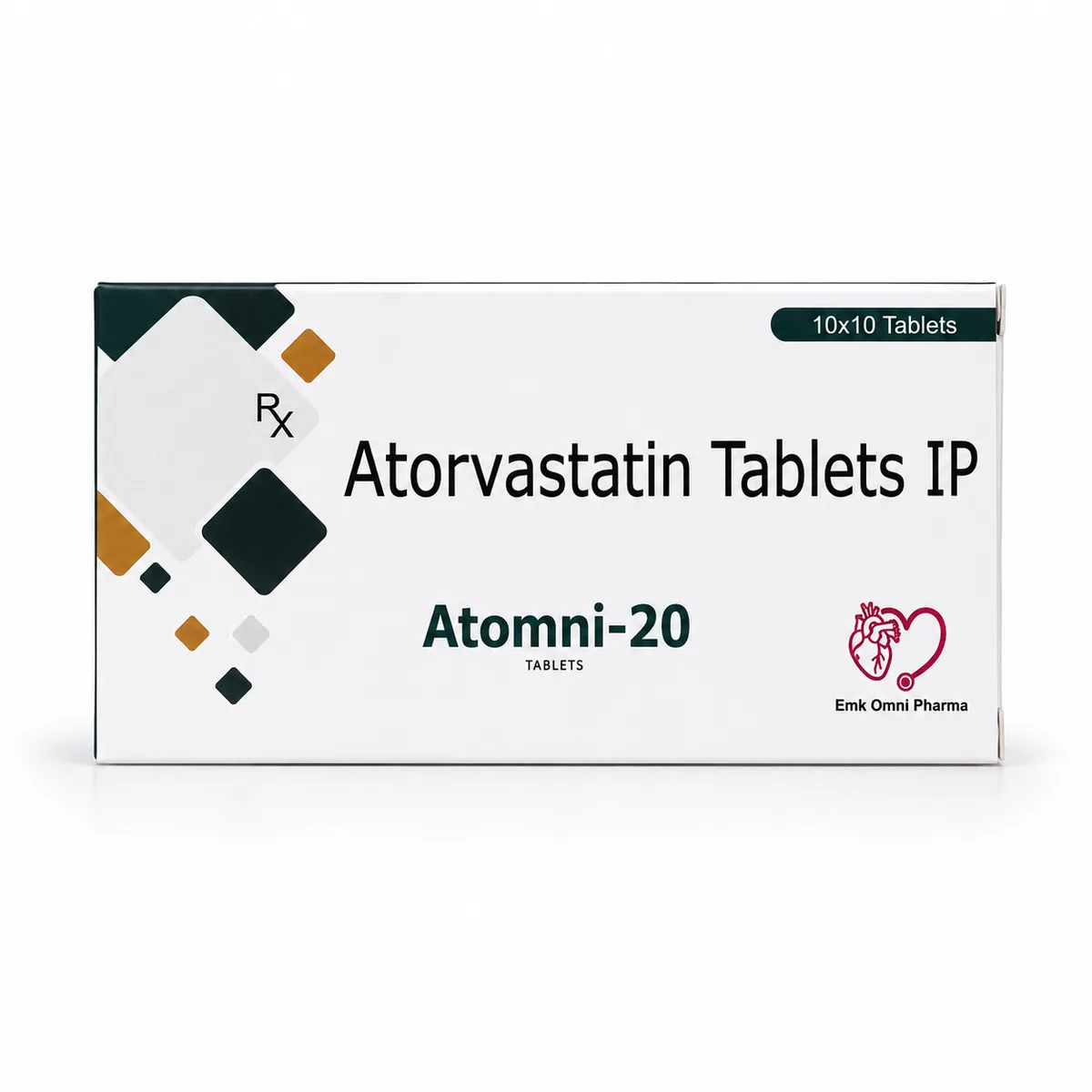
Atomni-10: Atorvastatin Tablets IP
Atorvastatin is the active molecule in Atomni-10. This article explains the statin class it belongs to, where it came from and how it differs from other statins in everyday use.
What class of drug is atorvastatin?
Atorvastatin belongs to the statins, formally known as HMG-CoA reductase inhibitors. The name comes from the enzyme they block, 3-hydroxy-3-methylglutaryl coenzyme A reductase, which controls the pace at which the liver builds cholesterol from smaller molecules. By occupying the enzyme's active site, statins slow production, and the liver compensates by drawing LDL cholesterol out of the blood.
All statins share this mechanism, but they differ in chemical structure, potency, duration of action, the way they are cleared from the body and the medicines they clash with. These differences are why a doctor may pick one statin over another for a particular patient.
A brief history of statins and atorvastatin
The statin story began in Japan in the 1970s, when the biochemist Akira Endo screened fungal extracts for substances that blocked cholesterol synthesis and found the first statin. The first statin to reach patients, lovastatin, was derived from a fungus and approved in the late 1980s. Atorvastatin was designed later by a research team at an American pharmaceutical company, reached the market in the second half of the 1990s and went on to become one of the best-selling prescription medicines in the world.
Once patents expired, generic atorvastatin became widely available. In India it has been affordable for many years, and Atomni-10 is one such branded generic, marketed by EMK Omni Pharma and made to Indian Pharmacopoeia standards.
How does atorvastatin compare with other statins?
Three features set atorvastatin apart within its class.
- Potency: Milligram for milligram it is among the stronger statins. Only rosuvastatin lowers LDL more per milligram; simvastatin, pravastatin and fluvastatin are weaker at the same dose.
- Duration: Atorvastatin and its active breakdown products act for a long time, so it can be taken at any hour, unlike short-acting statins that work best at bedtime.
- Solubility: Atorvastatin is fat-soluble, which lets it enter tissues readily. Water-soluble statins such as rosuvastatin and pravastatin are more liver-selective. Whether this affects muscle side effects is debated, and in practice tolerability varies from person to person.
Atorvastatin is cleared mainly by the liver through the CYP3A4 enzyme, so it shares interactions with medicines that block that enzyme. Rosuvastatin and pravastatin rely far less on CYP3A4, which sometimes makes them the better choice for patients on many other drugs.
Why atorvastatin comes in different strengths
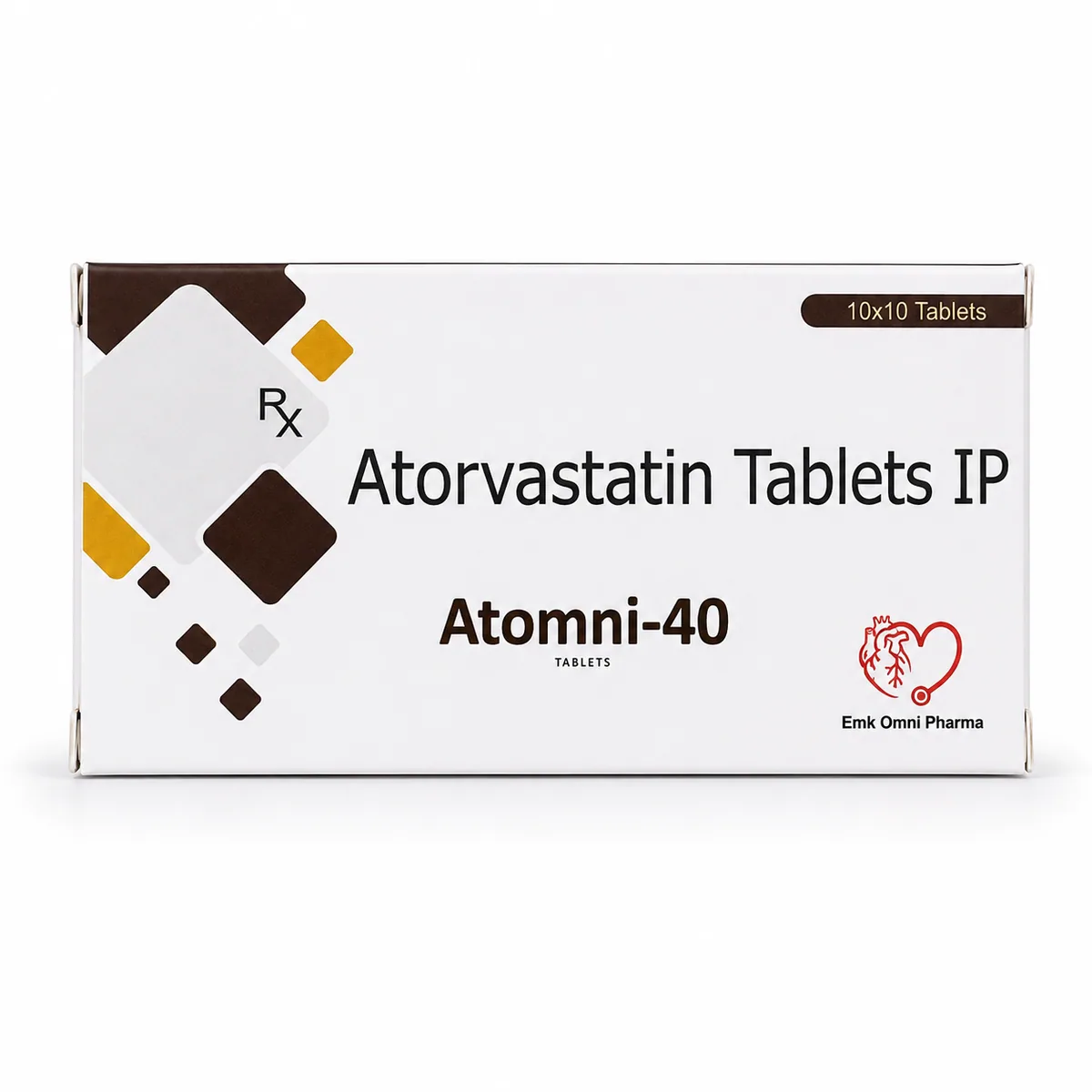
Guidelines describe statin treatment by intensity. Atorvastatin 10 mg and 20 mg are considered moderate-intensity, while 40 mg and 80 mg are high-intensity, reserved for people at the highest risk, such as those who have already had a heart attack. Each doubling of the dose adds only a modest further fall in LDL, so higher strengths are used when the target demands it rather than by default.
The 10 mg strength in Atomni-10 is the usual starting point for primary prevention in people at moderate risk, for older adults and for those who need cautious dosing. It is also a maintenance option for patients whose LDL has reached target.
Why Atomni-10 is a single-ingredient tablet
Some cholesterol products combine atorvastatin with ezetimibe, fenofibrate, aspirin or a blood pressure medicine. Such combinations reduce the number of pills but lock the doses together. A single-ingredient tablet like Atomni-10 lets the doctor adjust the statin on its own and is the standard way to begin treatment, adding other agents later only if needed. This article is for general information only and is not a substitute for advice from a registered medical practitioner.
Frequently asked questions
- Is atorvastatin a natural or synthetic drug?
- Atorvastatin is fully synthetic, unlike the earliest statins, which were derived from fungi. It was designed in the laboratory to block the same enzyme.
- What does IP after Atorvastatin Tablets mean?
- IP stands for Indian Pharmacopoeia, the official Indian standard for the identity, strength and quality that the tablet must meet.
- Is atorvastatin the same as rosuvastatin?
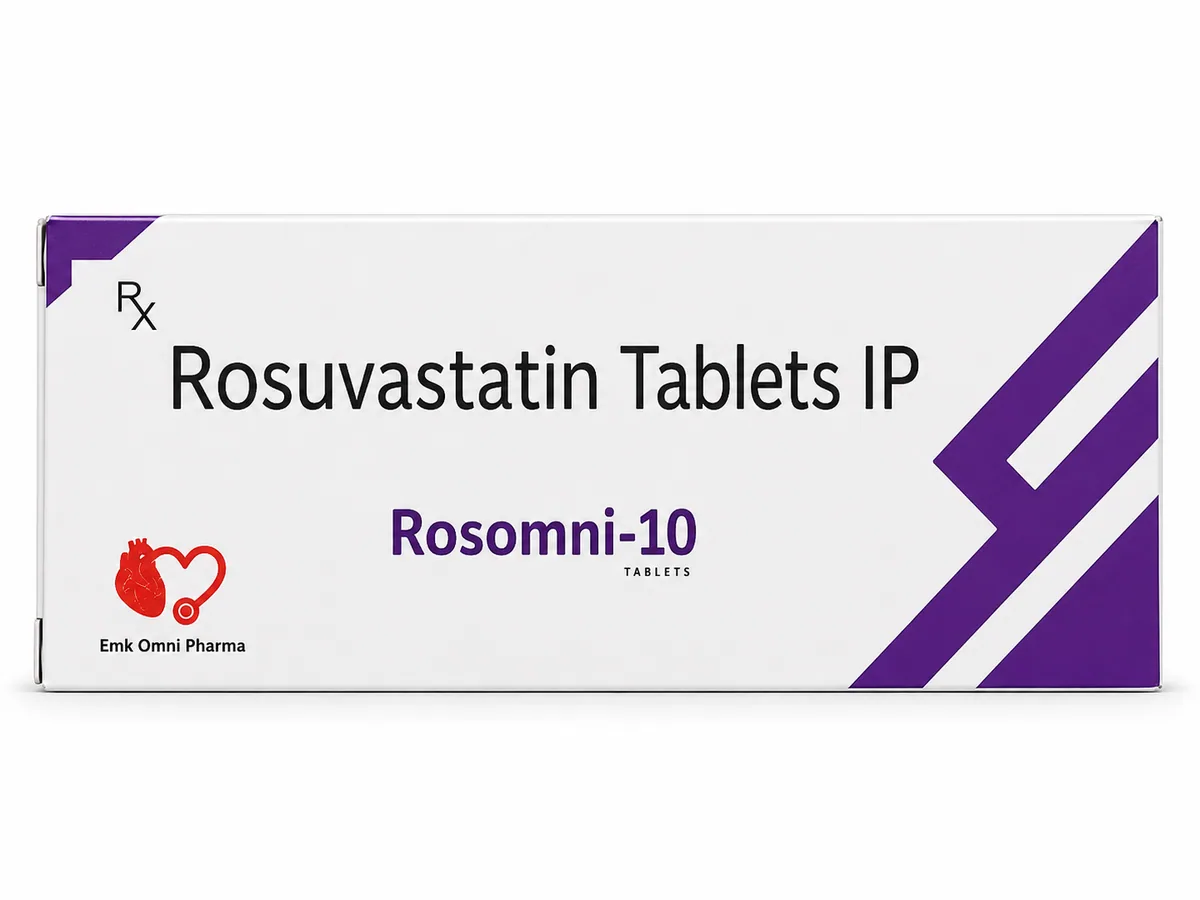
- No. Both are statins with the same mechanism, but rosuvastatin is more potent per milligram, more water-soluble and less dependent on the CYP3A4 enzyme.
- Why is atorvastatin calcium used rather than plain atorvastatin?
- The calcium salt is a stable, well-absorbed form for tablet making. The label states the amount of atorvastatin the salt provides, which is 10 mg in Atomni-10.
- Are all atorvastatin brands in India equivalent?
- Brands meeting Indian Pharmacopoeia standards are expected to deliver the same dose. Manufacturing quality and storage still matter, so buy from licensed chemists.
Need Atomni-10 for your pharmacy, hospital or clinic?
EMK Omni Pharma supplies through authorised channels across Karnataka. Send an enquiry and our team will respond during business hours.
Related guides
Medical Disclaimer
This product information is intended for general awareness only and should not be considered medical advice. Please consult a registered medical practitioner before using any prescription medicine.