Bisoprolol Explained: How Bisomni 5 Works
Bisomni 5: Bisoprolol Fumarate Tablets IP 5 mg
The molecule behind Bisomni 5 explained without jargon: what beta receptors do, why cardioselectivity matters, and how bisoprolol sits within the beta-blocker family.
What Is Bisoprolol Fumarate?
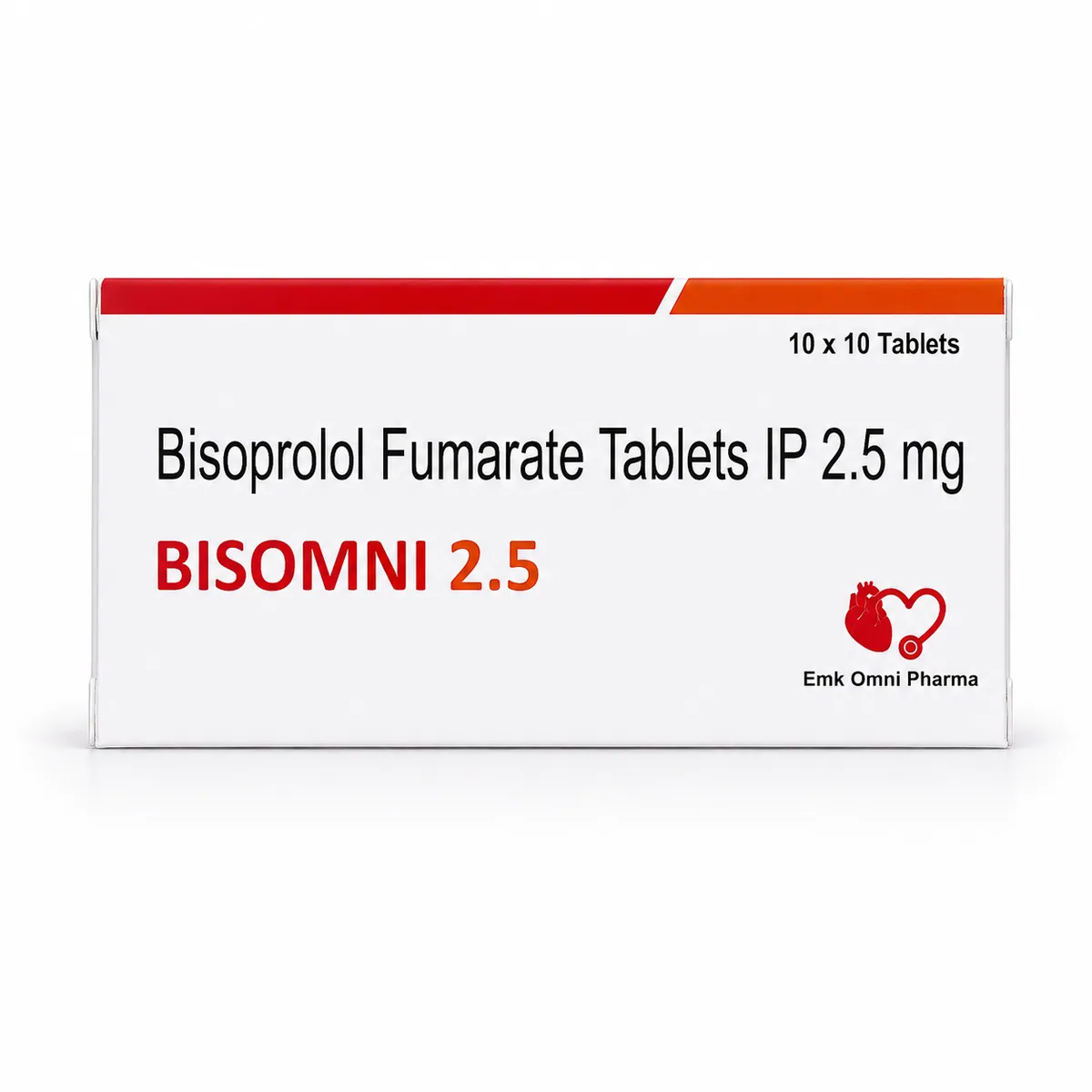
Bisoprolol is the active molecule in Bisomni 5. The fumarate part is a salt used to make the molecule stable and suitable for a tablet; it is not a second active drug. The label Bisoprolol Fumarate Tablets IP means the product is made to the standards laid down in the Indian Pharmacopoeia.
Bisoprolol belongs to the beta-blocker family, a group that has been part of heart medicine for decades. The earliest members blocked beta receptors everywhere in the body. Later molecules, bisoprolol among them, were designed to act far more on the heart than on other tissues, which made them easier to use in a wider range of patients.
In a tablet like Bisomni 5, the 5 mg refers to the amount of bisoprolol fumarate in each film-coated tablet.
What Beta Receptors Do and Why Blocking Them Helps
Think of beta receptors as switches that adrenaline flips. Beta-1 switches sit mostly on the heart. When adrenaline flips them, the heart beats faster and squeezes harder, which is exactly what you want when you are running for a bus. Beta-2 switches sit mostly in the airways and blood vessels, where they widen the tubes.
In long-standing high blood pressure, angina or heart failure, the body keeps the beta-1 switches pressed for too long. The heart works harder than it needs to, uses more oxygen and, over years, changes shape.
A beta-blocker sits on those switches so the signal cannot press them as hard. The heart slows, the contraction eases, oxygen demand falls, and the kidneys release less renin, which softens the hormone chain that keeps vessels tight.
What Cardioselective Means in Practice
Cardioselective is the term for a beta-blocker that prefers beta-1 receptors on the heart over beta-2 receptors in the airways. Bisoprolol is one of the more selective members of the family.
That preference matters because blocking beta-2 receptors in the lungs can tighten the airways, which is a problem for anyone with asthma or long-term lung disease. It also matters in diabetes, since beta-2 blockade contributes to blunting the body's response to a low blood sugar.
Selectivity, though, is relative and not absolute. At higher doses the preference weakens and some beta-2 blockade occurs. This is exactly why a doctor asks about wheezing and inhaler use before prescribing, and why the dose is chosen deliberately rather than pushed as high as possible.
How Bisoprolol Compares Within Its Class
Beta-blockers differ from one another in three main ways, and the differences drive the choice.
- Selectivity: some block both beta-1 and beta-2, some are cardioselective like bisoprolol, and some also relax blood vessels through an extra action.
- Duration: some need more than one dose a day, while bisoprolol stays in the body long enough for once-daily use.
- Elimination: some are cleared mainly by the liver and some mainly by the kidneys. Bisoprolol is cleared in a fairly balanced way through both routes, which is convenient when one organ is not working perfectly.
There is no single member of the class that suits everyone. Lung disease, kidney or liver function, other medicines, and how a person feels on a given tablet all shape the decision.
Why Bisomni 5 Is a Single-Molecule Tablet
Some heart medicines are fixed-dose combinations, where two molecules sit in one tablet to reduce the number of tablets a person swallows. Bisomni 5 is not one of those. It contains bisoprolol fumarate alone, with approved excipients and a film coating.
A single-molecule tablet gives the doctor room to move. If blood pressure needs more control, another medicine can be added at its own dose and adjusted on its own schedule. If a side effect appears, it is easier to identify which molecule is responsible when they are prescribed separately.
The film coating is not an extended-release system. It protects the tablet, makes swallowing easier and helps with taste, which is why the tablet should be swallowed whole rather than crushed.
This article is for general information only and is not a substitute for advice from a registered medical practitioner.
Frequently asked questions
- What does the fumarate in bisoprolol fumarate mean?
- Fumarate is a salt form used to make the molecule stable and suitable for a tablet. The active part is bisoprolol; fumarate is not a second medicine.
- What does IP mean on the pack?
- IP stands for Indian Pharmacopoeia, the official standards reference in India. It indicates the product is made to those specified standards.
- Is bisoprolol a blood thinner?
- No. It is a beta-blocker that slows the heart and lowers blood pressure. Blood thinners are a completely different group of medicines.
- Does bisoprolol widen blood vessels?
- Its main action is on the heart and on renin release rather than direct vessel widening. Some other beta-blockers have an additional vessel-relaxing action.
- Is Bisomni 5 a sustained-release tablet?
- No. It is a film-coated tablet of bisoprolol fumarate. The coating protects the tablet and aids swallowing; it is not a modified-release system.
- Why do beta-blockers have to be tapered?
- With continued blockade the receptors become more sensitive. Stopping suddenly can allow a rebound with a faster pulse and higher pressure, so doctors reduce the dose in steps.
Need Bisomni 5 for your pharmacy, hospital or clinic?
EMK Omni Pharma supplies through authorised channels across Karnataka. Send an enquiry and our team will respond during business hours.
Related guides
Medical Disclaimer
This product information is intended for general awareness only and should not be considered medical advice. Please consult a registered medical practitioner before using any prescription medicine.