Cilomni-10 Precautions and Drug Interactions
Cilomni-10: Cilnidipine Tablets IP 10 mg
Some people need extra care with cilnidipine, and a few common medicines and foods change how it behaves. Here is what to declare to your doctor before starting Cilomni-10.
Who Needs Extra Caution With Cilomni-10?
Cilnidipine is broken down mainly by the liver, so people with significant liver disease may need a lower dose or closer review. Severe kidney disease, heart failure, aortic valve narrowing, recent chest pain at rest and a recent heart attack are all reasons for your doctor to weigh the choice carefully.
Older patients are more sensitive to a fall in blood pressure and to the giddiness that can come with it, which raises the risk of a fall at home. Doctors often begin cautiously and review sooner in this group. The same caution applies if you are already on several blood pressure medicines, if you are prone to dehydration, or if you work outdoors in the Indian summer heat.
Cilomni-10 is not intended for children. Any use outside the usual adult setting is entirely a physician's decision.
Cilomni-10 in Pregnancy and Breastfeeding
If you are pregnant, think you may be pregnant, or are planning a pregnancy, tell your doctor before taking Cilomni-10. Blood pressure in pregnancy is managed with medicines chosen specifically for that situation, and calcium channel blockers are generally used only when a doctor judges the benefit to outweigh the risk.
The same applies while breastfeeding. Information on how much cilnidipine passes into breast milk is limited, so your doctor will decide whether to continue, switch or monitor the baby.
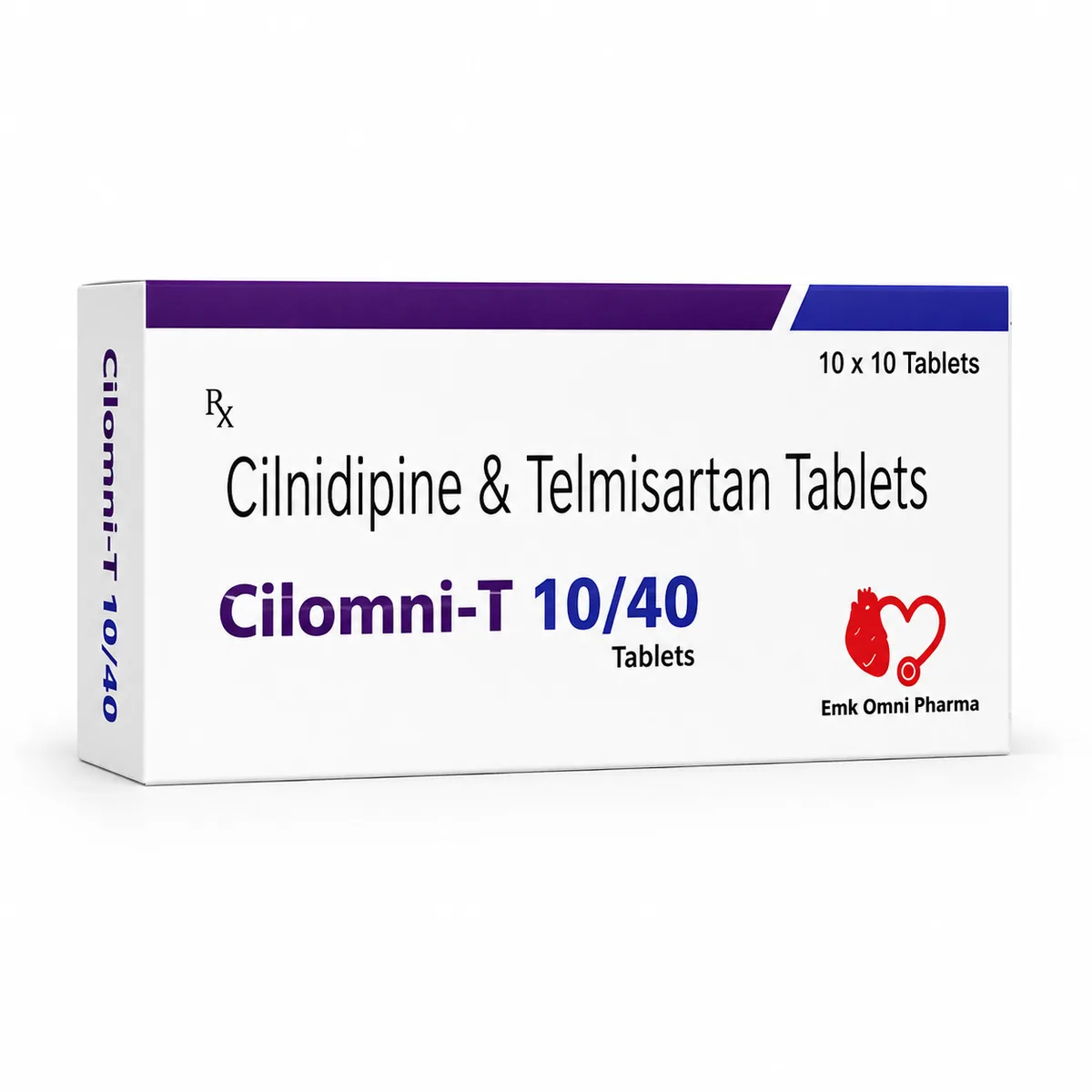
This matters even more with combination products. Telmisartan, the ARB in the sibling product Cilomni-T 10/40, is not used in pregnancy at all. If a pregnancy is confirmed or planned while you are on any blood pressure medicine, contact your doctor promptly rather than stopping on your own.
Medicines That Interact With Cilnidipine
Cilnidipine is processed by the CYP3A4 enzyme system, so medicines that block or boost that system change its levels.
- May raise cilnidipine levels: azole antifungals such as ketoconazole and itraconazole, macrolide antibiotics such as erythromycin and clarithromycin, and some antiviral medicines. The result can be excessive lowering of blood pressure.
- May reduce its effect: rifampicin, phenytoin, carbamazepine and St John's wort.
- Add to the blood pressure lowering: other antihypertensives, nitrates, some medicines for an enlarged prostate, and certain drugs used before surgery or anaesthesia.
- Work against it: regular NSAID painkillers, some decongestants in cold remedies, and steroid tablets.
- Levels of digoxin and of some other medicines can also be affected, so your doctor may check them.
Carry an up-to-date list of everything you take, including Ayurvedic and herbal products, and show it at every consultation and at the chemist.
Grapefruit, Alcohol and Everyday Foods
Grapefruit and grapefruit juice interfere with the same CYP3A4 enzyme and can raise the amount of cilnidipine in the blood, so it is sensible to avoid them. This applies to sweet lime and orange far less, and ordinary Indian citrus fruit is generally not a concern, but ask your doctor if you drink imported juices regularly.
Alcohol widens vessels too, so it adds to giddiness and can make readings unpredictable. If you drink, keep it low and tell your doctor honestly how much.
Salt is the everyday item that matters most. Pickle, papad, packaged namkeen, processed cheese, sauces and restaurant food carry a lot of hidden sodium, and a high-salt diet works against every blood pressure medicine. Cutting back is one of the most useful things you can do while on Cilomni-10.
Tests Your Doctor May Order
There is no single test for the medicine itself, but doctors normally build a picture around your treatment. Expect repeated blood pressure readings in the clinic and often a home record. Blood tests for kidney function and electrolytes, liver function, blood sugar or HbA1c, and a lipid profile are common at the start and then periodically.
An ECG, an echocardiogram, a urine test for protein or an eye examination may be added depending on your history. These look for the effects of long-standing high blood pressure on the heart, kidneys and eyes.
Keep the reports in one folder and carry them to each visit. It makes decisions about dose and about whether to move to a combination such as Cilomni-T 10/40 far easier for your doctor.
This article is for general information only and is not a substitute for advice from a registered medical practitioner.
Frequently asked questions
- Can I drink alcohol while taking Cilomni-10?
- Alcohol adds to the giddiness and can make blood pressure control less predictable. Discuss your actual intake with your doctor rather than guessing.
- Is grapefruit juice a problem with cilnidipine?
- Yes, grapefruit affects the enzyme that breaks down cilnidipine and can raise its level in the blood. It is best avoided.
- Can I take paracetamol or ibuprofen with Cilomni-10?
- Occasional paracetamol is usually acceptable. Regular NSAIDs such as ibuprofen can work against blood pressure control, so ask your doctor first.
- Is Cilomni-10 used during pregnancy?
- Only if a doctor decides the benefit outweighs the risk. Inform your doctor at once if you are pregnant or planning a pregnancy.
- Do I need blood tests while on this medicine?
- Your doctor commonly checks kidney function, liver function, sugar and lipids at intervals as part of overall hypertension care.
- Can I take Ayurvedic medicines alongside Cilomni-10?
- Tell your doctor about every traditional or herbal preparation you use. Some affect blood pressure or interact with the way the tablet is processed.
Need Cilomni-10 for your pharmacy, hospital or clinic?
EMK Omni Pharma supplies through authorised channels across Karnataka. Send an enquiry and our team will respond during business hours.
Related guides
Medical Disclaimer
This product information is intended for general awareness only and should not be considered medical advice. Please consult a registered medical practitioner before using any prescription medicine.