What Is Cilomni-10 Used For? Cilnidipine 10 mg Uses
Cilomni-10: Cilnidipine Tablets IP 10 mg
Cilomni-10 is prescribed mainly for high blood pressure. This article explains the conditions cilnidipine is used in, who it typically suits, and the things it is not meant to do.
What Conditions Is Cilomni-10 Prescribed For?
The principal use of Cilomni-10 is the treatment of essential hypertension, the common form of high blood pressure that has no single identifiable cause. Doctors prescribe it to bring readings towards the target they set for you and to keep them there over months and years.
Because lowering blood pressure lowers the strain on the heart, arteries, kidneys and the vessels of the brain, treatment is also part of broader cardiovascular risk management. Your doctor may prescribe Cilomni-10 to a patient who already has other risk factors such as diabetes, kidney disease, a family history of stroke or thickening of the heart muscle. Cilnidipine is sometimes chosen in patients with protein in the urine, because of the way it acts on both the incoming and outgoing arterioles of the kidney, but that judgement belongs to the treating physician after appropriate tests.
How Cilnidipine Lowers Blood Pressure
Think of your arteries as flexible pipes with a muscular wall. Calcium flowing into that muscle makes it contract, narrowing the pipe and raising the pressure inside. Cilnidipine blocks the L-type calcium channels that let this happen, so the wall relaxes, the pipe widens and pressure falls.
Many medicines in this family stop there. Cilnidipine also blocks N-type calcium channels at sympathetic nerve endings, reducing the release of noradrenaline. In practical terms this means the body is less likely to answer the widening of vessels with a faster heartbeat, and fluid is less likely to be pushed into the tissues around the ankles.
The effect is gradual and steady rather than sudden. That is exactly what long-term blood pressure control needs.
Who Doctors Typically Prescribe Cilomni-10 To
Cilomni-10 is generally considered for adults whose office and home readings remain above target after a fair trial of lifestyle measures, or straight away when readings are markedly high or the overall risk is high.
It may be started as the first medicine, or added when an existing medicine has not been enough on its own. Doctors often favour a calcium channel blocker in older patients and in people whose blood pressure runs high mainly in the upper number. Some patients are moved to cilnidipine from another medicine in the same class when ankle swelling or a racing pulse has been troublesome.
Children, pregnant women and people with severe liver disease need separate consideration, which the precautions article covers.
What Cilomni-10 Does Not Do
Cilomni-10 is not a painkiller, not a cholesterol tablet and not a blood thinner. It does not dissolve existing deposits in arteries and it does not remove the need for the rest of your treatment plan.
It is also not an emergency medicine. If a home reading is very high and you feel chest pain, breathlessness, severe headache, weakness on one side or difficulty speaking, that is a reason to reach a hospital, not to take an extra tablet.
And it does not work retrospectively. Blood pressure control depends on the medicine being present in the body every day, which is why consistency matters far more than any single dose.
Using Cilomni-10 Alongside Other Treatment
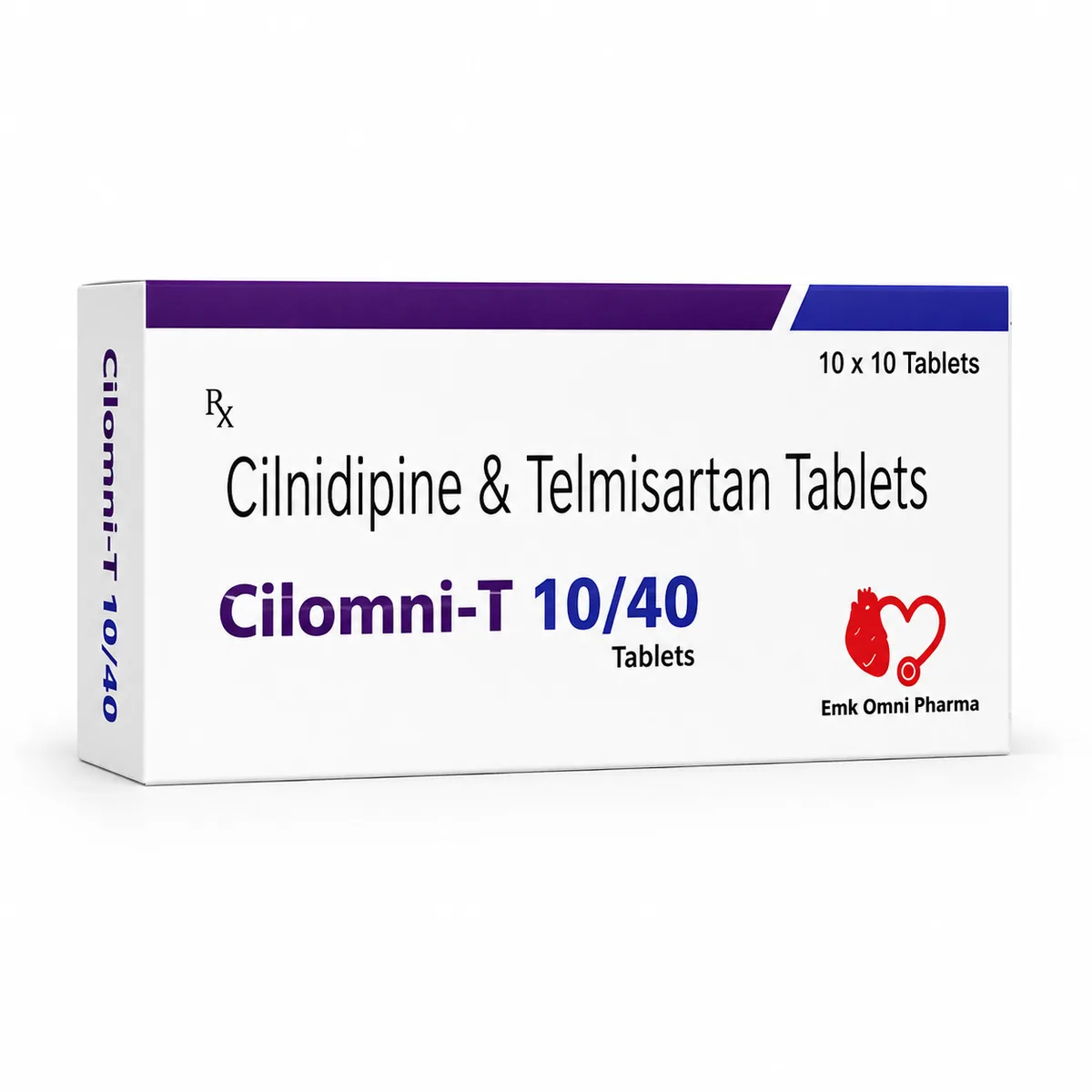
Most people with hypertension eventually need more than one medicine, and combining groups is normal practice rather than a sign that treatment has failed. Cilnidipine is commonly paired with an ARB, an ACE inhibitor, a diuretic or a beta blocker, depending on what else is going on. EMK Omni Pharma also markets Cilomni-T 10/40, which brings cilnidipine 10 mg and telmisartan 40 mg into one tablet for patients whose doctor wants both mechanisms with fewer tablets to remember.
Lifestyle measures continue alongside the medicine. Reducing added salt, cooking with less pickle and papad, walking most days, losing a few kilograms and stopping tobacco all add to what Cilomni-10 can do, and sometimes allow a doctor to keep the dose lower.
This article is for general information only and is not a substitute for advice from a registered medical practitioner.
Frequently asked questions
- Is Cilomni-10 only for high blood pressure?
- Blood pressure management is its main use. Any other use is a decision for your doctor based on your full clinical picture.
- Can Cilomni-10 be taken for a sudden spike in blood pressure?
- No. It is a regular control medicine, not a rescue tablet. A very high reading with symptoms needs medical attention, not an extra dose at home.
- Does cilnidipine help the kidneys?
- Cilnidipine acts on both afferent and efferent kidney arterioles and has been studied in patients with protein in the urine. Whether it suits your kidneys is for your doctor to judge.
- Will Cilomni-10 stop my headaches?
- It is not a headache medicine. Some people actually get mild headaches in the first days as vessels widen, and these usually settle.
- Can I stop the tablet once my readings are normal?
- Normal readings usually mean the treatment is working. Stopping without medical advice generally lets pressure rise again, so speak to your doctor first.
- Is Cilomni-10 suitable for young adults?
- Adults of any age can develop hypertension, and suitability depends on the cause, other conditions and pregnancy plans. Your doctor will decide.
Need Cilomni-10 for your pharmacy, hospital or clinic?
EMK Omni Pharma supplies through authorised channels across Karnataka. Send an enquiry and our team will respond during business hours.
Related guides
Medical Disclaimer
This product information is intended for general awareness only and should not be considered medical advice. Please consult a registered medical practitioner before using any prescription medicine.