Gluomni M1 vs Gluomni-M2 and Other Diabetes Options
Gluomni M1: Metformin Hydrochloride (SR) & Glimepiride Tablets IP
Gluomni M1 sits in a family of diabetes options with different molecules and strengths. Here is how they differ conceptually and what a doctor considers when choosing.
What Is Being Compared and Why
Patients often see several diabetes brands on the same chemist's shelf and assume they are interchangeable. They are not. Within the EMK Omni Pharma Diabetes Care range alone there are different molecules and different strengths, each with its own reason for existing.
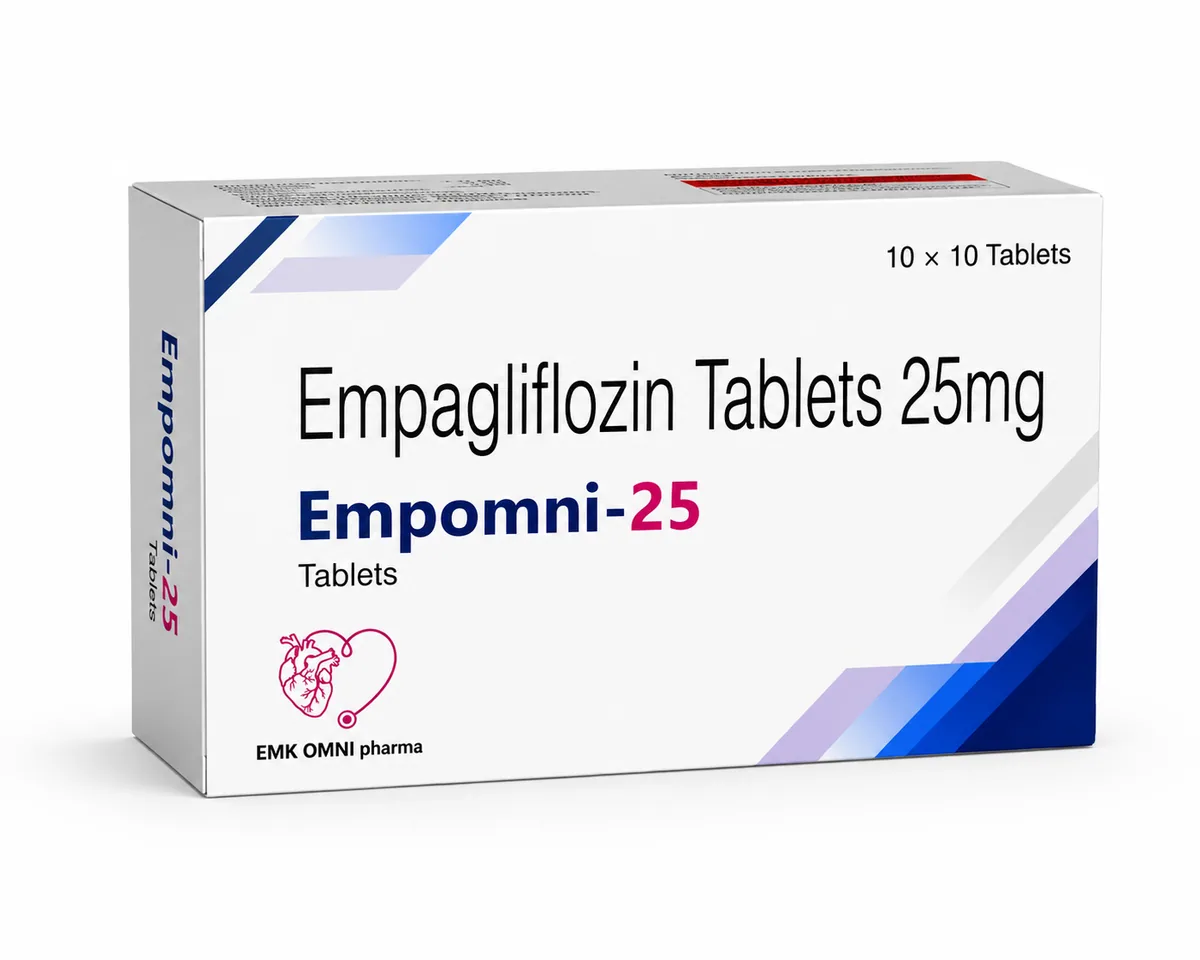
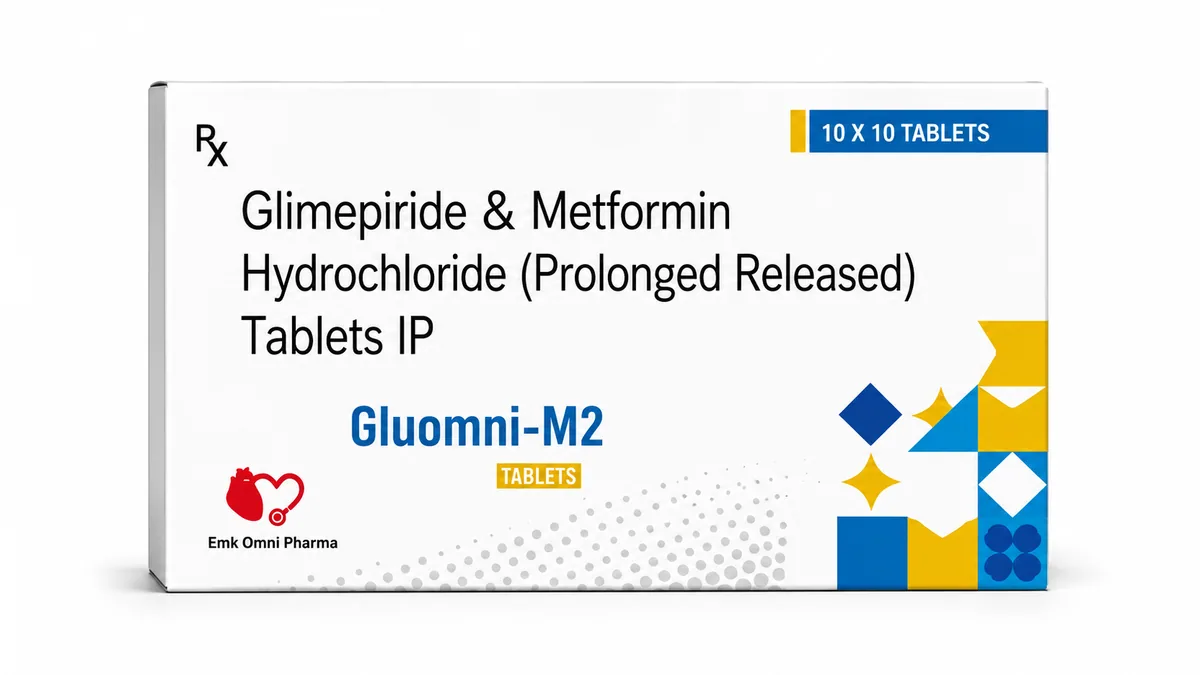
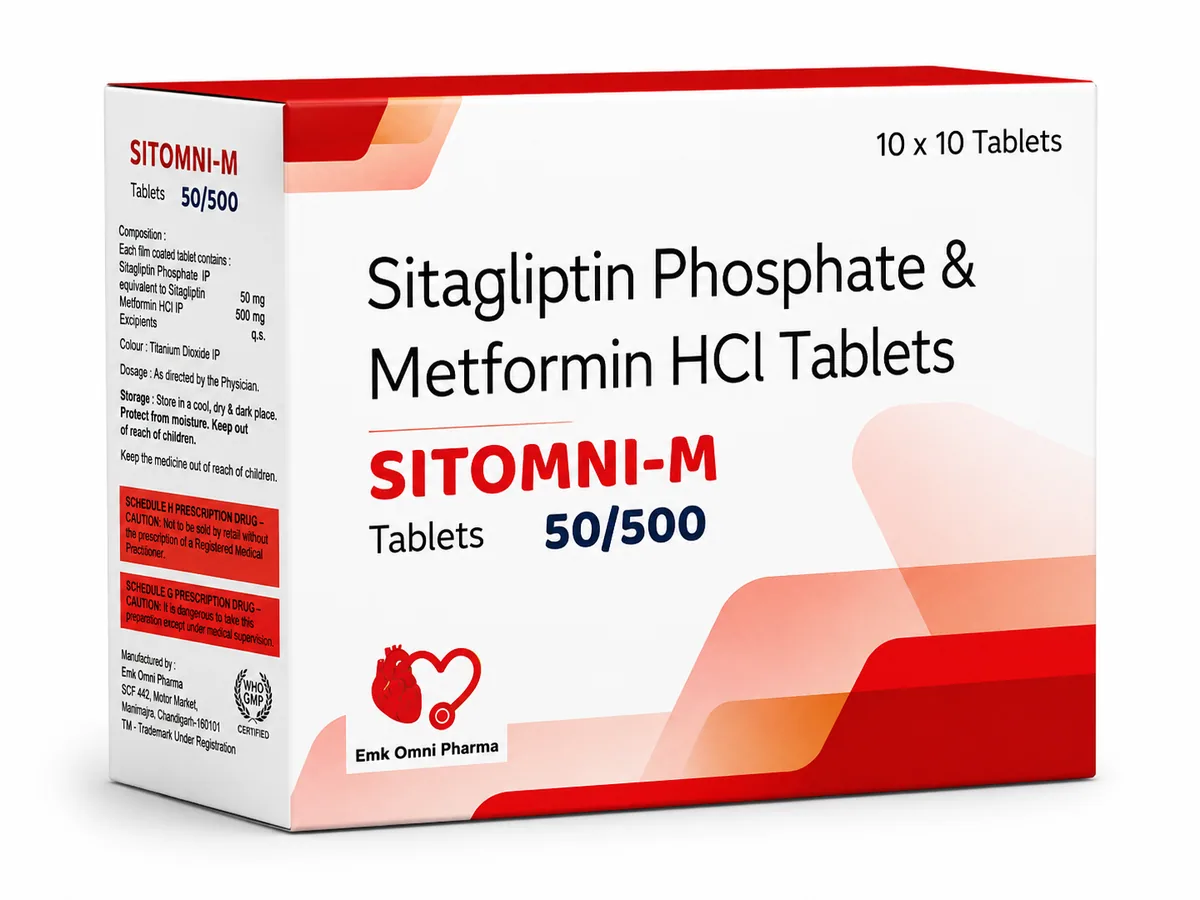
The products discussed here are Gluomni M1, which is Metformin Hydrochloride (SR) 500 mg with Glimepiride 1 mg; Gluomni-M2, which is Glimepiride and Metformin Hydrochloride (Prolonged Release) Tablets IP with Glimepiride 2 mg and Metformin 500 mg; Sitomni-M 50/500, which is Sitagliptin 50 mg with Metformin Hydrochloride 500 mg; Sitomni-M-OD 100/500, which is Sitagliptin Phosphate 100 mg with Metformin Hydrochloride 500 mg; and Empomni-25, which is Empagliflozin 25 mg.
This comparison is written to help you follow your doctor's reasoning, not to help you choose for yourself.
Gluomni M1 vs Gluomni-M2: The Glimepiride Strength
The clearest difference between the two Gluomni options is the sulfonylurea content. Gluomni M1 carries Glimepiride 1 mg; Gluomni-M2 carries Glimepiride 2 mg. Both pair it with Metformin Hydrochloride 500 mg in an extended delivery form, described as sustained release on Gluomni M1 and prolonged release on Gluomni-M2.
A doctor generally starts a sulfonylurea low and reviews. The 1 mg version is often the starting point, particularly for older patients, for people with irregular meals, or for anyone who has had low sugar episodes. If readings remain above target after a fair trial and the patient tolerates the medicine well, the doctor may consider the 2 mg version.
Moving in the other direction happens too. If low sugar episodes appear, a doctor may step down the sulfonylurea strength. Because the Metformin component stays at 500 mg in both, the change is essentially a change in insulin stimulation.
Sulfonylurea Combinations Versus Sitagliptin Combinations
Sitomni-M 50/500 and Sitomni-M-OD 100/500 also pair a partner molecule with Metformin 500 mg, but the partner is Sitagliptin, a DPP-4 inhibitor rather than a sulfonylurea.
Sitagliptin works through the incretin system. It prolongs the action of gut hormones that prompt insulin release when glucose is high and reduce glucagon. Because the effect is largely glucose dependent, DPP-4 inhibitors on their own rarely push blood sugar too low. Glimepiride, by contrast, stimulates insulin release more directly, so low sugar is a real consideration with Gluomni M1.
The difference between Sitomni-M 50/500 and Sitomni-M-OD 100/500 lies in Sitagliptin content, 50 mg against 100 mg, and in the once daily design of the OD version. A doctor may prefer a Sitagliptin combination where the risk of low sugar needs to be kept low, and may prefer a sulfonylurea combination where a stronger glucose lowering push or a lower cost is the priority.
Empomni-25: A Completely Different Route
Empomni-25 contains Empagliflozin 25 mg, an SGLT2 inhibitor. Instead of acting on the liver or the pancreas, it acts on the kidney, reducing the reabsorption of glucose so that surplus glucose leaves the body in the urine.
Because the mechanism does not depend on stimulating insulin, an SGLT2 inhibitor used alone is unlikely to cause low blood sugar. It carries its own considerations instead, including urinary and genital infections, attention to hydration, and specific caution in people with reduced kidney function or a history of ketoacidosis.
SGLT2 inhibitors are also chosen by doctors for reasons beyond glucose in certain patients with heart or kidney disease. That is a specialist judgement based on your full clinical picture, not something a patient should infer from an article.
What a Doctor Considers When Choosing
The prescription that arrives on your paper is the result of several judgements at once:
- Current readings: fasting glucose, post meal glucose and HbA1c compared with your target
- Kidney function: eGFR and creatinine, which affect Metformin and SGLT2 inhibitors
- Liver function: relevant particularly to sulfonylureas
- Age and low sugar risk: older adults and people living alone need extra caution with sulfonylureas
- Meal pattern: shift work, long fasts and irregular hours push doctors away from stronger sulfonylurea strengths
- Weight: sulfonylureas may add a little weight, while some other classes do not
- Other conditions: heart failure, established heart disease and kidney disease change the calculation
- Other medicines and cost: long term treatment has to be affordable and sustainable
A change in any of these can be a reason to change the prescription later, which is normal and not a sign that anything has gone wrong.
Why You Must Not Switch Strengths on Your Own
Two packs may look similar and carry similar names while differing in the molecule or the strength. Taking Gluomni-M2 in place of Gluomni M1 doubles the Glimepiride content, which can lead to low blood sugar. Replacing a sulfonylurea combination with a Sitagliptin or Empagliflozin product changes the mechanism entirely and may leave your readings uncontrolled.
All of these are Schedule H medicines, so a chemist should dispense them only against a prescription that names the exact product and strength. Read the strip before you leave the counter and question anything that differs from your prescription.
If you feel the current medicine is not suiting you, whether because of cost, side effects or readings, say so at your next visit. There are usually alternatives, and your doctor can move you across safely with the right monitoring.
This article is for general information only and is not a substitute for advice from a registered medical practitioner.
Frequently asked questions
- What is the difference between Gluomni M1 and Gluomni-M2?
- Both pair Metformin 500 mg with Glimepiride, but Gluomni M1 has Glimepiride 1 mg and Gluomni-M2 has 2 mg. Only your doctor can decide which strength suits you.
- Is a Sitagliptin combination better than a Glimepiride combination?
- Neither is better in general. They work by different mechanisms, and the choice depends on your readings, kidney function, age and risk of low blood sugar.
- How is Empomni-25 different from Gluomni M1?
- Empomni-25 contains Empagliflozin, which removes surplus glucose through the urine. Gluomni M1 works on the liver and the pancreas instead.
- Can I move from Gluomni M1 to Gluomni-M2 myself if my sugar is high?
- No. That doubles the Glimepiride content and can cause low blood sugar. Any change in strength must come from your doctor after reviewing your reports.
- Why did my doctor change my diabetes tablet?
- Treatment is reviewed as readings, kidney function, weight and other conditions change over the years. A change is a normal part of long term diabetes care.
- Can two diabetes brands be taken together?
- Sometimes doctors do combine agents, but never do it yourself. Two products may share the same molecule, which would mean a double dose.
Need Gluomni M1 for your pharmacy, hospital or clinic?
EMK Omni Pharma supplies through authorised channels across Karnataka. Send an enquiry and our team will respond during business hours.
Related guides
Medical Disclaimer
This product information is intended for general awareness only and should not be considered medical advice. Please consult a registered medical practitioner before using any prescription medicine.