Type 2 Diabetes: Symptoms, Care and Where Gluomni M1 Fits
Gluomni M1: Metformin Hydrochloride (SR) & Glimepiride Tablets IP
Type 2 diabetes develops quietly and is managed for life. This guide explains what happens in the body, the symptoms to notice, and where a tablet like Gluomni M1 fits.
What Type 2 Diabetes Actually Is
Glucose from food is the body's main fuel. Insulin, made by beta cells in the pancreas, acts like a key that lets glucose move from the blood into muscle and fat cells.
In type 2 diabetes two things go wrong together. First, cells stop responding properly to insulin, a state called insulin resistance. The pancreas compensates by making more insulin, and for years the readings may look normal. Second, over time the beta cells tire and release less insulin than the body needs. Glucose then accumulates in the blood.
At the same time the liver keeps releasing glucose even when levels are already high, which is why fasting readings in the morning are often the first to rise. Understanding these three problems explains why treatments differ: some medicines target the liver, some target insulin resistance, and some target insulin release.
Symptoms and Warning Signs to Notice
Type 2 diabetes can develop for years without obvious symptoms. When symptoms do appear, they commonly include:
- passing urine more often, especially at night
- unusual thirst and a dry mouth
- tiredness that rest does not fix
- unexplained weight loss despite normal eating
- blurred vision that comes and goes
- cuts, boils or gum infections that heal slowly
- tingling or numbness in the feet
- itching, particularly around the groin
In India, screening is often advised earlier than in many other countries because type 2 diabetes tends to appear at a younger age and at a lower body weight. A family history in parents or siblings, a large waist, high blood pressure, a history of gestational diabetes or polycystic ovary syndrome all raise the risk. A simple fasting glucose test and HbA1c can settle the question.
Why Long Term Control Matters
High glucose over years damages small and large blood vessels. That is the route to the complications people worry about: reduced vision from retinopathy, protein loss and declining kidney function, numbness and pain from neuropathy, foot ulcers, and a higher risk of heart attack and stroke.
The encouraging part is that these develop slowly and are strongly linked to how well glucose, blood pressure and cholesterol are kept in range over time. Bringing readings closer to target may lower that long term risk considerably.
This is also why doctors track HbA1c rather than relying on a single glucose value. HbA1c reflects the average over roughly three months, which is a fairer picture than one reading taken after an unusual meal or a stressful morning.
Everyday Lifestyle Measures That Help
Medicines work better when daily habits support them.
- Meals: keep portions of rice, roti, poha, idli and potato controlled rather than eliminating them; fill more of the plate with vegetables, dal, curd and protein
- Timing: eat at roughly the same times each day, which matters especially with a sulfonylurea in the tablet
- Sugar and sweets: limit sweets, sweetened tea and coffee, packaged juice and cold drinks; treat festival sweets as an occasional portion rather than a free day
- Activity: aim for regular walking or other activity most days, along with some strength work, after clearing it with your doctor
- Weight and waist: even a modest reduction in weight can improve insulin sensitivity
- Sleep and stress: poor sleep and prolonged stress both push glucose upward
- Smoking and alcohol: stopping tobacco protects blood vessels; alcohol needs a specific discussion with your doctor when you take a sulfonylurea combination
A dietitian who understands regional Indian cooking is worth consulting once, because practical swaps beat generic advice.
Where a Tablet Like Gluomni M1 Fits In
Most doctors begin with lifestyle changes and Metformin. If readings remain above the target after a fair trial, a second medicine is usually added rather than pushing one drug endlessly upward.
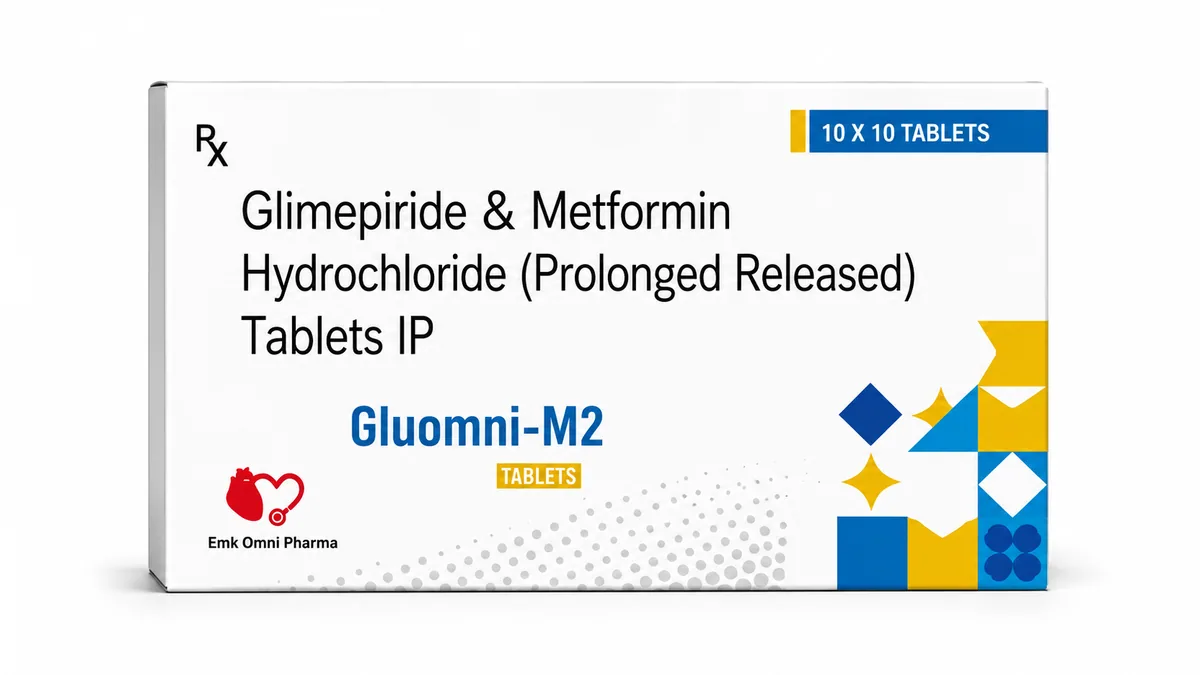
Gluomni M1 is one way of doing that in a single tablet. Its Metformin component works on the liver and on insulin resistance, while the Glimepiride 1 mg component encourages the pancreas to release more insulin. The bilayer sustained release format is aimed at making a two drug plan easier to follow through the day.
Whether a sulfonylurea is the right second agent for you depends on your age, kidney function, weight, risk of low blood sugar, other illnesses and cost. Several other drug families exist, and your doctor weighs them all. Gluomni M1 supports the plan; it does not replace the plan.
Why Follow Up Matters More Than Any Single Reading
Type 2 diabetes changes over years. Insulin release tends to decline slowly, weight and activity levels change, and other conditions appear. A plan that suited you three years ago may need revision now.
Regular follow up usually includes HbA1c every three to six months, kidney function and urine albumin, a lipid profile, blood pressure at every visit, an annual dilated eye examination and a yearly foot check. Vaccinations and dental care matter too, because infections raise glucose.
Bring your home readings, your reports and your current medicine strips to every appointment. Ask what your targets are and what would prompt a change in treatment. Do not adjust or stop any medicine, including Gluomni M1, between visits without medical advice.
This article is for general information only and is not a substitute for advice from a registered medical practitioner.
Frequently asked questions
- Can type 2 diabetes go away with diet alone?
- Some people achieve very good control with weight loss and lifestyle change, and their doctor may reduce medicines. That decision belongs to the doctor after reviewing your reports.
- What HbA1c should I aim for?
- Targets are individual. They depend on your age, how long you have had diabetes, other illnesses and the risk of low blood sugar, so ask your doctor for your number.
- Do I have to give up rice completely?
- Usually not. Most Indian dietitians work on portion size, adding vegetables, dal and protein, and pairing carbohydrates rather than removing a staple food altogether.
- How often should I test at home?
- It depends on your treatment and how stable your readings are. Your doctor will tell you which readings to record and how frequently.
- Is walking enough exercise?
- Regular brisk walking helps a great deal. Many doctors also suggest some resistance work twice a week, if your heart, joints and eyes allow it.
- Why do my morning readings stay high?
- The liver releases glucose overnight, and in type 2 diabetes that release is often excessive. Show the pattern to your doctor rather than adjusting your tablets.
Need Gluomni M1 for your pharmacy, hospital or clinic?
EMK Omni Pharma supplies through authorised channels across Karnataka. Send an enquiry and our team will respond during business hours.
Related guides
Medical Disclaimer
This product information is intended for general awareness only and should not be considered medical advice. Please consult a registered medical practitioner before using any prescription medicine.