Gluomni-M2 vs Gluomni M1: How Doctors Choose a Strength
Gluomni-M2: Glimepiride & Metformin Hydrochloride (Prolonged Release) Tablets IP
EMK Omni Pharma offers several diabetes combinations. This article compares Gluomni-M2 with Gluomni M1 and the Sitomni-M range, and explains how a doctor picks between them.
The EMK Omni Pharma Diabetes Care Range
EMK Omni Pharma markets several prescription combinations in its Diabetes Care category, each built around metformin with a partner molecule.
- Gluomni-M2: Glimepiride 2 mg with Metformin Hydrochloride 500 mg as prolonged release, an uncoated bilayer tablet
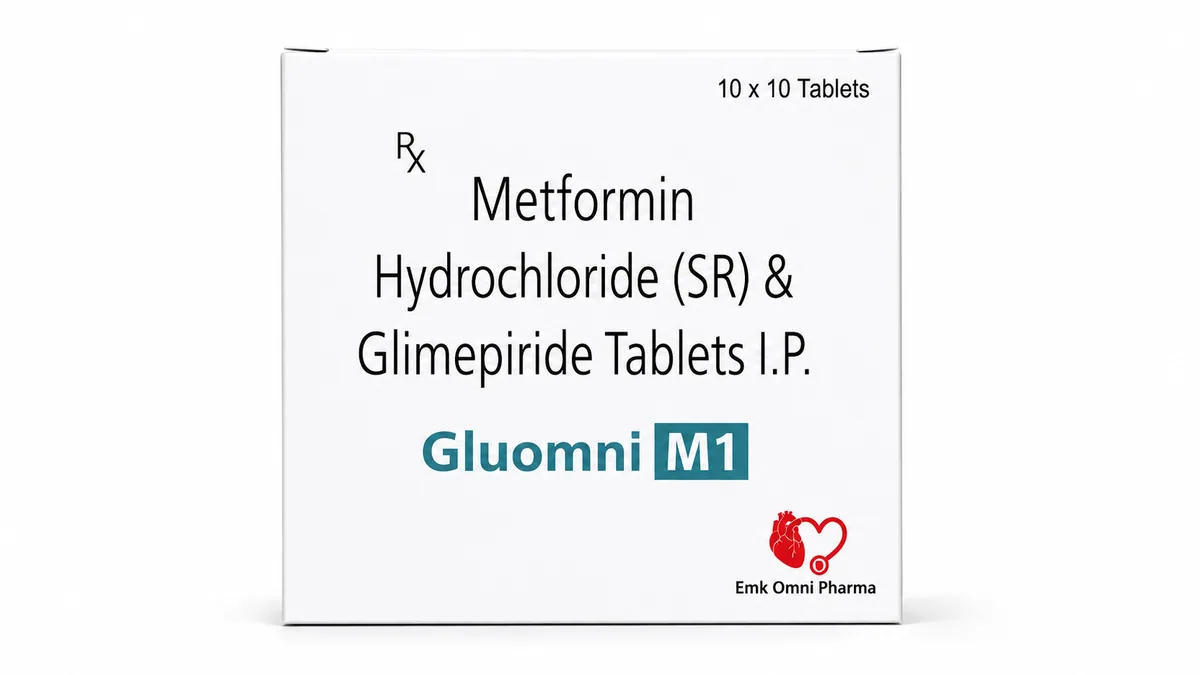
- Gluomni M1: Metformin Hydrochloride (SR) 500 mg with Glimepiride 1 mg, supplied as Metformin Hydrochloride (SR) and Glimepiride Tablets IP
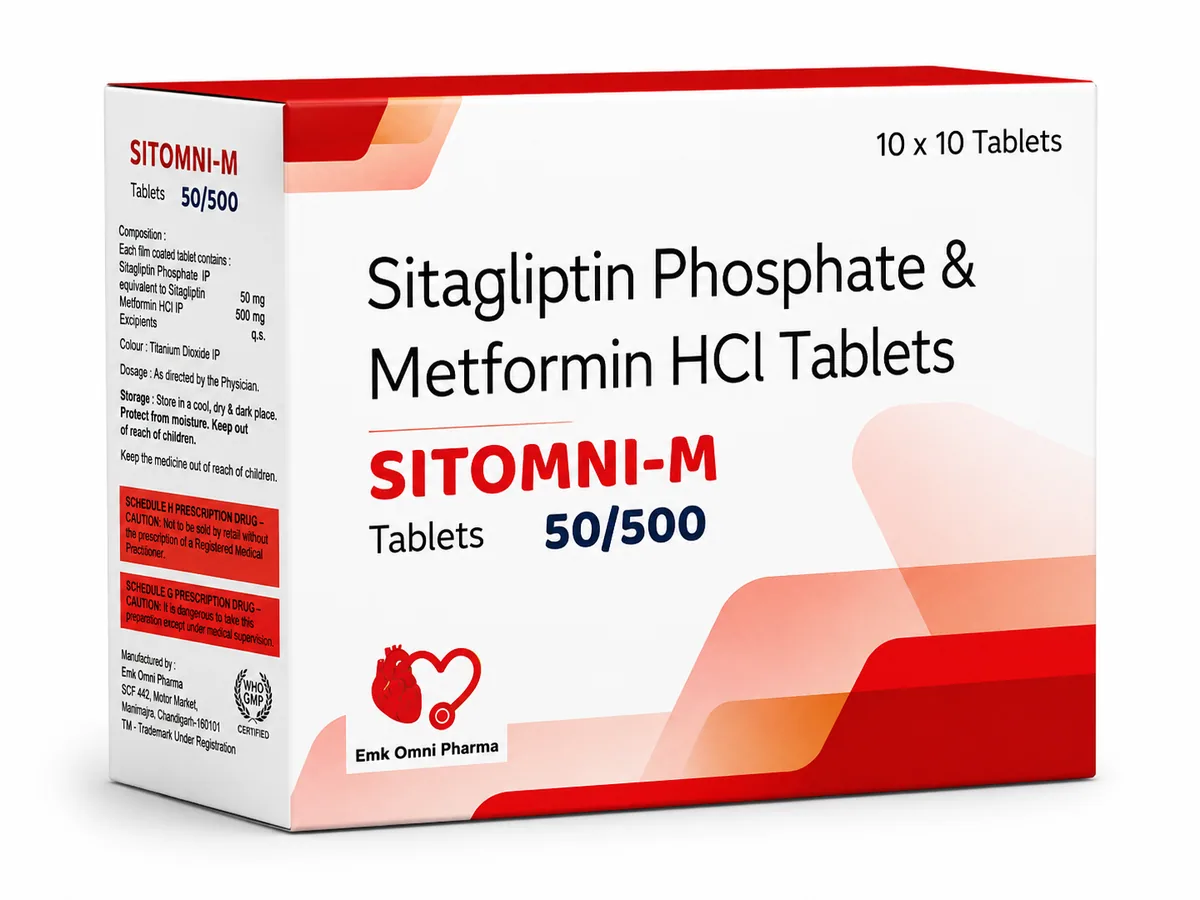
- Sitomni-M 50/500: Sitagliptin 50 mg with Metformin Hydrochloride 500 mg
- Sitomni-M-OD 100/500: Sitagliptin Phosphate 100 mg with Metformin Hydrochloride 500 mg
All four are prescription medicines. Which one appears on a prescription depends on the patient, not on the pack.
Gluomni M1 and Gluomni-M2: What Differs
These two are the closest pair in the range. Both combine glimepiride with a modified release metformin 500 mg. The difference lies in the glimepiride content: 1 mg in Gluomni M1 and 2 mg in Gluomni-M2.
Glimepiride is the molecule that prompts insulin release, so it is the one linked to low blood sugar. Doctors therefore follow a familiar pattern. Treatment often begins at the lower glimepiride content, readings are reviewed over some weeks, and the strength is stepped up only if control remains short of target and the patient has tolerated the lower one well. Moving from M1 to M2 is a deliberate clinical step, not a small adjustment, and the reverse move may be made if lows become frequent or kidney function changes.
Glimepiride or Sitagliptin as the Partner Molecule
The bigger difference in the range is between the Gluomni brands and the Sitomni-M brands. Both build on metformin, but the partner molecule is quite different.
Glimepiride, in Gluomni-M2, is a sulfonylurea that directly triggers insulin release. It acts on blood glucose regardless of meals, which is effective and also the reason low blood sugar is a real consideration.
Sitagliptin, in Sitomni-M 50/500 and Sitomni-M-OD 100/500, is a DPP-4 inhibitor. It works through the body's own gut hormone system, which responds to food, so its effect is more meal linked and it carries a lower tendency to cause low blood sugar on its own. Doctors weigh effectiveness, low sugar risk, kidney function, other illnesses and long term affordability when choosing between these routes.
What a Doctor Considers Before Choosing
- Current control: fasting, post meal readings and HbA1c against the individual target
- Kidney function: creatinine and estimated GFR, which affect metformin and influence the partner molecule
- Age and awareness of lows: older patients often sense the warning signs of low blood sugar less clearly
- Meal pattern: shift work, long fasting days and irregular meals raise the risk with a sulfonylurea
- Weight: sulfonylureas may be linked with modest weight gain
- Other medicines and illnesses: heart, liver and thyroid conditions all feed into the decision
- Cost over years: treatment continues for a long time, so affordability affects adherence
No single factor decides it. The doctor balances all of them and reviews the choice at follow up.
Why Patients Must Not Switch Strengths on Their Own
Packs in the same range can look alike, and a well meaning relative or a chemist under pressure may suggest a substitute when a strip is out of stock. This is where mistakes happen.
Moving from Gluomni M1 to Gluomni-M2 doubles the glimepiride content, which can cause low blood sugar in someone whose meals are irregular or whose kidney function has slipped. Moving the other way can let blood glucose drift upward unnoticed for weeks, since high sugar rarely produces symptoms early. Switching between a sulfonylurea combination and a sitagliptin combination changes the mechanism entirely.
If your usual brand is unavailable, ring your doctor or ask the chemist to check with them before accepting anything else. Carry your prescription so that the exact composition can be matched. This article is for general information only and is not a substitute for advice from a registered medical practitioner.
Frequently asked questions
- Is Gluomni-M2 simply double the strength of Gluomni M1?
- The glimepiride content is 2 mg instead of 1 mg. The metformin 500 mg modified release component is comparable in both.
- Which is better, Gluomni-M2 or Sitomni-M?
- Neither is better in general. They use different partner molecules and suit different patients, so your doctor chooses based on your reports and history.
- Can I take two Gluomni M1 tablets instead of one Gluomni-M2?
- No. That would also double the metformin. Only your doctor can decide how to make up a required dose.
- My chemist has only Gluomni M1 today. Should I take it?
- Do not substitute on your own. Ask the chemist to arrange your prescribed strength or check with your doctor first.
- Why does Sitomni-M-OD have a higher sitagliptin content?
- It is formulated as a once daily option with sitagliptin 100 mg and metformin 500 mg. The prescribing decision remains with the doctor.
- Will my doctor keep me on the same strength forever?
- Not necessarily. Type 2 diabetes changes over time, so the strength or the combination may be revised at follow up visits.
Need Gluomni-M2 for your pharmacy, hospital or clinic?
EMK Omni Pharma supplies through authorised channels across Karnataka. Send an enquiry and our team will respond during business hours.
Related guides
Medical Disclaimer
This product information is intended for general awareness only and should not be considered medical advice. Please consult a registered medical practitioner before using any prescription medicine.