Glimepiride and Metformin Explained: Gluomni-M2 Basics
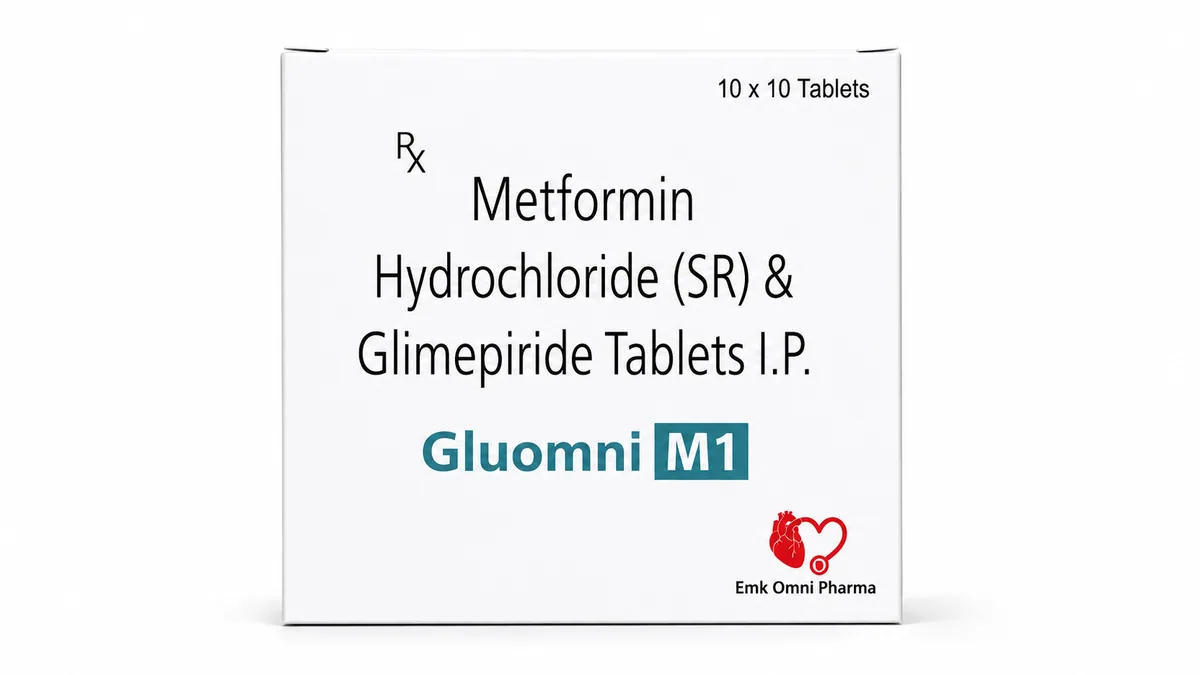
Gluomni-M2: Glimepiride & Metformin Hydrochloride (Prolonged Release) Tablets IP
Gluomni-M2 brings together two of the oldest and most widely used oral diabetes molecules. This article explains each class, what prolonged release adds and why combinations exist.
Metformin: The Biguanide at the Base of Treatment
Metformin belongs to the biguanide class and traces its origins to a plant compound long used in traditional European medicine before modern pharmacology refined it. It has been in wide clinical use for decades and remains the medicine most doctors start with in type 2 diabetes.
Its main action is in the liver, where it reduces the production of new glucose. It also improves the sensitivity of muscle and fat tissue to insulin and slightly slows glucose absorption from the intestine. Notably, metformin does not push the pancreas to release insulin, which is why it rarely causes low blood sugar when used on its own. Its typical drawbacks are stomach related and it is cleared by the kidneys, so kidney function guides its use.
Glimepiride: A Second Generation Sulfonylurea
Sulfonylureas were among the first oral medicines available for diabetes and are still widely prescribed across India. Glimepiride belongs to the later generation of this class, which is generally used at lower amounts than the earliest members.
Glimepiride binds to a specific receptor on the beta cells of the pancreas, closing a potassium channel and setting off the release of stored insulin. Because it depends on the pancreas having working beta cells, it suits type 2 rather than type 1 diabetes. Since it releases insulin regardless of what you have eaten, it carries a genuine risk of low blood sugar if a meal is skipped. It is usually taken with a meal for that reason, and doctors start at a lower strength and adjust upward based on readings.
What Prolonged Release Adds in Gluomni-M2
In Gluomni-M2 the metformin is formulated as prolonged release. The molecule sits in a matrix that swells and releases it slowly over several hours rather than dissolving quickly.
Two things follow. First, tolerance usually improves, because the burst of metformin that irritates the gut is spread out. Second, cover between doses is steadier, which can suit a once daily routine when the doctor prescribes it that way. The trade off is that the tablet must be swallowed whole, since crushing it defeats the entire design. The bilayer format keeps the prolonged release metformin layer separate from the glimepiride layer inside a single uncoated tablet.
Why Fixed Dose Combinations Like Gluomni-M2 Exist
Type 2 diabetes tends to progress. Control achieved with one molecule often slips over the years as beta cell function declines, so a second molecule is added.
At that point a doctor can write two separate prescriptions or one combination tablet. Combinations such as Gluomni-M2 exist because:
- Fewer tablets a day usually means better adherence over years of treatment
- Two complementary mechanisms address both insulin release and insulin resistance
- A single pack is simpler to store, carry and refill
- The pairing of a sulfonylurea with metformin is a long established step in diabetes care
The limitation is flexibility. A fixed combination cannot be adjusted molecule by molecule, so doctors move between available strengths instead.
How These Molecules Sit Among Other Diabetes Medicines
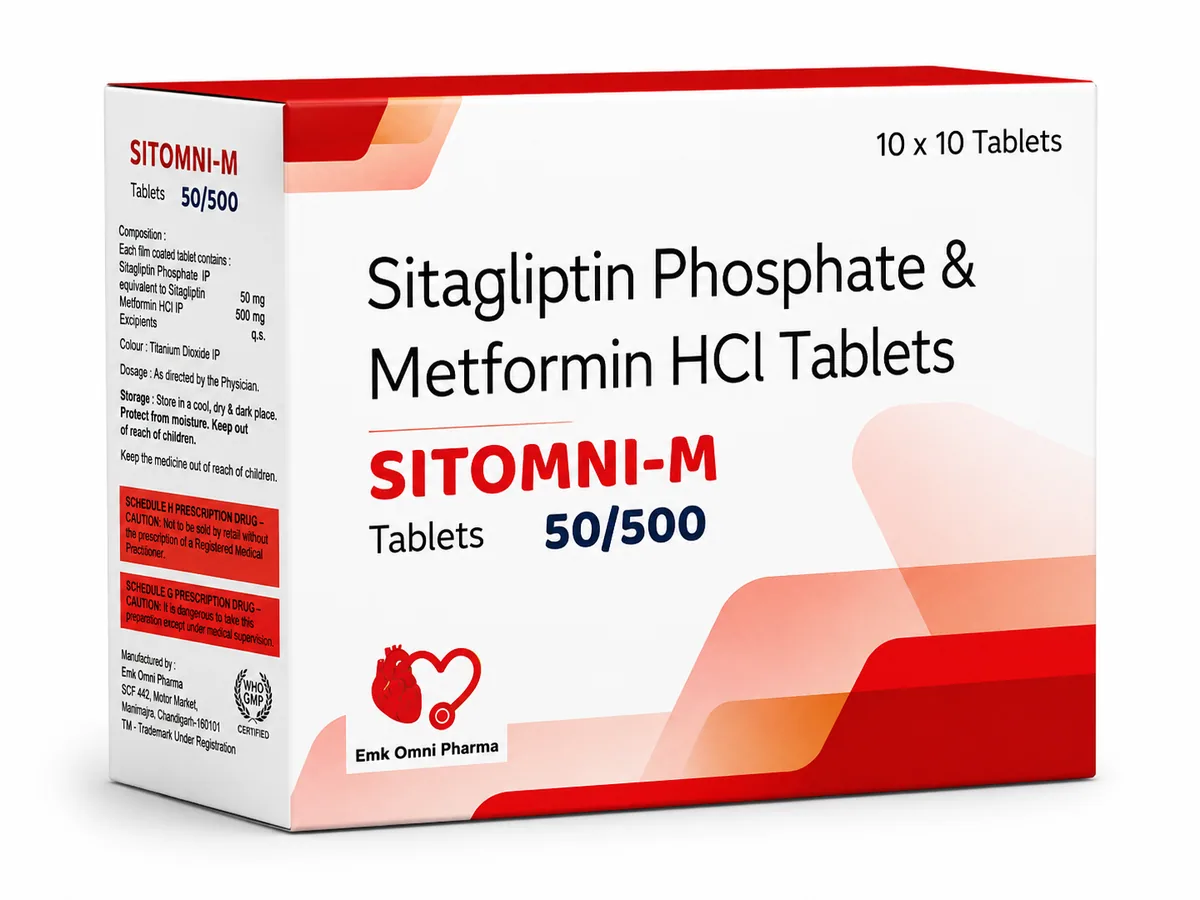
Oral diabetes treatment now includes several classes. DPP-4 inhibitors such as sitagliptin work through gut hormones and rarely cause low blood sugar on their own. SGLT2 inhibitors make the kidneys pass out glucose in the urine. Thiazolidinediones act on insulin sensitivity by a different route.
Sulfonylureas remain in wide use because they act reliably on blood glucose, have decades of clinical familiarity behind them and are affordable, which matters in long term treatment. Their main drawbacks are the risk of low blood sugar and some weight gain. The choice between a sulfonylurea based combination and a newer class depends on the patient's age, kidney function, heart health, eating pattern and budget, and is made by the treating doctor. This article is for general information only and is not a substitute for advice from a registered medical practitioner.
Frequently asked questions
- Is glimepiride stronger than metformin?
- They are not compared that way. They act by different mechanisms, which is exactly why they are combined in one tablet.
- Why does metformin alone rarely cause low blood sugar?
- It does not force the pancreas to release insulin. It mainly reduces glucose production by the liver and improves insulin sensitivity.
- What does IP mean on the pack?
- IP stands for Indian Pharmacopoeia, meaning the ingredient meets the standards laid down in that official reference.
- Is prolonged release the same as sustained release?
- The terms are used similarly to describe slow delivery over time. What matters for you is that the tablet is swallowed whole.
- Why is glimepiride called second generation?
- It belongs to a later group of sulfonylureas, generally used at lower amounts than the earliest medicines in the class.
- Can a combination tablet be split to change one molecule?
- No. If the balance needs to change, your doctor will prescribe a different strength or separate tablets.
Need Gluomni-M2 for your pharmacy, hospital or clinic?
EMK Omni Pharma supplies through authorised channels across Karnataka. Send an enquiry and our team will respond during business hours.
Related guides
Medical Disclaimer
This product information is intended for general awareness only and should not be considered medical advice. Please consult a registered medical practitioner before using any prescription medicine.